Survivorship bias
Survivorship bias is the error of drawing lessons only from the things that made it through some filter — the survivors — while the failures, which are invisible, silently distort the picture. What’s missing from the data is often more instructive than what’s in it.
- 1 min read
- 5 linked ideas
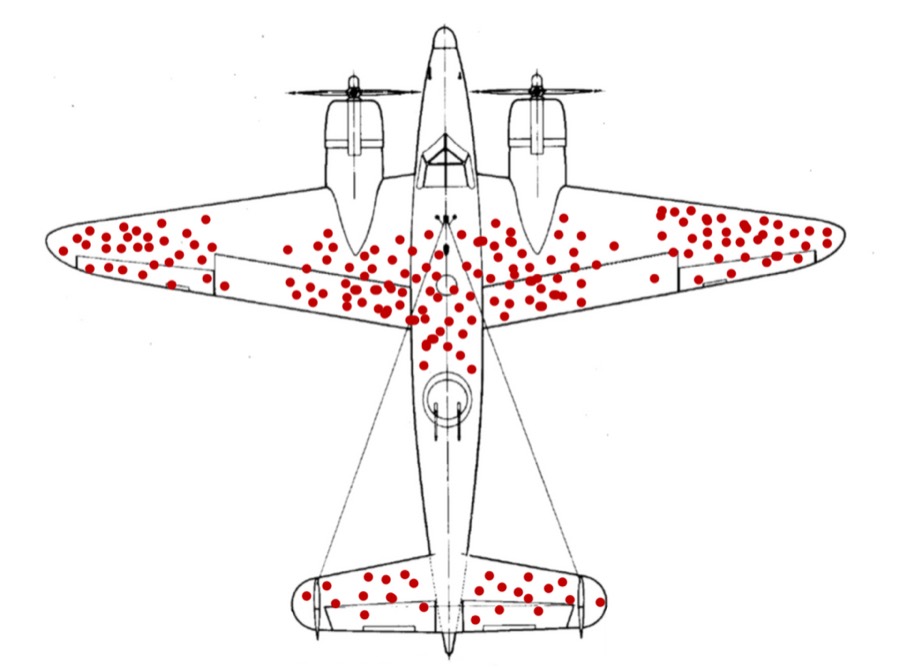
Survivorship bias diagram · McGeddon · CC BY-SA 4.0
How does survivorship bias work?
Filters remove cases before you look — companies go bust, planes are shot down, funds close and vanish from the record. Study only what remains and you mistake a property of the filter for a property of success. The failures can’t report their reasons, so their evidence never reaches you.
What's missing from the data is often more instructive than what's in it — go looking for the graveyard.
How do you use survivorship bias?
- Asking “what would be here if it had failed, and where did it go?” before copying winners.
- Discounting “habits of successful people” claims that never checked the equally-habitual failures.
- Seeking the full population and its base rates, not just the highlight reel.
What does survivorship bias look like in practice?
In WWII, engineers wanted to armour the parts of returning bombers most riddled with bullet holes. Abraham Wald saw the opposite: planes hit there came back, so armour belonged where survivors showed no holes — the engines — because planes hit in the engines never returned to be counted.
Where does survivorship bias fail?
The correction can over-fire into “every winner was just lucky.” Skill and survivorship both operate; the fix isn’t cynicism but completeness — find the missing failures and let the full sample, not the survivors alone, tell you what actually mattered.
- The missing failures are often genuinely unrecorded, so the prescribed correction — recover the full sample — can be impossible in practice.
- Passing a harsh filter is itself evidence; discounting every survivor as noise throws away real information about quality.
- It only bites where a selection filter exists — in complete datasets the correction adds doubt without adding accuracy.
The counter-model: The Lindy effect — Lindy treats survival as positive evidence of durability; survivorship bias warns survival can be luck — each keeps the other honest.
How do you apply survivorship bias, step by step?
- When studying successes for lessons, first name the filter they passed through.
- Ask what entered the filter and never came out; estimate how many, and why.
- Check whether the trait you admire also appears among the failures.
- Keep only the lessons that distinguish survivors from non-survivors, not those both share.
The deeper point
Its deepest instruction is to go looking for the graveyard: whenever a dataset is built from the things that “made it,” the most decision-relevant evidence is precisely the part deleted before you arrived. Ask where the failures went — the answer usually rewrites the lesson.
Frequently asked
- What is survivorship bias?
- The mistake of studying only the survivors of a filter — winners, returning planes, surviving funds — while the failures are invisible, which skews the conclusions.
- What’s a famous example?
- Abraham Wald’s WWII analysis: armour the parts of returning bombers with no bullet holes, because planes hit there never made it back to be seen.
- How do you guard against it?
- Deliberately look for the missing failures. Ask where the cases that didn’t survive went, and judge from the full population rather than the survivors.
Related
Keep reading
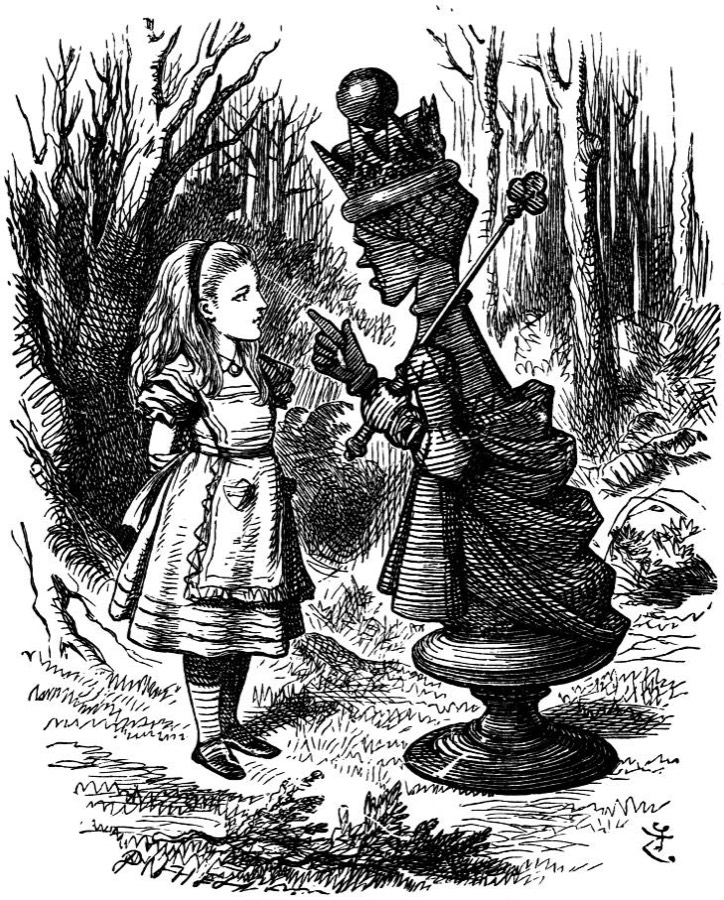
Red Queen effect
Faster cheetahs breed faster gazelles; both sprint harder just to stay even.
The books behind better thinking
Affiliate links. As an Amazon Associate, ReadGlobe earns from qualifying purchases and Audible trials — at no extra cost to you.
Listen to any of these free. Start a free Audible trial and get your first audiobook on the house.
Prefer to read? The canonical picks:
- Thinking, Fast and Slow — Daniel Kahneman
- The Art of Thinking Clearly — Rolf Dobelli
- The Great Mental Models, Volume 1 — Shane Parrish
- Poor Charlie’s Almanack — Charlie Munger
- Super Thinking — Gabriel Weinberg & Lauren McCann
- Seeking Wisdom — Peter Bevelin
Cite this page
ReadGlobe. (2026). Survivorship bias. https://readglobe.com/model/survivorship-bias/
"Survivorship bias." ReadGlobe, 1 July 2026, readglobe.com/model/survivorship-bias/.
Primary source: Wikipedia
Editorial synthesis © ReadGlobe 2026, drawing on the mental-models tradition (Charlie Munger, Farnam Street) and the primary sources for each model. · Last reviewed 2026-07-01.