The visual history of melancholy
For five centuries artists painted the same downturned head resting on a hand — but what melancholy meant changed completely: from a Renaissance badge of genius, to a Baroque meditation on death, to modern psychological alienation.
Melancholy is one of the oldest subjects in Western art, and one of the most revealing — because to paint a mood, an artist has to decide what that mood is. Trace it across five works and you watch an idea migrate: from a medical humour, to the mark of the thinker, to a private feeling, to the modern sense of a mind alone with itself. The gesture barely changes. The meaning changes entirely.
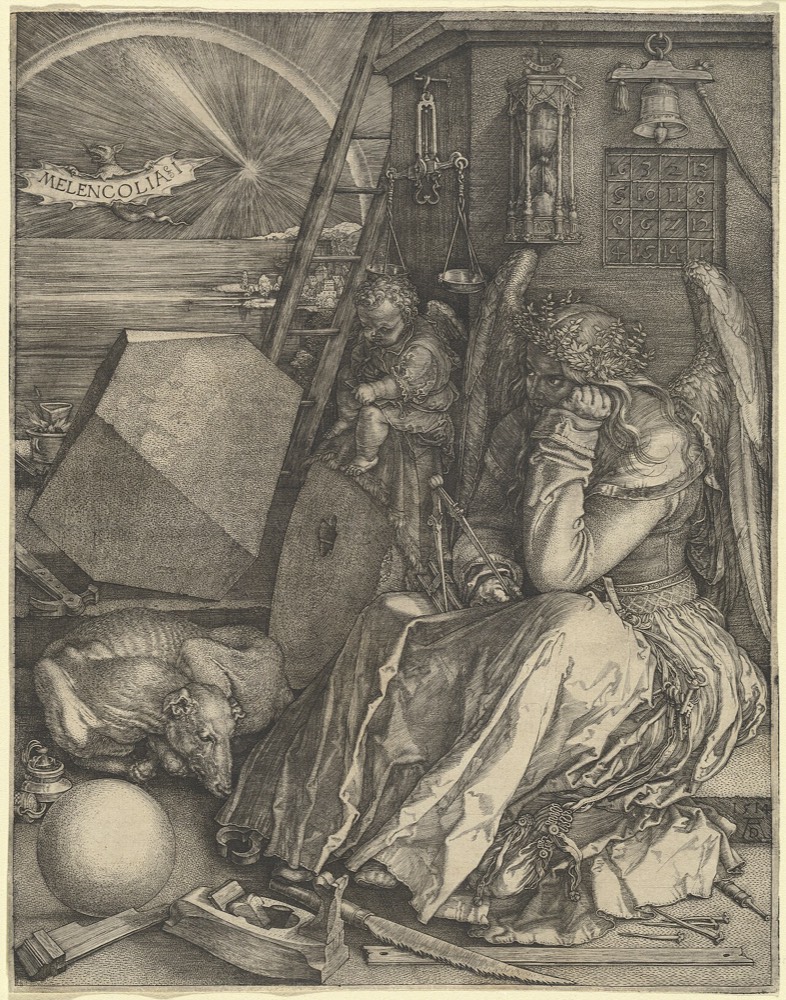
A winged figure sits idle amid the instruments of reason — compass, scales, hourglass, a half-built polyhedron — staring past all of them. Dürer took melancholy, long considered a curse of black bile, and reframed it as the affliction of genius: the thinker paralysed by the gap between what the mind can imagine and the hand can make. This single engraving fixed melancholy as the mood of intelligence for centuries after.
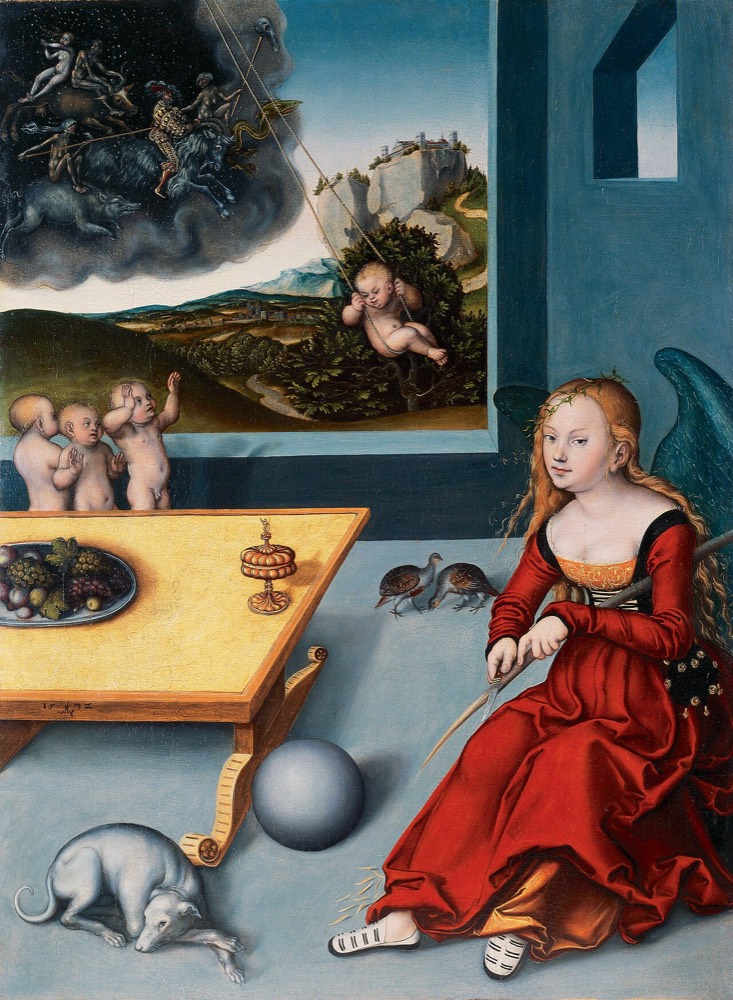
Cranach keeps Dürer’s winged melancholic but whittles the mood darker: she idly sharpens a stick while children play, and a witches’ cavalcade storms across the sky behind her. Here melancholy is not just idleness — it is the doorway to dread and dark vision, the temperament that sees what others cannot, and suffers for it.
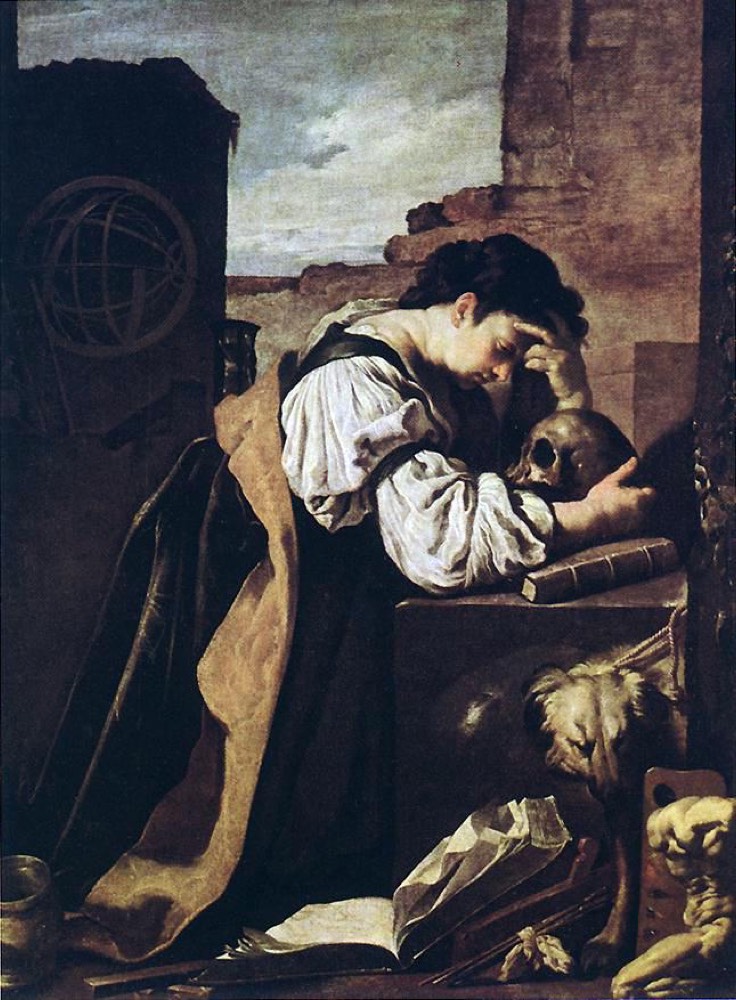
A solitary woman contemplates a skull among scattered books and instruments. The Baroque fused melancholy with the vanitas — the meditation on mortality — so that sadness becomes a form of wisdom: to sit with the skull is to understand that all the learning around her ends the same way. Melancholy, here, is clear-eyed rather than paralysed.
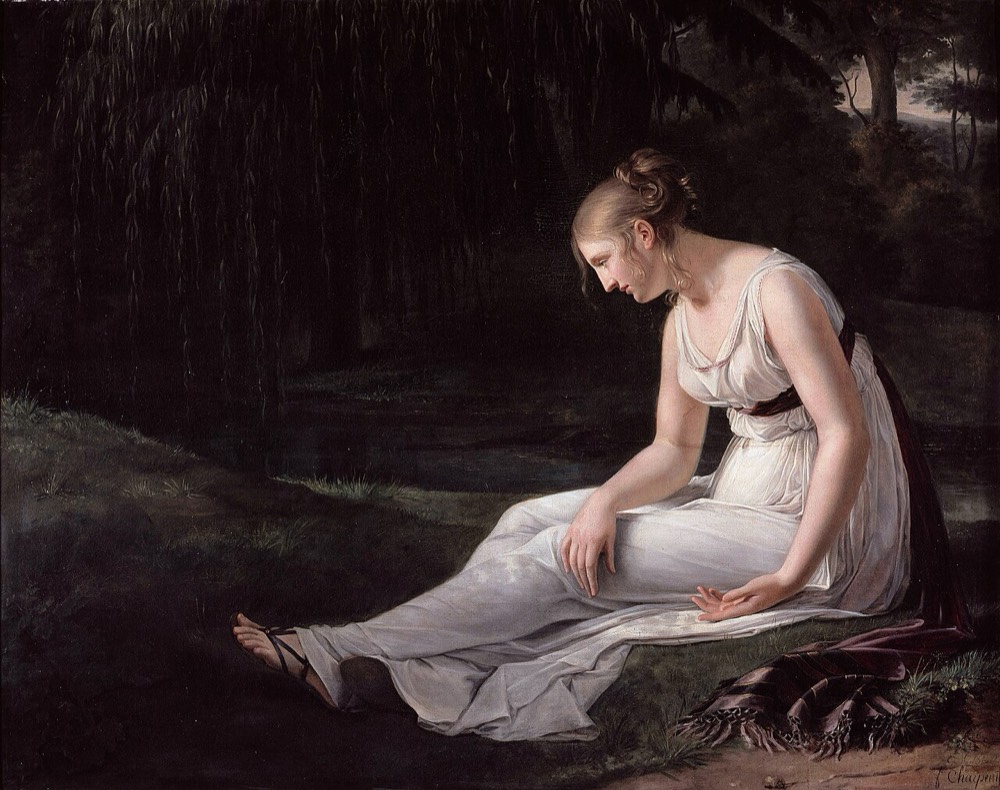
By 1800 the allegory is gone. No wings, no skull, no compass — just a woman seated alone in a shadowed landscape, head on her hand. Melancholy has become a private feeling: quiet, inward, sentimental. The Romantic era stopped explaining the mood with symbols and simply let a body hold it.
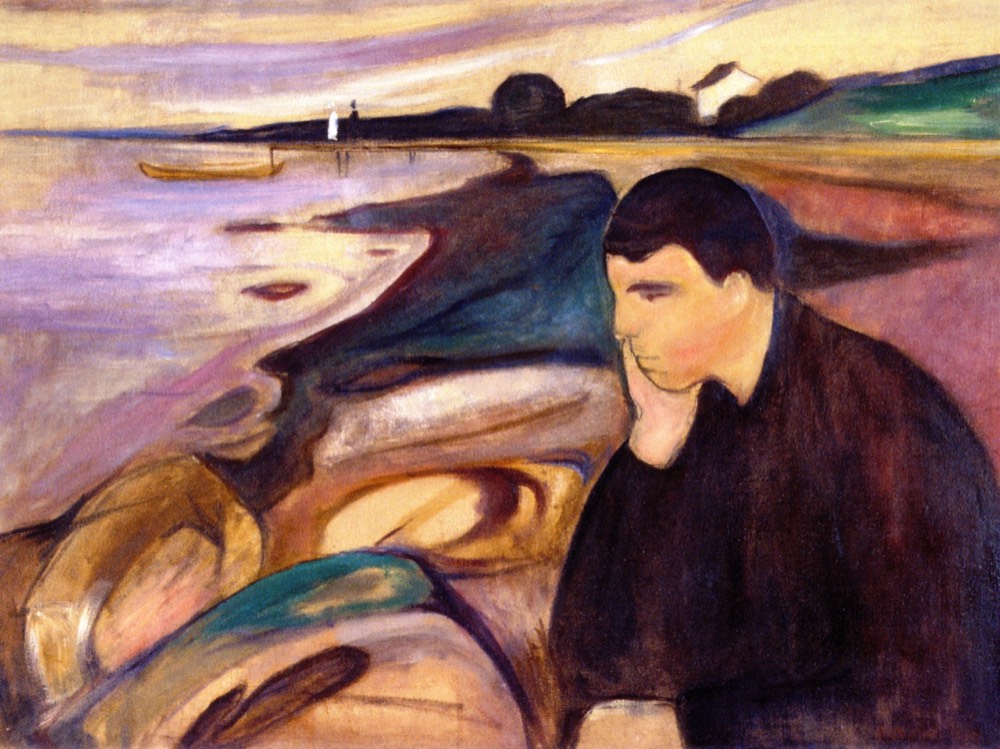
A man sits on a curving shore, turned inward, while the landscape dissolves into long bands of colour. Munch made melancholy fully modern: no allegory, no props, only interiority — the mind’s weather painted directly as line and hue. Melancholy is no longer something you have; it is who you are, alone with a feeling the world outside barely registers.
What five centuries changed
Across five hundred years the outward sign of melancholy barely moves — the downcast head, the hand that supports it, the averted gaze. What moves is the meaning. In Dürer it is the badge of the genius; in Cranach, a brush with the demonic; in Fetti, a meditation on death; in Charpentier, private Romantic sentiment; in Munch, modern alienation. The picture-language shifts too — from allegory you must decode (read the symbols) to interiority you simply feel (read the mood). To watch melancholy change in art is to watch the West slowly relocate the source of suffering: from the body’s humours, to the soul, to the isolated modern mind.
See these works in print
The definitive books on melancholy in art:
- Saturn and Melancholy — Klibansky, Panofsky & Saxl
- The Life and Art of Albrecht Dürer — Erwin Panofsky
- Edvard Munch: Behind the Scream — Sue Prideaux
- Melancholia and Depression — Stanley W. Jackson
As an Amazon Associate, ReadGlobe earns from qualifying purchases — at no extra cost to you.
Related on ReadGlobe
Paintings are public-domain / CC0, sourced from Wikimedia Commons and the National Gallery of Art Open Access, with artist and date verified at source. Editorial synthesis © ReadGlobe.