Analytical Psychology
The school founded by Carl Jung that studies the unconscious through archetypes, the collective unconscious, and the process of individuation.
Analytical psychology grew out of Jung's break with Freud. It treats the unconscious not only as a store of repressed material but as a creative, partly shared source of symbols — archetypes such as the Shadow, Anima, and Self. Its therapeutic goal, individuation, is the integration of these parts into a whole personality. The school takes dreams, myth, and religion seriously as psychological data, and it seeded popular tools such as introversion/extraversion typologies.
The unconscious is not just repressed material but a creative, partly shared source of symbols.
Core tenets
- The unconscious is structured and meaningful — a deep source of symbols and direction, not only repressed drives.
- The shadow — the disowned parts of the self, which steer our lives until made conscious.
- Archetypes — universal patterns (the Hero, the Mother, the Self) inherited in the "collective unconscious".
- Individuation — the lifelong process of integrating the unconscious to become a whole, distinct self.
- Psychological types — the introvert/extravert distinction and the four functions that later inspired the MBTI.
In practice today
In practice, analytical psychology works through dreams, symbols, and projections — treating what irritates us in others as a clue to our own shadow, and reading inner conflict as the psyche’s push toward wholeness. Its concepts — the shadow, the complex, introversion/extraversion, the archetype — have passed into everyday language.
Core ideas
- The Shadow — Jung's term for the disowned parts of the self — traits we deny and project onto others — which must be integrated to become whole.
Frequently asked
- What is analytical psychology?
- The school of depth psychology founded by Carl Jung — centred on the unconscious, archetypes, the shadow, and individuation, the lifelong integration of the psyche into a whole self.
- How does it differ from Freud’s psychoanalysis?
- Jung broke with Freud over the unconscious: where Freud saw mainly repressed sexual drives, Jung saw a deeper "collective unconscious" of shared symbols, and made meaning and individuation central.
- What is individuation?
- Jung’s term for becoming who you truly are — the lifelong process of integrating conscious and unconscious, including the shadow, into a balanced, whole self.
Go deeper
Affiliate links. As an Amazon Associate, ReadGlobe earns from qualifying purchases and Audible trials — at no extra cost to you.
The book behind this idea: Man and His Symbols by Carl Jung. Hear the whole thing free — start an Audible trial and your first audiobook is on the house.
Read the full summary of Man and His Symbols →
More canonical picks:
- Thinking, Fast and Slow — Daniel Kahneman
- The Art of Thinking Clearly — Rolf Dobelli
- The Great Mental Models, Volume 1 — Shane Parrish
- Poor Charlie’s Almanack — Charlie Munger
- Super Thinking — Gabriel Weinberg & Lauren McCann
- Seeking Wisdom — Peter Bevelin
Keep reading
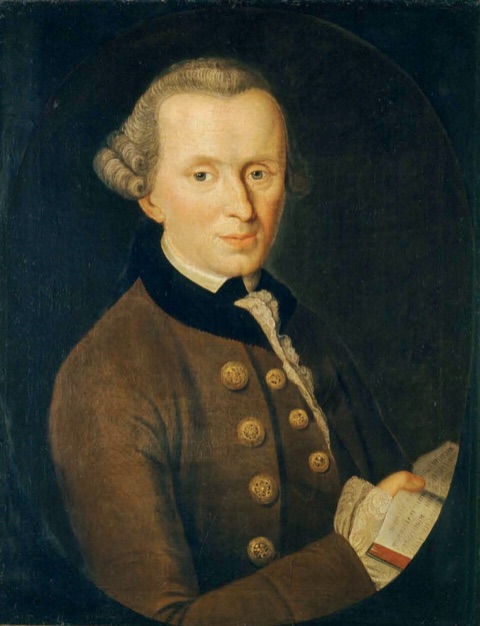
Immanuel Kant
From Königsberg, with famous regularity, he argued the mind doesn't receive the world — it structures it.
Cite this page
ReadGlobe. Analytical Psychology. https://readglobe.com/school/analytical-psychology/
"Analytical Psychology." ReadGlobe, readglobe.com/school/analytical-psychology/.
Primary source: Wikipedia
Summary synthesised from Wikipedia (CC-BY-SA) and standard secondary sources.