Creative destruction
Creative destruction is the process by which new innovations replace and dismantle the old — Joseph Schumpeter’s term for how capitalism continually revolutionises itself from within, destroying established companies and industries even as it creates new ones.
- 1 min read
- 2 books teach this
- 3 linked ideas
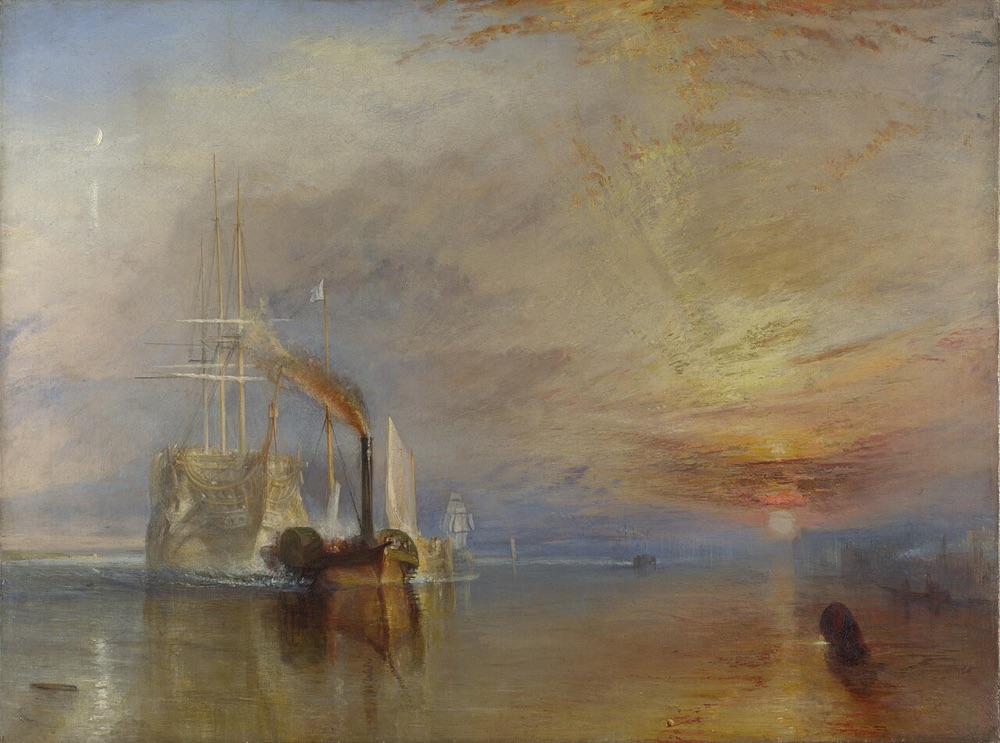
The obsolete but majestic sail warship being hauled by a grubby modern steam tug to be scrapped is the precise image of new technology dismantling the old order in a single motion.
J. M. W. Turner, The Fighting Temeraire (1839) · Public domain
How does creative destruction work?
See economic progress as inherently disruptive: growth comes not from doing the old thing better but from new methods, products, and firms displacing incumbents. Expect that today’s dominant business is tomorrow’s casualty, and that the destruction is the flip side of the creation.
The destruction isn't a bug — it's the mechanism: the new arrives only by clearing away the old.
How do you use creative destruction?
- Understanding why dominant companies and whole industries collapse when technology shifts.
- Anticipating that incumbency is temporary — disruption is the normal state, not the exception.
- Seeing job and industry churn as the cost (and engine) of long-run growth.
What does creative destruction look like in practice?
Streaming destroyed the video-rental industry (Blockbuster), digital then smartphone cameras destroyed film (Kodak), and ride-hailing reshaped taxis. Each new method created enormous value while dismantling the established businesses it replaced — creation and destruction in one motion.
Where does creative destruction fail?
The "creative" and "destructive" halves don’t fall on the same people. Aggregate progress can coexist with real, concentrated harm to displaced workers and communities — ignoring that human cost is a common and callous misreading of the model.
- Not all destruction is creative — incumbents can be dismantled by financial engineering or regulation with nothing better arriving to replace them.
- The model describes long-run aggregates and says nothing about timing; industries can persist for decades past their predicted obsolescence.
- It presumes competitive markets; where incumbents can buy or block challengers, the destruction is postponed and the creation diverted.
The counter-model: The Lindy effect — Creative destruction expects the old to be swept away; the Lindy effect predicts the long-established will often outlast their challengers.
How do you apply creative destruction, step by step?
- List the innovations that could make your product, role, or industry unnecessary.
- Judge each by the customer job it does cheaper or better, not by its current polish.
- Shift investment toward the replacing technology before the old line peaks.
- Plan the transition for the people the destruction lands on — retraining, redeployment, runway.
The deeper point
Its uncomfortable truth is that the destruction is not a bug — it’s the mechanism. An economy that protected every incumbent from disruption would also stop creating, because the new can only fully arrive by clearing away the old it renders obsolete.
Frequently asked
- What is creative destruction?
- It’s the process, named by economist Joseph Schumpeter, by which new innovations dismantle and replace old industries and firms. Capitalism continually revolutionises itself from within, destroying the established as it creates the new.
- What is an example of creative destruction?
- Streaming services destroying video rental, digital photography destroying film, and ride-hailing disrupting taxis. Each created huge value while dismantling the incumbents it displaced.
- Is creative destruction good or bad?
- Both. It drives long-run growth and innovation but inflicts real, concentrated harm on displaced workers and industries. The aggregate gain and the localised pain are two sides of the same process.
Related
Keep reading
Barnum effect
Horoscopes feel spot-on because you supply the specifics that make a vague line fit your life.
Go deeper
Affiliate links. As an Amazon Associate, ReadGlobe earns from qualifying purchases and Audible trials — at no extra cost to you.
The book behind this idea: The Innovator's Dilemma by Clayton Christensen. Hear the whole thing free — start an Audible trial and your first audiobook is on the house.
Read the full summary of The Innovator's Dilemma →
More canonical picks:
- Thinking, Fast and Slow — Daniel Kahneman
- The Art of Thinking Clearly — Rolf Dobelli
- The Great Mental Models, Volume 1 — Shane Parrish
- Poor Charlie’s Almanack — Charlie Munger
- Super Thinking — Gabriel Weinberg & Lauren McCann
- Seeking Wisdom — Peter Bevelin
Cite this page
ReadGlobe. (2026). Creative destruction. https://readglobe.com/model/creative-destruction/
"Creative destruction." ReadGlobe, 29 May 2026, readglobe.com/model/creative-destruction/.
Primary source: Wikipedia
Editorial synthesis © ReadGlobe 2026, drawing on the mental-models tradition (Charlie Munger, Farnam Street) and the primary sources for each model. · Last reviewed 2026-05-29.