The visual history of memento mori
For four centuries Western art carried the same reminder — memento mori, “remember that you must die” — but kept changing how it showed it: from a skull smuggled beneath worldly power, to a Dutch still-life sermon, to a skull studied like a specimen, to Cézanne’s skulls painted as pure, symbol-free form.
Every culture has to decide how to picture death. Western art settled on a single object — the human skull — and then spent five hundred years arguing about what it meant. Trace the memento mori across four paintings and you watch the reminder shed its symbols: the crowded allegory falls away layer by layer until nothing is left but the skull, and the plain fact of it. The lesson never changes. The way of teaching it changes completely.
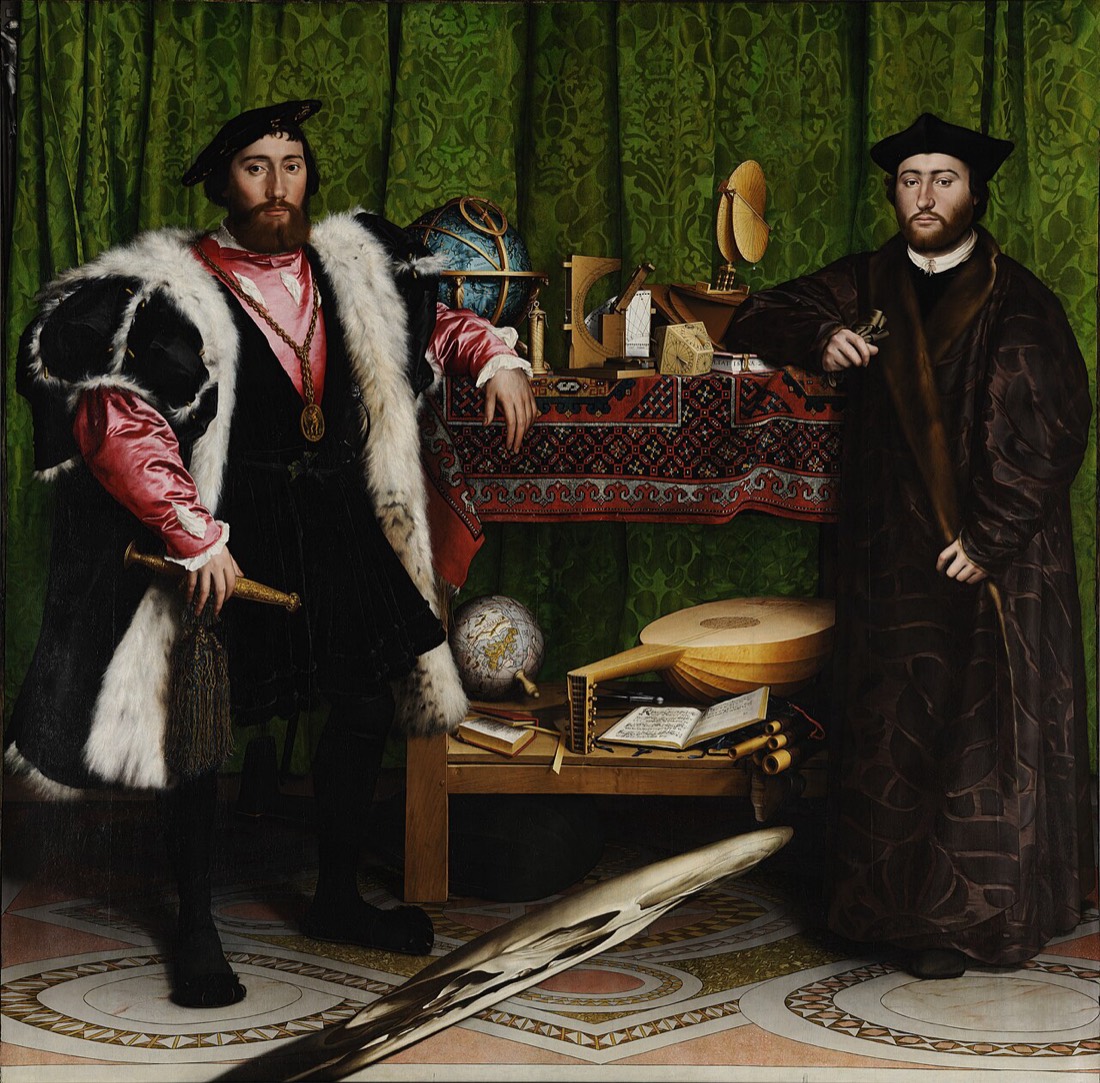
Two powerful men stand among the instruments of Renaissance mastery — globes, a lute, books, scientific tools. Then, smeared across the foreground at a slant, an unreadable grey shape: step to the side and it snaps into a human skull. Holbein hid death in plain sight beneath wealth and learning, visible only to the viewer who moves. The memento mori here is a trick of perspective — mortality is always in the room, just not from where you happen to be standing.
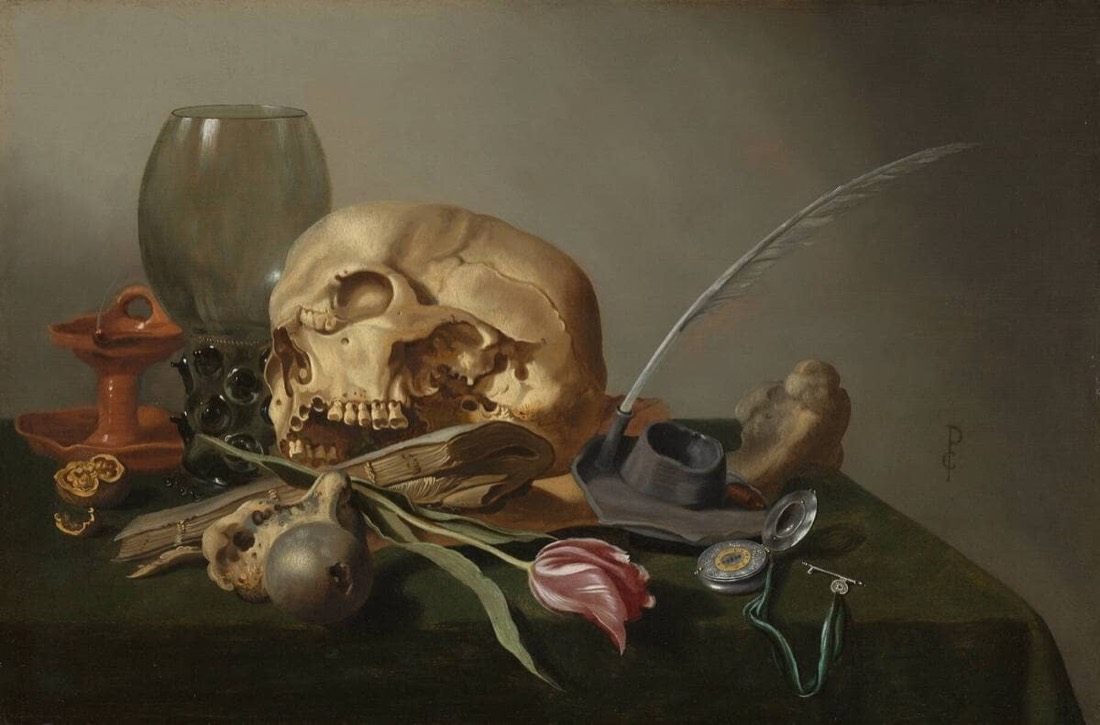
The Dutch turned the reminder into furniture. A skull rests among a toppled glass, a watch, an extinguished lamp still trailing smoke — each an everyday object chosen to say the same thing: this too is ending. The vanitas still life made mortality domestic and quiet, a sermon you could hang on the wall. Death is no longer hidden; it is laid out on the table alongside the rest of your possessions.
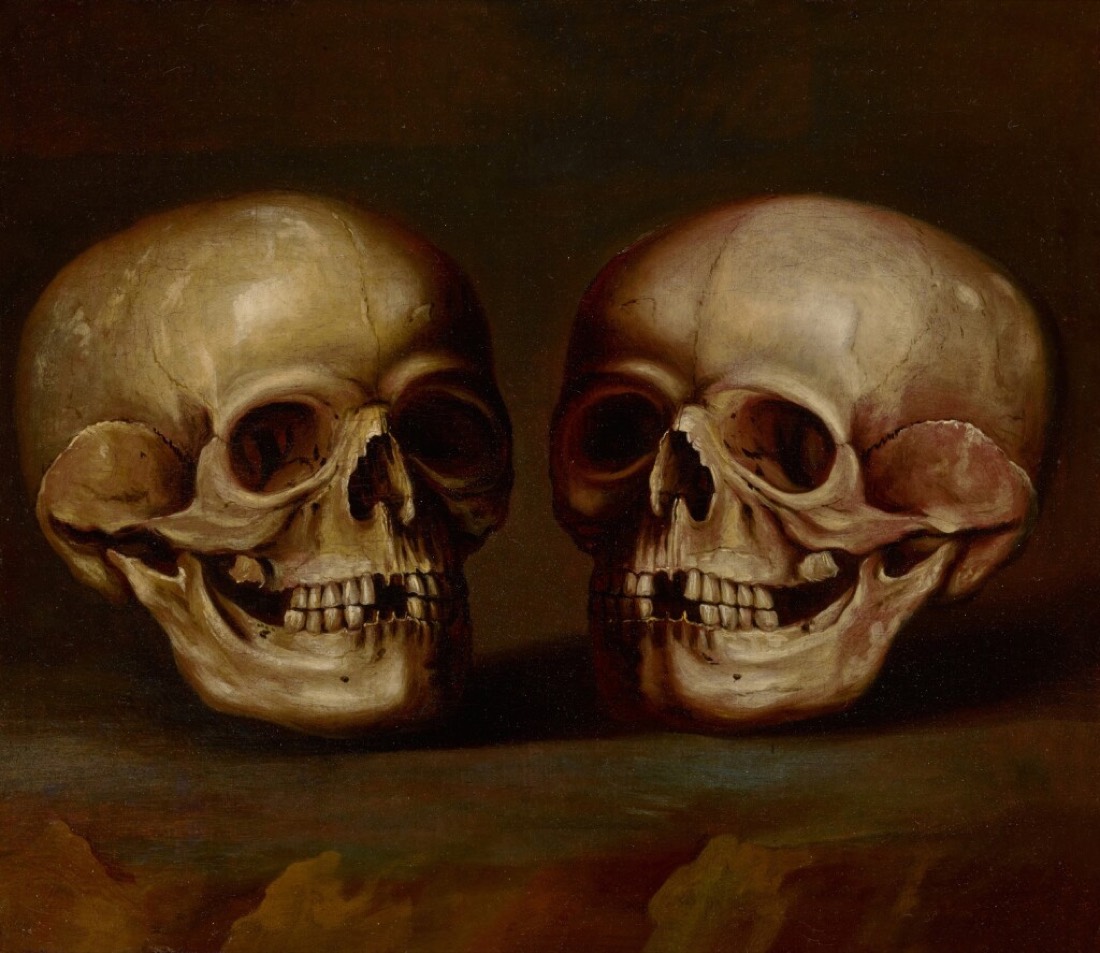
By the later Baroque the vanitas has been distilled almost to nothing — here a single skull, studied from two angles against a bare ground. Stripped of the crowded symbolism of the Dutch table, death is examined almost clinically, turned over like a specimen for reasoned contemplation. The reminder is becoming less a moral to decode and more an object of study.
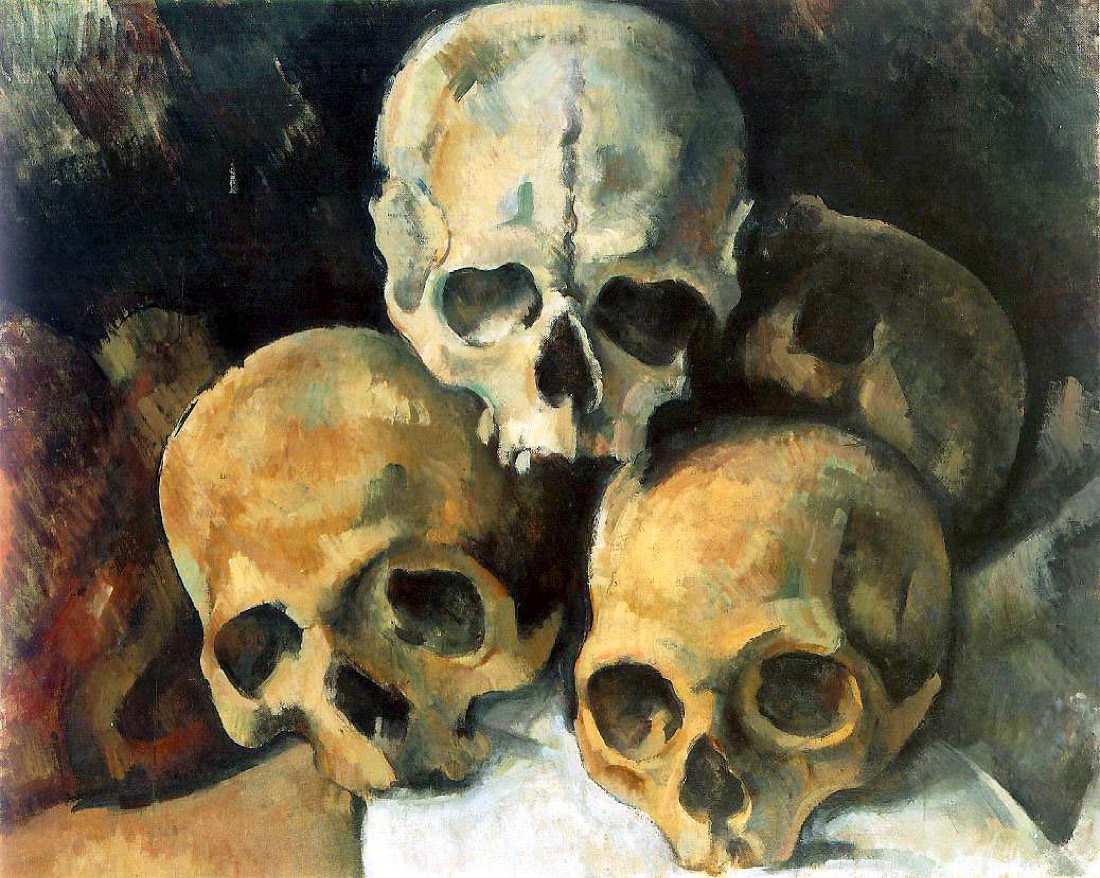
Cézanne removed the last of the symbols. No candle, no watch, no motto — just skulls stacked like fruit and painted with the same patient, searching attention he gave to apples. Death becomes a problem of form, weight and light; the dread is in the plainness itself. Three centuries after Holbein, the memento mori has shed everything but the skull and the honest fact of looking at it.
What five centuries changed
Follow the skull across four hundred years and you watch the reminder lose its disguises. In Holbein death is hidden — smuggled beneath power, visible only obliquely. In Claesz it is staged — a moral still life you decode object by object. In the Champaigne circle it is examined — turned over and studied like a specimen. In Cézanne it is simply confronted — no allegory at all, only form and mass. The memento mori never disappears from Western art; it sheds its symbols one by one until nothing remains but the thing itself, and the fact that you are the one looking. It is the same instruction the Stoics gave in words — that keeping death in view is what teaches you to live — rendered, finally, without a single symbol.
See these works in print
The definitive books on memento mori in art:
- The Hour of Our Death — Philippe Ariès
- Still Life: A History — Norbert Schneider
- The Ambassadors’ Secret — John North
- Cézanne: A Life — Alex Danchev
As an Amazon Associate, ReadGlobe earns from qualifying purchases — at no extra cost to you.
Related on ReadGlobe
Paintings are public domain, sourced from Wikimedia Commons with artist and date verified at source. Editorial synthesis © ReadGlobe.