Pygmalion effect
The Pygmalion effect is when higher expectations placed on someone lead to better performance — and lower expectations to worse. Believing a person is capable subtly changes how you treat them, and that treatment helps make the belief come true.
- 1 min read
- 6 linked ideas
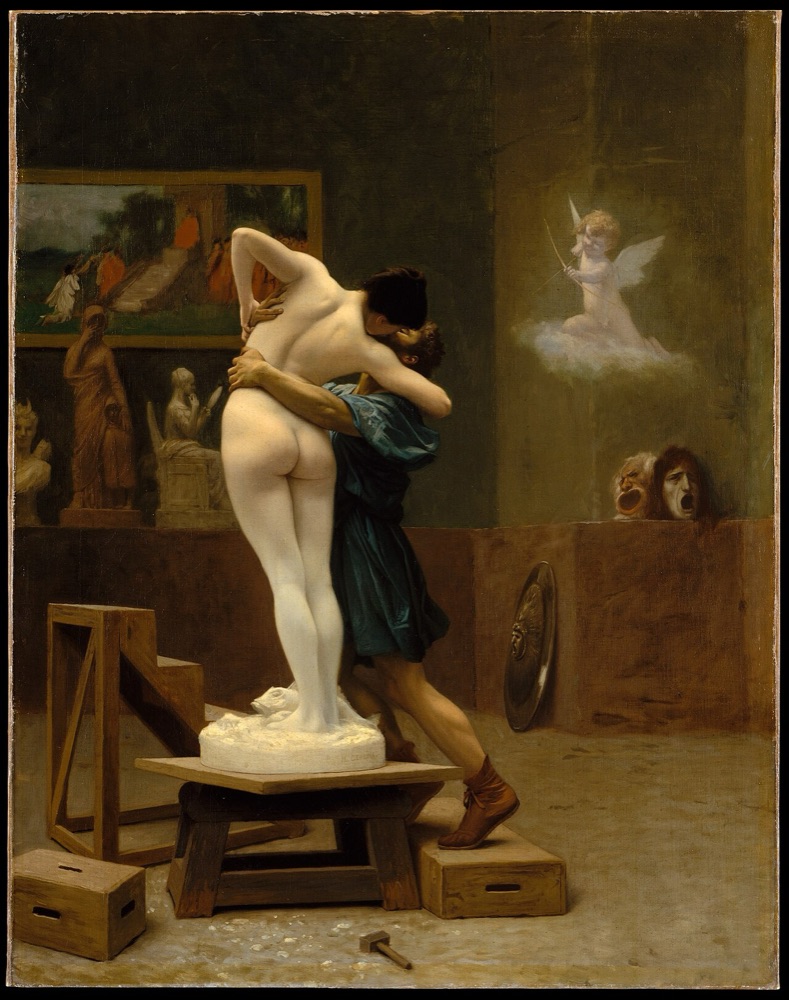
The bias takes its name from this very myth: Pygmalion's unwavering belief in his statue is what animates her into flesh — expectation literally making itself come true, the essence of the Pygmalion effect.
Jean-Léon Gérôme, Pygmalion and Galatea (c. 1890) · CC0 (The Metropolitan Museum of Art)
Why does the Pygmalion effect happen?
Expectations leak into behaviour: we give people we believe in more attention, harder challenges, warmer feedback, and more chances. That richer treatment genuinely raises performance, which confirms the original expectation — a self-fulfilling prophecy running through everyday interaction rather than magic.
Your beliefs about people aren't neutral observations — they're inputs that help create the outcome they predict.
What does the Pygmalion effect look like in real life?
- Students whose teachers were told (at random) they were "high potential" improving more over the year.
- Employees a manager believes in being given better projects and rising to them.
- A coach’s faith in a player translating into more coaching and real improvement.
How do you counter the Pygmalion effect?
- Be aware your expectations shape your behaviour toward others — set them deliberately, not by stereotype.
- Give people the treatment you’d give someone you believe in, and watch the results.
- Guard against the reverse (the Golem effect): low expectations that quietly sabotage.
The deeper point
It means your beliefs about people are never neutral observations — they are inputs that help create the outcome they predict. Whom you decide to believe in, often unconsciously, becomes a quiet force shaping who actually rises.
Frequently asked
- What is the Pygmalion effect?
- It is when higher expectations of someone lead to higher performance. Believing in a person changes how you treat them — more support, challenge, and opportunity — which helps the expectation become reality.
- What is an example of the Pygmalion effect?
- In a famous study, teachers told (falsely, at random) that certain students were "intellectual bloomers" gave them subtly better treatment, and those students improved more — purely because of the raised expectation.
- What is the opposite of the Pygmalion effect?
- The Golem effect: low expectations leading to worse performance. The same mechanism runs in reverse — diminished attention, challenge, and belief quietly undermining the person held to a low standard.
Keep reading
Critical mass
Quit one inch below critical mass and all that effort simply vanishes.
See this alongside the other thinking tools of leadership & managing people.
The books behind better thinking
Affiliate links. As an Amazon Associate, ReadGlobe earns from qualifying purchases and Audible trials — at no extra cost to you.
Listen to any of these free. Start a free Audible trial and get your first audiobook on the house.
Prefer to read? The canonical picks:
- Thinking, Fast and Slow — Daniel Kahneman
- The Art of Thinking Clearly — Rolf Dobelli
- The Great Mental Models, Volume 1 — Shane Parrish
- Poor Charlie’s Almanack — Charlie Munger
- Super Thinking — Gabriel Weinberg & Lauren McCann
- Seeking Wisdom — Peter Bevelin
Cite this page
ReadGlobe. (2026). Pygmalion effect. https://readglobe.com/bias/pygmalion-effect/
"Pygmalion effect." ReadGlobe, 29 May 2026, readglobe.com/bias/pygmalion-effect/.
Primary source: Wikipedia
Editorial synthesis © ReadGlobe 2026, drawing on Kahneman’s Thinking, Fast and Slow, the Tversky–Kahneman research program, and the primary cognitive-science literature. · Last reviewed 2026-05-29.