Ostrich Effect vs Confirmation Bias
Both protect a comfortable belief, by different means. The ostrich effect avoids negative information entirely — not checking the bank balance, the diagnosis, the metric. Confirmation bias engages with information but filters it to fit. One hides from evidence; the other distorts it.
| Dimension | Ostrich Effect | Confirmation Bias |
|---|---|---|
| Relationship to evidence | Avoids it entirely | Engages but filters it |
| The move | Don't look | Look, but only at what fits |
| What it protects | Comfort / peace of mind | An existing belief |
| Typical example | Not opening the bill or test result | Reading only news that agrees with you |
| Tell-tale sign | Information you "haven't gotten around to" | "See, I was right all along" |
Two defences of a fragile belief
When the truth threatens our comfort or our convictions, the mind has two ways to defend itself — and these biases are the pair. The ostrich effect refuses to engage with threatening information at all; confirmation bias engages but only with the agreeable parts. Avoidance versus distortion: both keep an uncomfortable reality at bay.
The ostrich effect: head in the sand
Named for the (myth of the) ostrich burying its head, this is the tendency to avoid information you expect to be unpleasant. Investors check their portfolios far less often when markets fall; people delay opening medical results, bills, or performance metrics. The information exists and matters — but not looking feels safer than facing it, so the decision is simply postponed.
Confirmation bias: seeing what you want to see
Confirmation bias is the opposite relationship to evidence: you do engage, but you seek, notice, and remember what supports your existing view while discounting what challenges it. You read the sources that agree, weigh the confirming study more heavily, and explain away the rest. The belief survives not by avoidance but by selective attention.
How they trade off and combine
They often operate in sequence. Confirmation bias maintains a belief while there is still agreeable evidence to find; when the disconfirming evidence becomes unavoidable, the ostrich effect takes over and we simply stop looking. Both share a root — protecting comfort over accuracy — but the ostrich effect sacrifices information entirely, which is often the more costly error: you can't even filter what you refuse to see.
The verdict
Both are cured by the same uncomfortable discipline: deliberately seek the information you least want. Against the ostrich effect, schedule the check-in you're avoiding — open the statement, book the test, read the metric. Against confirmation bias, actively hunt for the strongest case against your view. Facing evidence you'd rather dodge, and weighing what contradicts you, is the only reliable path to an accurate picture.
Frequently asked
- What is the difference between the ostrich effect and confirmation bias?
- The ostrich effect avoids negative information entirely — you don't look. Confirmation bias engages with information but filters it to support what you already believe. One hides from evidence; the other distorts the evidence it does take in.
- Do the ostrich effect and confirmation bias work together?
- Often in sequence. Confirmation bias preserves a belief while agreeable evidence is available; once disconfirming evidence becomes hard to ignore, the ostrich effect kicks in and we stop looking altogether. Both protect comfort over accuracy.
- How do you beat the ostrich effect?
- Pre-commit to facing the information on a schedule, regardless of how it feels — open the bill, check the result, review the metric at fixed times. Removing the moment-to-moment choice to avoid takes away the bias's main opportunity.
Explore further
More comparisons
Keep reading
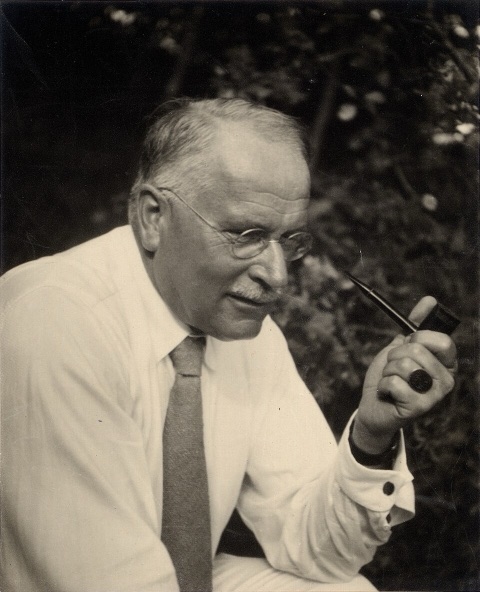
Carl Jung
Where Freud saw repressed drives, Jung saw a storehouse the whole species shares.
Go deeper
Affiliate links. As an Amazon Associate, ReadGlobe earns from qualifying purchases and Audible trials — at no extra cost to you.
The book behind this idea: Thinking, Fast and Slow by Daniel Kahneman. Hear the whole thing free — start an Audible trial and your first audiobook is on the house.
Read the full summary of Thinking, Fast and Slow →
More canonical picks:
- The Art of Thinking Clearly — Rolf Dobelli
- The Great Mental Models, Volume 1 — Shane Parrish
- Poor Charlie’s Almanack — Charlie Munger
- Super Thinking — Gabriel Weinberg & Lauren McCann
- Seeking Wisdom — Peter Bevelin
Primary sources: Ostrich Effect (Wikipedia) · Confirmation Bias (Wikipedia)
Editorial synthesis © ReadGlobe 2026, drawing on the behavioural-finance literature (Karlsson, Loewenstein & Seppi on the ostrich effect) and the heuristics-and-biases tradition. · Last reviewed 2026-05-29.