The visual history of the night
In roughly one century, artists turned the night from a place of terror into the most beautiful subject in painting — from Fuseli’s demon-ridden dark, to Whistler’s pure “nocturnes”, to Van Gogh’s ecstatic, living sky. The dark stayed the same; what we saw in it changed.
For most of history the night was simply the absence of light — and of safety. Then, over about a hundred years, painters did something strange: they began to find the dark beautiful. Trace the night across five works and you watch fear turn into wonder. The elements barely change — a figure, a moon, a sky — but what the night means moves from terror, to reverence, to pure sensation, to the modern glimpse of the infinite.
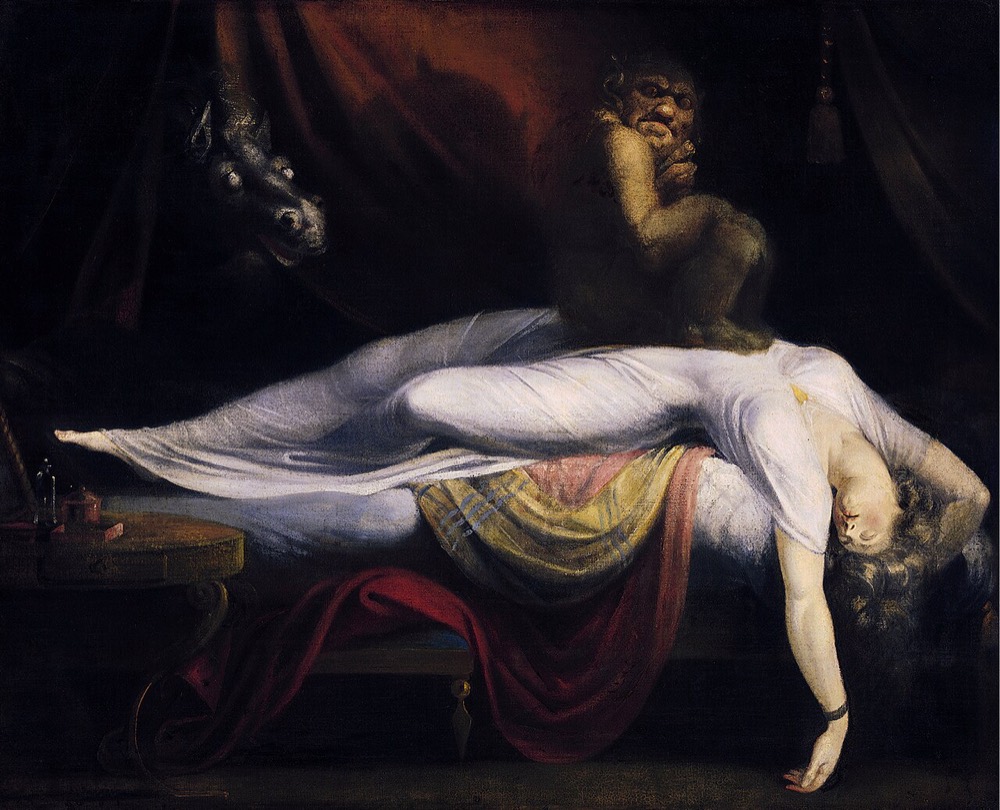
A sleeping woman is thrown backward over her bed while a squat incubus crouches on her chest and a blind horse pushes its head through the curtains. Fuseli painted not the night sky but the night of the mind — sleep as the hour when reason lets go and the irrational climbs in. A century before Freud, it fixed the dark as the home of the unconscious: everything we suppress by day, returning after dark.
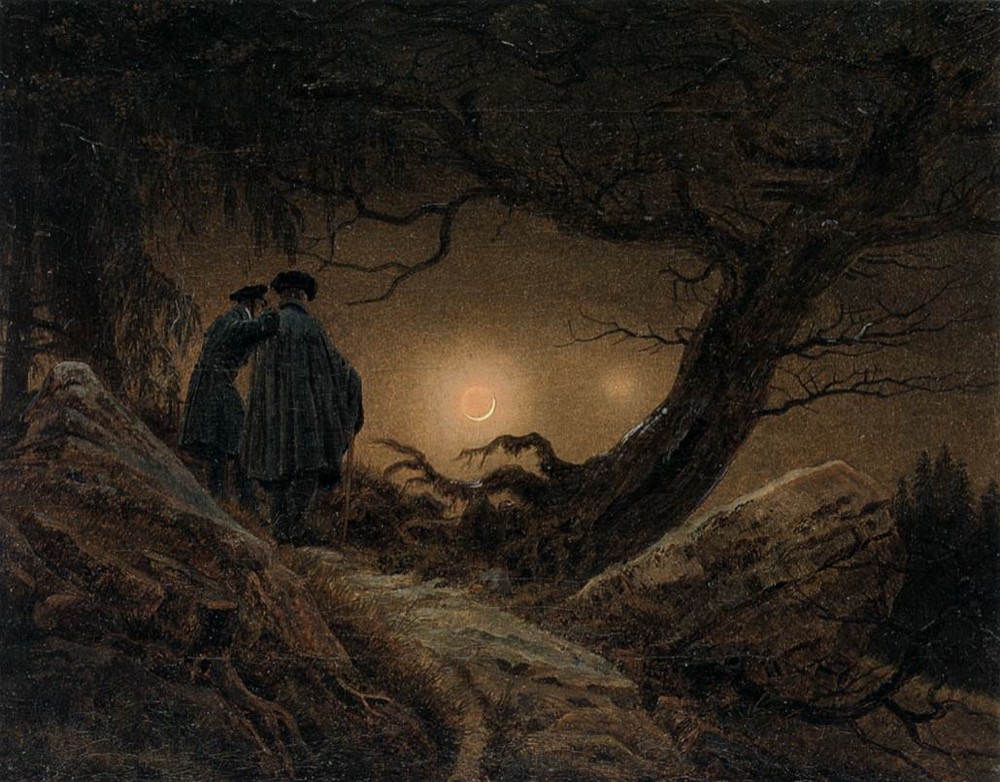
Two small figures stand with their backs to us, dwarfed by a gnarled tree and a vast dusk sky, gazing at the moon. Friedrich made the night sublime — no longer a threat but an invitation to awe. The Romantics turned darkness into a cathedral: to stand under a night sky was to feel your own smallness before something infinite, and to find that feeling holy rather than frightening.
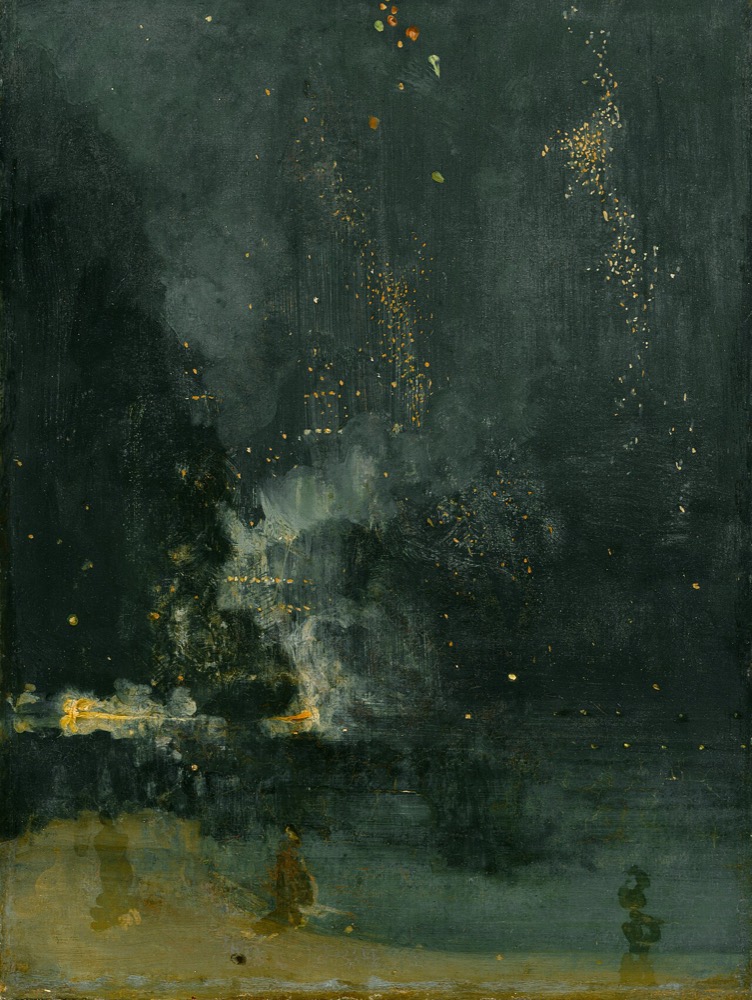
A firework dissolves into sparks over a black river, and the subject almost vanishes with it. Whistler borrowed the word nocturne from music to insist that a night painting need not tell a story — it could be pure arrangement of tone and colour, a mood with no plot. The critic John Ruskin accused him of flinging “a pot of paint in the public’s face.” It was, in fact, the night pointing the way to abstraction.
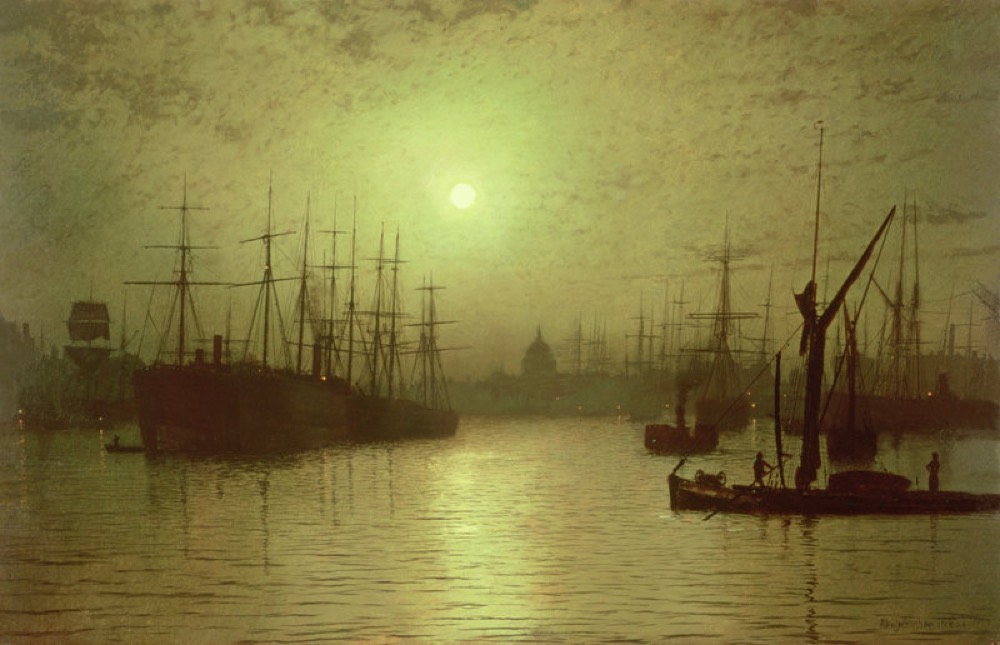
Masts and warehouses stand black against a wet, gaslit sky, the moon smeared in the haze above the docks. Grimshaw painted the modern night — not the wilderness sublime but the industrial city after dark, damp and glittering and strangely peaceful. The night here is domesticated: no demons, no gods, just lamplight on stone. For the first time the dark is simply, quietly beautiful — the ordinary world made lovely by shadow.
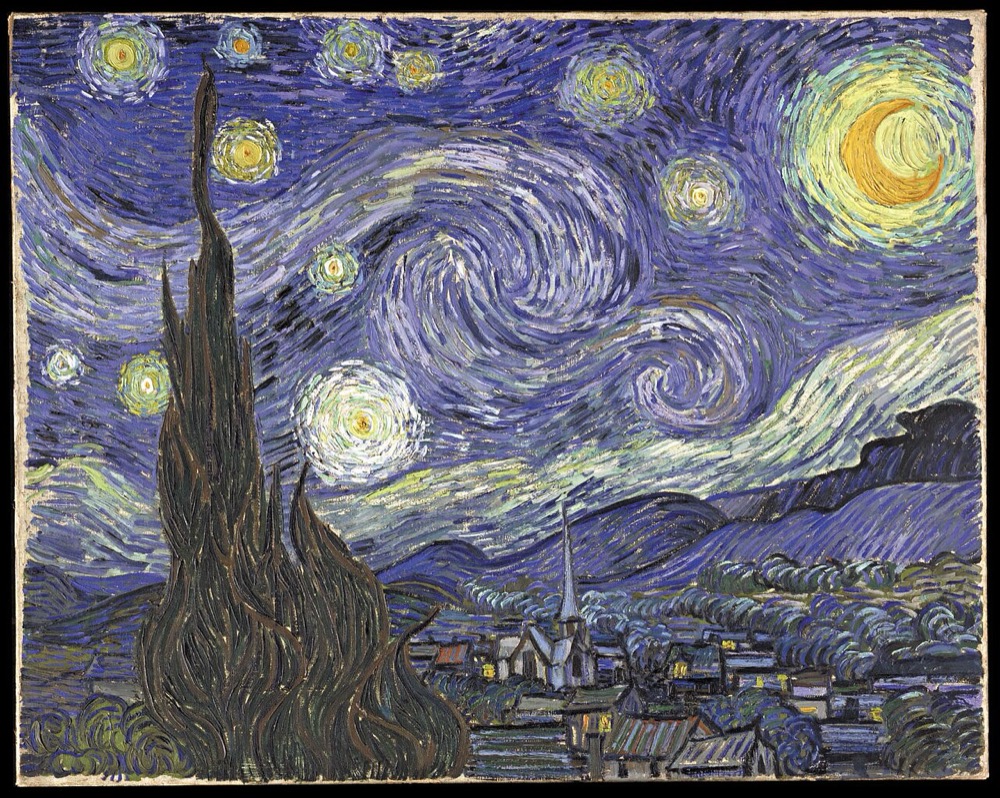
From the window of an asylum at Saint-Rémy, Van Gogh painted a sky that will not hold still: stars swell into whirlpools, the moon burns, a cypress flames up toward the churning heavens. This is the night at its furthest from Fuseli’s terror — the dark not as threat or backdrop but as a living, ecstatic vision of the infinite. It gave the night what a century had been building toward: not fear, not even beauty, but awe made visible.
What five centuries changed
Across a single century the night sky barely changes — the same moon, the same dark, the same small human figure beneath it. What changes is what we let ourselves see in it. In Fuseli the dark is terror, the hour the mind is invaded; in Friedrich it becomes reverence, the sublime made holy; in Whistler, pure sensation, a mood freed from any story; in Grimshaw, the ordinary modern night, gaslit and lovely; in Van Gogh, ecstasy, the infinite blazing overhead. To watch the night change in art is to watch fear slowly convert into wonder — the same darkness, re-lit each generation by whatever the age most needed to feel.
See these works in print
The definitive books on the night in art:
- At Day’s Close: Night in Times Past — A. Roger Ekirch
- Nocturne: A Journey in Search of Moonlight — James Attlee
- Evening’s Empire: A History of the Night in Early Modern Europe — Craig Koslofsky
- Van Gogh: The Life — Steven Naifeh & Gregory White Smith
As an Amazon Associate, ReadGlobe earns from qualifying purchases — at no extra cost to you.
Related on ReadGlobe
Paintings are public domain, sourced from Wikimedia Commons with artist and date verified at source. Editorial synthesis © ReadGlobe.