The visual history of the sublime
The sublime is the overwhelming — the feeling of being dwarfed by something vast. For a century artists painted it and slowly moved it from inward to outward: from Friedrich’s lone soul before the infinite, to Bierstadt’s glowing spectacle of the American West.
Beauty is what pleases; the sublime is what overwhelms — the vastness that makes you feel thrillingly, terrifyingly small. It was the great subject of Romantic art, and to paint it an artist had to answer a hard question: where does awe come from — inside you, or out there? Follow the sublime across four landscapes and you watch the answer migrate: from a private shiver before infinity, to the elements as pure light, to a whole continent staged as a moral drama, to awe sold as spectacle.
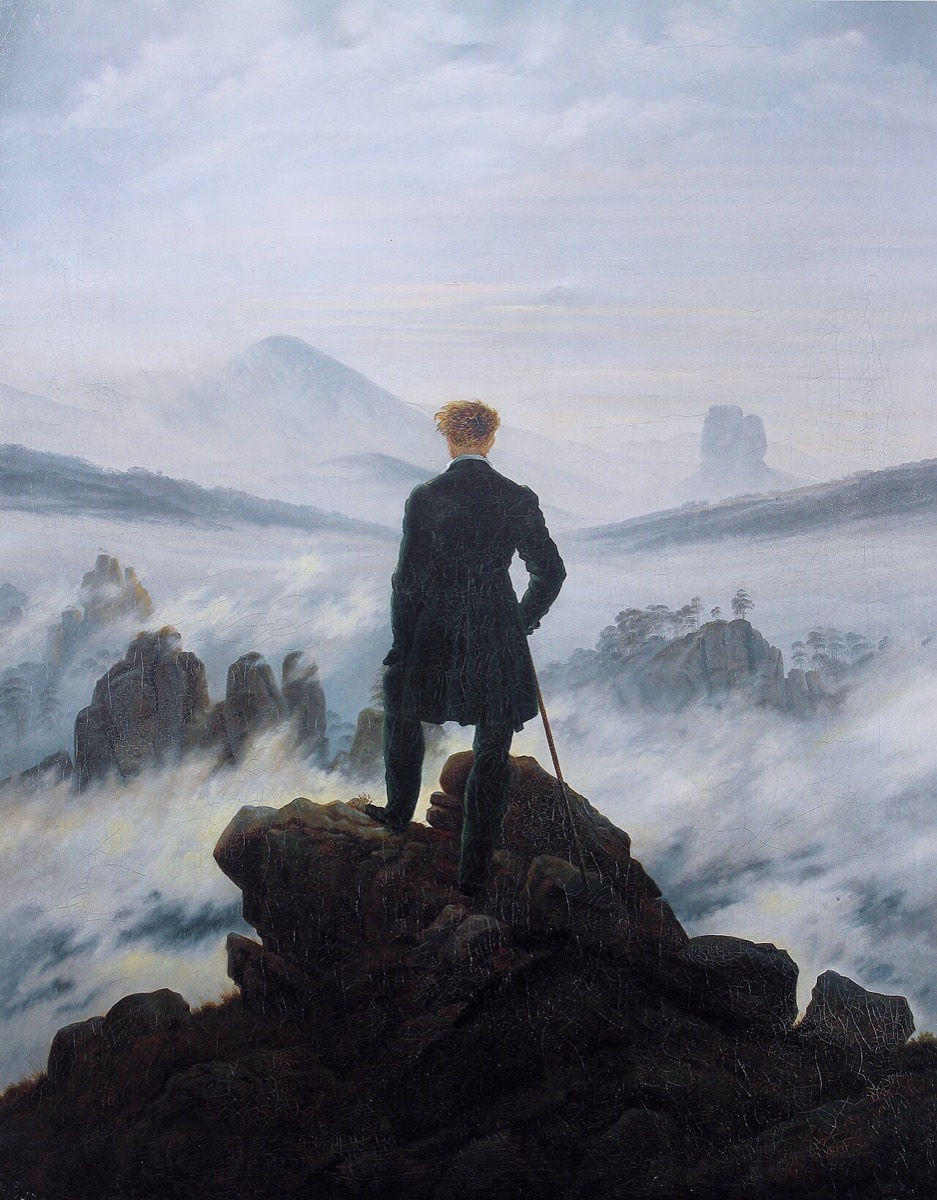
A lone figure stands on a crag, his back to us, gazing over a sea of fog and half-drowned peaks. Friedrich gives us the sublime from inside: we don’t look at the man, we look with him, out at an infinity that dwarfs him — and feel the strange Romantic mixture of awe and thrilling smallness. The sublime here is a private, inward event, a soul alone before the immensity of the world.
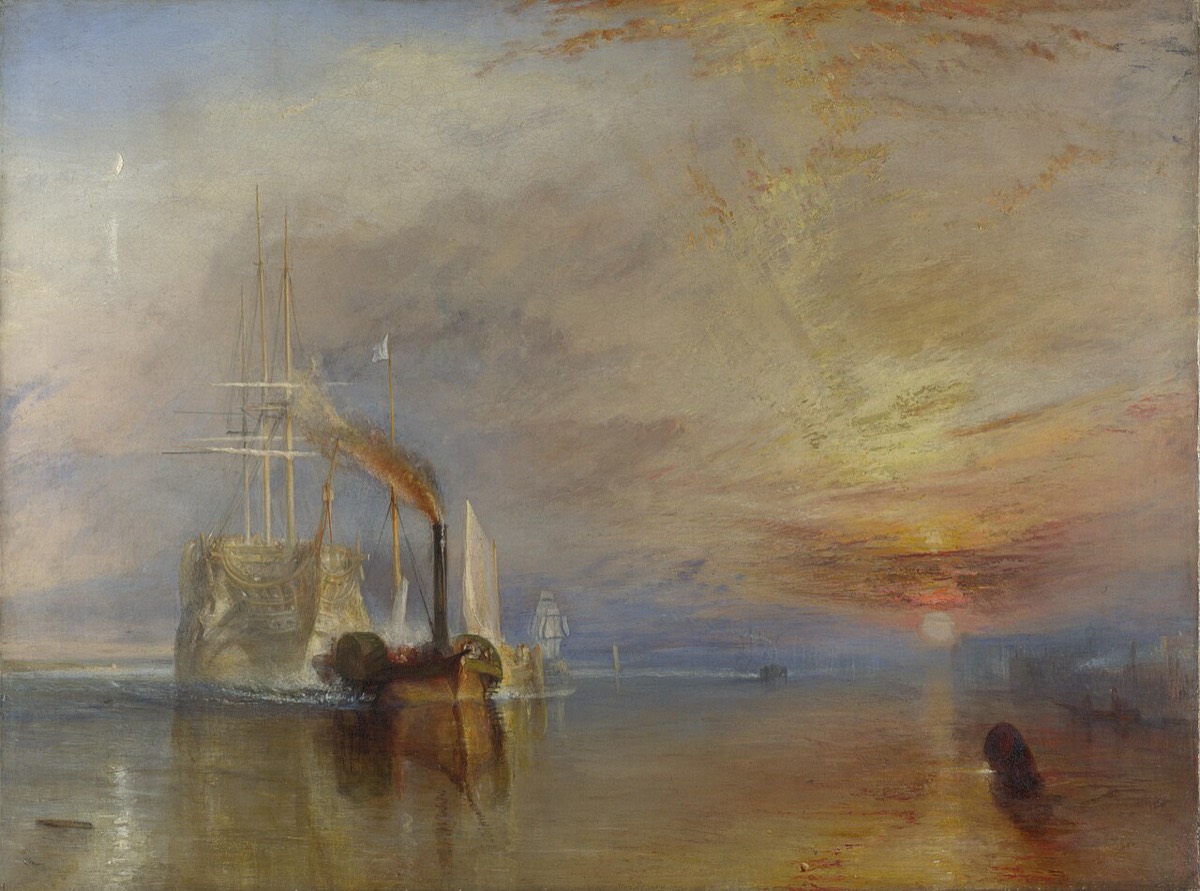
A ghostly old warship is towed to be broken up, against a sky ablaze with sunset. Turner dissolves the world into light and air — the ships almost vanish into the atmosphere, overwhelmed by the sheer glory of the sky. His sublime is elemental and elegiac: the grandeur is in the weather and the passing of an age, and the human works are tiny before it.
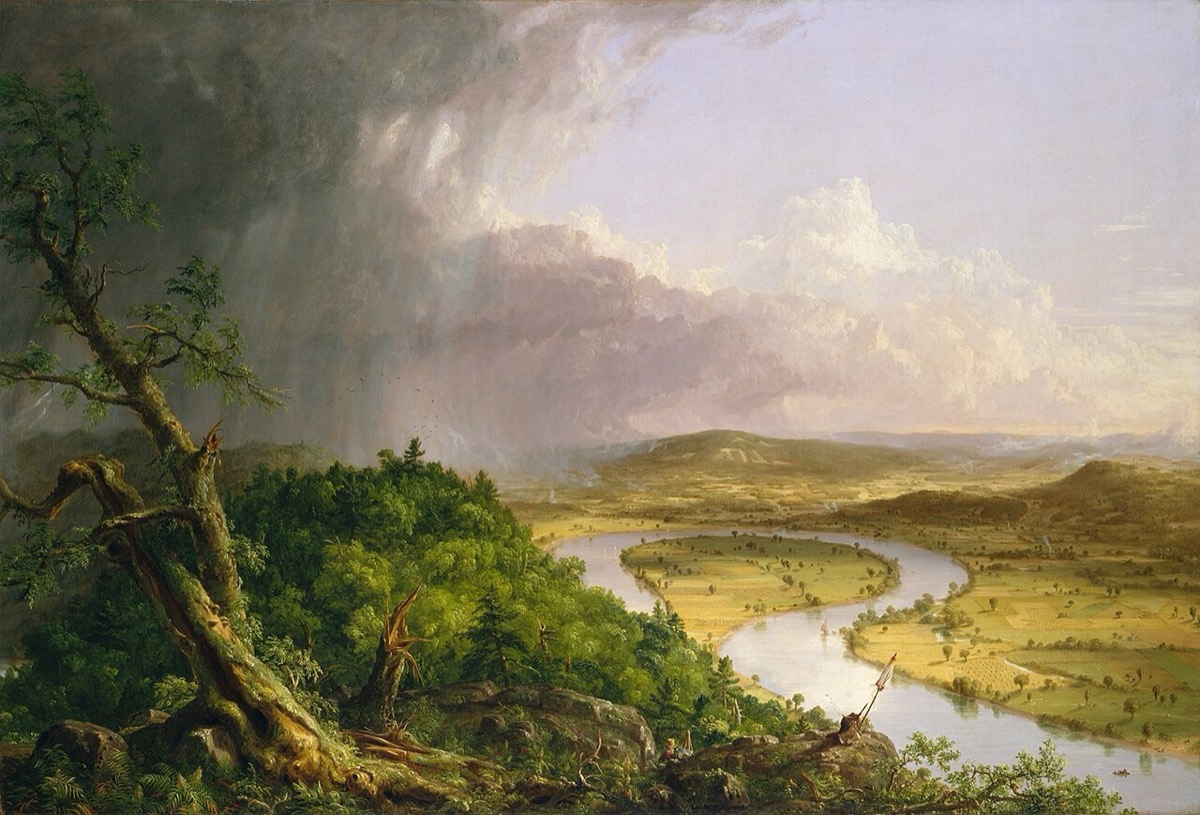
A vast panorama splits down the middle: wild, storm-wracked wilderness on the left, tamed sunlit farmland on the right. Cole made the sublime a moral question for a young nation — wilderness or civilisation? — and hid himself, a tiny figure with an easel, in the foreground. The awe is the scale of a continent, and the anxious choice of what to do with it.
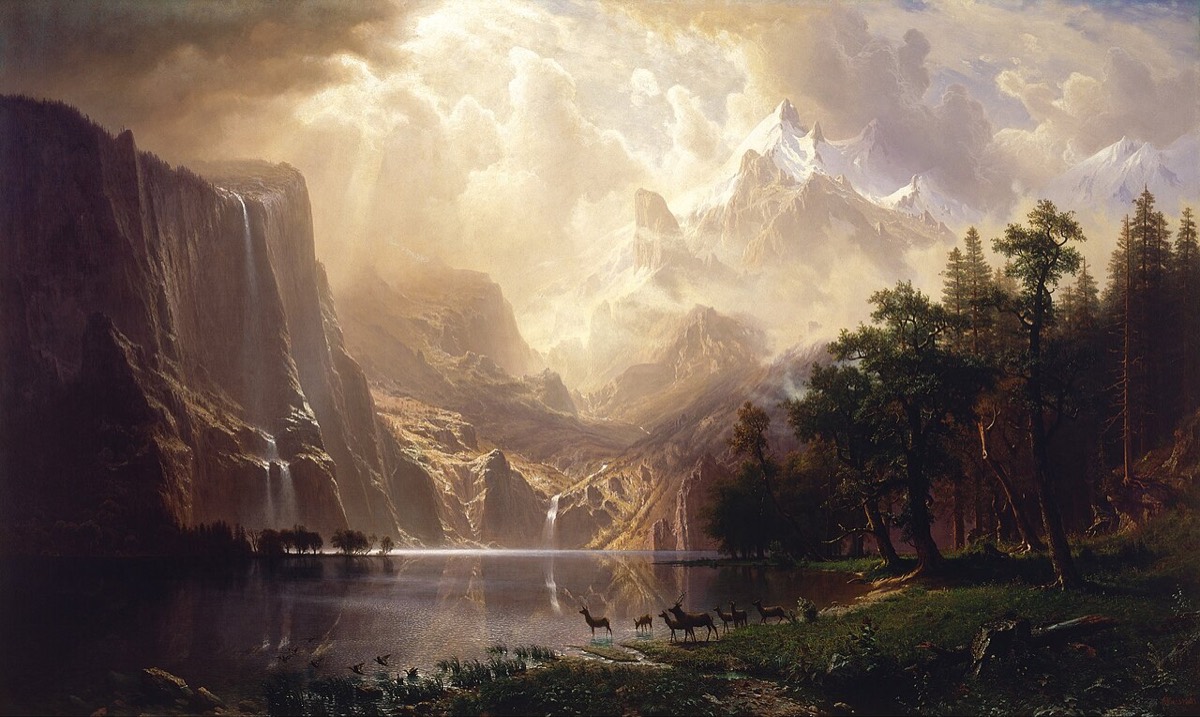
Golden light pours over impossible peaks onto a mirror-still lake — a paradise more theatrical than any real place. Bierstadt turned the sublime into spectacle: awe as a glowing stage set, painted to thrill crowds and feed a nation’s dream of the West. What began as Friedrich’s private shiver has become, fifty years on, a grand public advertisement for grandeur.
What five centuries changed
The sublime is the feeling of being overwhelmed by something vaster than yourself — and across a century art moved it from inward to outward. Friedrich makes you feel it privately, a soul before the infinite. Turner dissolves the world into light. Cole stages a whole continent as a moral drama. Bierstadt turns awe into a paying spectacle. The mountain never changes; what awe is for changes completely — from a Romantic shudder of individual smallness to a national image of glory. It is the same faculty Kant tried to define in words — the mind’s response to a magnitude it cannot contain — painted four different ways.
See these works in print
The definitive books on the sublime in art:
- American Sublime: Landscape Painting in the United States — Andrew Wilton & Tim Barringer
- Caspar David Friedrich and the Subject of Landscape — Joseph Leo Koerner
- Turner: The Extraordinary Life and Momentous Times — Franny Moyle
- The Sublime (Documents of Contemporary Art) — Simon Morley
As an Amazon Associate, ReadGlobe earns from qualifying purchases — at no extra cost to you.
Related on ReadGlobe
Paintings are public domain, sourced from Wikimedia Commons with artist and date verified at source. Editorial synthesis © ReadGlobe.