Immanuel Kant
The Enlightenment thinker who fused reason and experience and rebuilt ethics from duty.
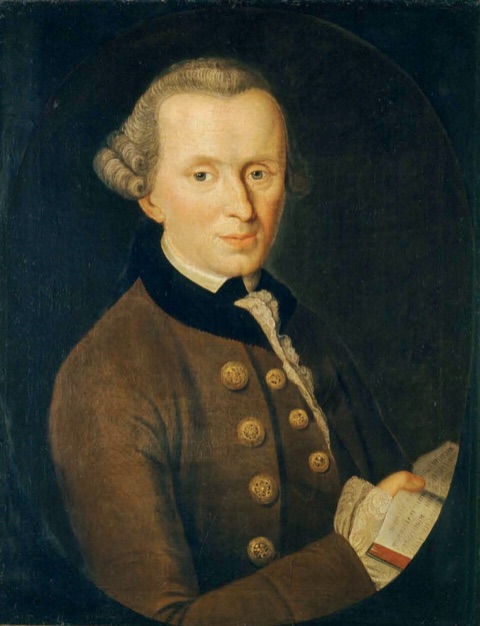
Kant set out to end the standoff between rationalists, who trusted reason alone, and empiricists, who trusted the senses alone. His answer — the "Copernican turn" — was that the mind does not passively receive the world but actively structures it: space, time, and causality are the lenses through which any experience must arrive. In ethics he grounded morality not in consequences or feeling but in reason itself. The categorical imperative commands us to act only on principles we could will to be universal laws, and to treat humanity always as an end, never merely as a means. Working in Königsberg with famous regularity, Kant produced a body of work — the three Critiques — that reset the agenda for philosophy and still frames debates in metaphysics, ethics, and the theory of knowledge.
The mind does not passively receive the world but actively structures it.
Why Immanuel Kant still matters
Kant is the hinge of modern philosophy: he reconciled reason and experience and reset ethics, metaphysics, and aesthetics in the process. Much of the vocabulary of later thought — phenomena vs things-in-themselves, the categorical imperative, the autonomy of reason — is his.
The one big idea
Act only on a principle you could will to be a universal law, and never treat people merely as means but always also as ends. Morality comes from reason and duty, and binds everyone equally.
Commonly misunderstood
Kant’s ethics is caricatured as cold rule-following. Its core is actually respect for persons — the demand to treat every human as an end in themselves is the philosophical root of modern human-rights thinking.
Key ideas
- The Categorical Imperative — Kant's supreme moral rule: act only on a principle you could will everyone to follow, and treat people as ends, never merely as means.
Famous quotes
- “Act only according to that maxim whereby you can at the same time will that it should become a universal law.” — Groundwork of the Metaphysics of Morals
- “Two things fill the mind with ever new and increasing admiration and awe: the starry heavens above me and the moral law within me.” — Critique of Practical Reason
- “Out of the crooked timber of humanity, no straight thing was ever made.” — Idea for a Universal History with a Cosmopolitan Aim
- “Dare to know! Have the courage to use your own reason — that is the motto of enlightenment.” — Answering the Question: What Is Enlightenment?
Influenced by
Compare Immanuel Kant
Frequently asked
- What is the categorical imperative?
- Kant’s supreme moral principle: act only on a maxim you could will to become a universal law, and always treat humanity as an end, never merely as a means — duty derived from reason, binding on all rational beings.
- What did Kant mean by "dare to know"?
- His motto for the Enlightenment (sapere aude): have the courage to use your own reason without relying on others’ authority — humanity’s release from self-imposed immaturity.
- Why is Kant so important in philosophy?
- He bridged rationalism and empiricism, argued the mind actively structures experience, and grounded morality in reason — reshaping ethics, metaphysics, and epistemology for everyone after him.
Where to start with Immanuel Kant
The short answer: Start with the Groundwork of the Metaphysics of Morals — seventy pages containing the categorical imperative. Then the essay "What Is Enlightenment?" and the Prolegomena, Kant’s own primer. The Critique of Pure Reason comes last, not first.
Gentle · start here — no background needed
Groundwork of the Metaphysics of Morals — Immanuel KantStart here
Short, self-contained, and the source of the categorical imperative — the standard first Kant text in every philosophy department.
Which edition: Mary Gregor (Cambridge) is the scholarly standard.
An Answer to the Question: What Is Enlightenment? — Immanuel Kant
A few pages — "Sapere aude, dare to know" — and the clearest statement of what the whole critical project is for.
Kant: A Very Short Introduction — Roger Scruton
An honest map of the whole system in a pocket-sized book — read alongside the primary texts, not instead of them.
Moderate · once the ideas are familiar
Prolegomena to Any Future Metaphysics — Immanuel Kant
Kant’s own attempt to explain the first Critique to baffled readers. The right on-ramp to the big book — he wrote it because nobody understood the original.
Deep end · the demanding texts, worth the climb
Critique of Practical Reason — Immanuel Kant
The mature moral philosophy — freedom, the moral law, and the famous closing line about the starry heavens above and the moral law within.
Critique of Pure Reason — Immanuel Kant
One of the hardest great books ever written — the limits of reason itself. Attempt it after the Prolegomena, with the Guyer/Wood translation and patience.
Which edition: Paul Guyer & Allen Wood (Cambridge) is the modern standard.
Prefer to listen? Most of this list is on Audible — start a free trial and the first one is on the house.
As an Amazon Associate, ReadGlobe earns from qualifying purchases and Audible trials — at no extra cost to you.
What people get wrong about Immanuel Kant
- “The categorical imperative is just the golden rule.”
- Actually: Kant explicitly denies this in a Groundwork footnote. The golden rule depends on what you happen to want; universalizability asks whether the maxim itself could be a law for everyone, regardless of anyone’s preferences.
- “Kant proved you must tell the truth even to a murderer at the door.”
- Actually: Kant really did argue this in a late 1797 essay — but many Kant scholars argue it does not follow from the categorical imperative itself, and it remains one of the most disputed applications in the literature.
- “Noumena are a hidden second world behind this one.”
- Actually: On the widely-held "two-aspect" reading, noumena are not another world but the same things considered apart from how we must experience them. The two-world picture is one interpretation, not the doctrine itself.
The golden-rule footnote is at Groundwork 4:430n. The murderer essay is "On a Supposed Right to Lie from Philanthropy" (1797). Two-aspect vs two-world readings: Allison, Kant’s Transcendental Idealism.
Keep reading
Empathy gap
Full and rested, you plan to resist temptation; hungry, you cave.
Cite this page
ReadGlobe. Immanuel Kant. https://readglobe.com/thinker/immanuel-kant/
"Immanuel Kant." ReadGlobe, readglobe.com/thinker/immanuel-kant/.
Primary source: Wikipedia
Biographical summary synthesised from Wikipedia (CC-BY-SA) and the Stanford Encyclopedia of Philosophy.