Abilene paradox
The Abilene paradox is when a group collectively agrees to a course of action that most or all of its members privately oppose, because each person wrongly assumes the others want it and keeps quiet to avoid rocking the boat.
- 1 min read
- 6 linked ideas
Why does the abilene paradox happen?
The failure is one of communication, not conflict. Each member reads the group from the outside, sees no objections and concludes that their own reluctance is the odd one out. Speaking up then looks like a risk of seeming difficult or disloyal, so people voice support they do not feel. Those false signals of agreement confirm everyone else’s mistaken reading. Jerry Harvey, who described the paradox in 1974, argued that organisations often struggle more to manage agreement than disagreement, because the agreement is never actually stated aloud.
What does the abilene paradox look like in real life?
- Harvey’s own story: his family drove a long way to Abilene on a sweltering Texas afternoon for a mediocre meal, and afterwards it emerged that nobody had wanted to go.
- A team keeps running a weekly meeting that every member privately finds pointless.
- Friends book a holiday none of them is keen on because each thought the others were excited.
How do you counter the abilene paradox?
- Before deciding, ask each person to state their own preference, ideally in writing or anonymously.
- Make it explicit that raising a doubt is helpful, and thank the first person who does.
- Ask the direct question: “If it were only up to you, would you do this?”
Frequently asked
- What is the Abilene paradox in simple terms?
- It is a group agreeing to do something that nobody in the group actually wants, because everyone thinks everyone else wants it. The silence that each person reads as agreement is really shared, unspoken reluctance.
- Where does the name Abilene paradox come from?
- It comes from management expert Jerry B. Harvey, who described a family trip to Abilene, Texas, that every person agreed to and nobody wanted. He used the story in a 1974 article in Organizational Dynamics.
- What is the difference between the Abilene paradox and groupthink?
- In groupthink, pressure for harmony leads members to come round to the group’s view. In the Abilene paradox, members keep their private objections intact but misjudge what others think, so the group acts against nearly everyone’s actual wishes.
- How do you avoid the Abilene paradox?
- Surface private preferences before committing: ask people individually, use anonymous polls, and explicitly invite objections. Once one person admits reluctance, others often reveal they felt the same.
Keep reading
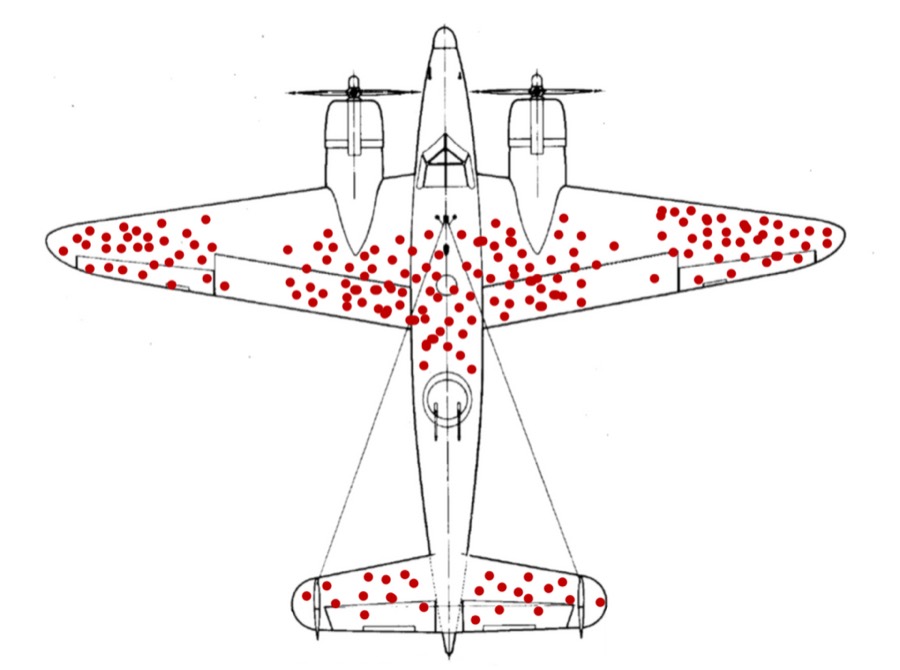
Survivorship bias
Armour the bombers where the survivors show no holes — those hits never came home.
The books behind better thinking
Affiliate links. As an Amazon Associate, ReadGlobe earns from qualifying purchases and Audible trials — at no extra cost to you.
Listen to any of these free. Start a free Audible trial and get your first audiobook on the house.
Prefer to read? The canonical picks:
- Thinking, Fast and Slow — Daniel Kahneman
- The Art of Thinking Clearly — Rolf Dobelli
- The Great Mental Models, Volume 1 — Shane Parrish
- Poor Charlie’s Almanack — Charlie Munger
- Super Thinking — Gabriel Weinberg & Lauren McCann
- Seeking Wisdom — Peter Bevelin
Cite this page
ReadGlobe. (2026). Abilene paradox. https://readglobe.com/bias/abilene-paradox/
"Abilene paradox." ReadGlobe, 24 Oct. 2026, readglobe.com/bias/abilene-paradox/.
Editorial synthesis © ReadGlobe 2026, drawing on Kahneman’s Thinking, Fast and Slow, the Tversky–Kahneman research program, and the primary cognitive-science literature. · Last reviewed 2026-10-24.