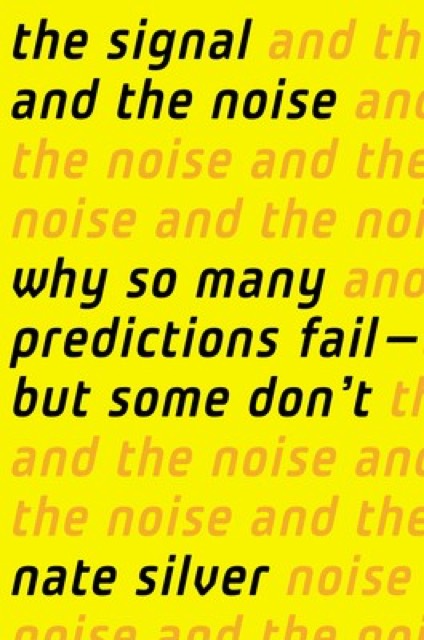
The Signal and the Noise
by Nate Silver
Most predictions fail because forecasters mistake noise for signal and overstate their certainty; better forecasting means thinking in probabilities and revising beliefs as evidence arrives.
What does The Signal and the Noise teach?
Silver surveys forecasting across domains where prediction succeeds and fails: weather, elections, baseball, poker, earthquakes, the 2008 financial crisis, and terrorism. His diagnosis is that the flood of available data has, paradoxically, made many predictions worse, because more information means more noise to mistake for signal, and human confidence rises faster than accuracy. The book's methodological heart is Bayesian thinking: start with a prior estimate, then revise it incrementally as new data arrives, rather than lurching between overconfidence and reversal. He champions calibrated forecasting, where a claim of seventy percent should prove right roughly seventy percent of the time, and shows why the best forecasters stay humble, hedge, and think like foxes rather than hedgehogs. Rigorous but accessible, it suits anyone who consumes forecasts and wants to know which deserve trust.
Which ideas does The Signal and the Noise explain?
Read the idea in two minutes, then read the book behind it.
Read or listen to The Signal and the Noise
Hear the whole book free: start an Audible trial and your first audiobook — this one, if you like — is on the house.
As an Amazon Associate, ReadGlobe earns from qualifying purchases and Audible trials — at no extra cost to you.