The best books on making better decisions
Five books that turn decision-making from instinct into discipline: how the mind misfires, how to think in odds instead of certainties, and how to weigh risk when the future is unknowable. Read in this order to move from diagnosis to a working method.
Listen to any of these free. Start an Audible trial and your first audiobook — any book on this list — is on the house.
- 1
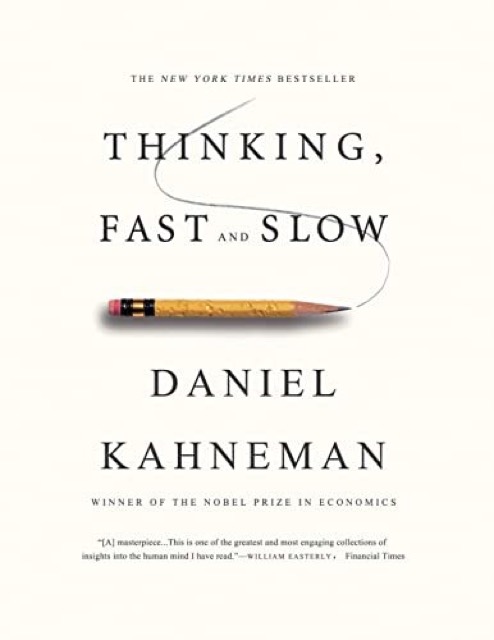
Thinking, Fast and Slow
Daniel KahnemanStart here, because every later book assumes you know how judgment fails. The Nobel laureate maps two mental systems—fast intuition and slow deliberation—and catalogs the biases that hijack the first: anchoring, loss aversion, framing, the availability heuristic. It names the enemy. The rest of this list is the counterattack.
- 2
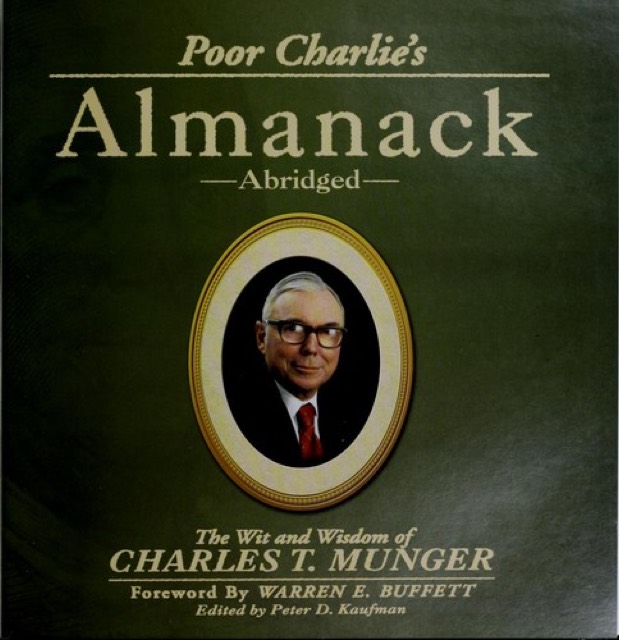
Poor Charlie's Almanack
Charlie MungerMunger's answer to Kahneman's biases: build a latticework of mental models drawn from many disciplines, then invert. Rather than ask how to succeed, he asks how to fail—and avoids that. His insistence on staying inside your circle of competence and following incentives turns Kahneman's warnings into working habits.
- 3
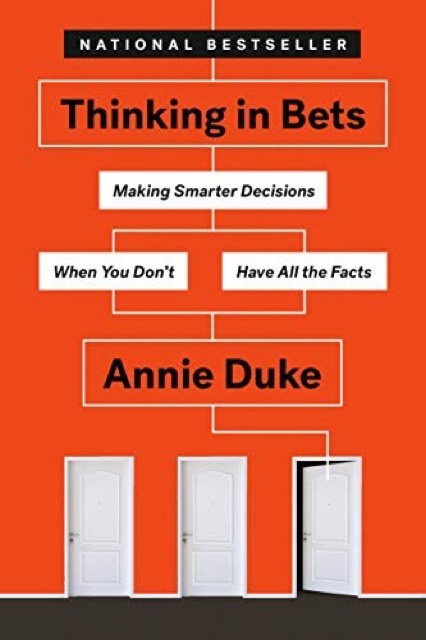
Thinking in Bets
Annie DukeA former professional poker player reframes every choice as a bet under uncertainty. Duke separates decision quality from outcome quality—her term is 'resulting'—so a good call that turns out badly isn't proof you were wrong. She operationalizes probabilistic thinking, giving Munger's models a scorecard and a language of expected value.
- 4
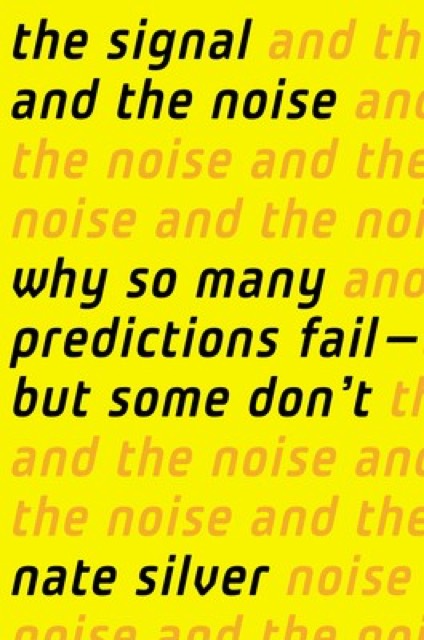
The Signal and the Noise
Nate SilverWhere Duke thinks in bets, Silver thinks in forecasts. Surveying poker, weather, elections, and earthquakes, he shows why most predictions fail: we mistake noise for signal and cling to first guesses. His remedy is Bayesian—update beliefs as evidence arrives—turning probabilistic thinking into a repeatable method for reading an uncertain world.
- 5
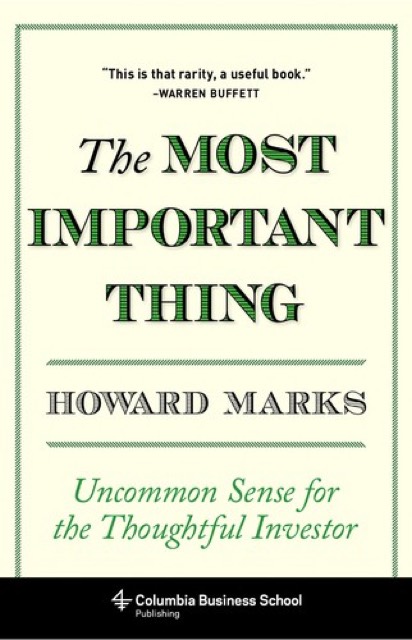
The Most Important Thing
Howard MarksThe investor's capstone, and the hardest-won lessons here. Marks argues that real risk isn't price volatility but the permanent loss of capital, and that surviving requires second-order thinking—asking what everyone else has already concluded. His case for a margin of safety closes the list: how to decide well when being wrong is expensive.
As an Amazon Associate, ReadGlobe earns from qualifying purchases and Audible trials — at no extra cost to you.