The best books on cognitive biases
The essential shelf on why the mind misjudges. Four books map the errors baked into human thought: Kahneman's dual-system architecture, Cialdini's levers of persuasion, and Taleb's twin studies of how randomness and rare events fool us. Read in this order, each explains a different way certainty deceives.
Listen to any of these free. Start an Audible trial and your first audiobook — any book on this list — is on the house.
- 1
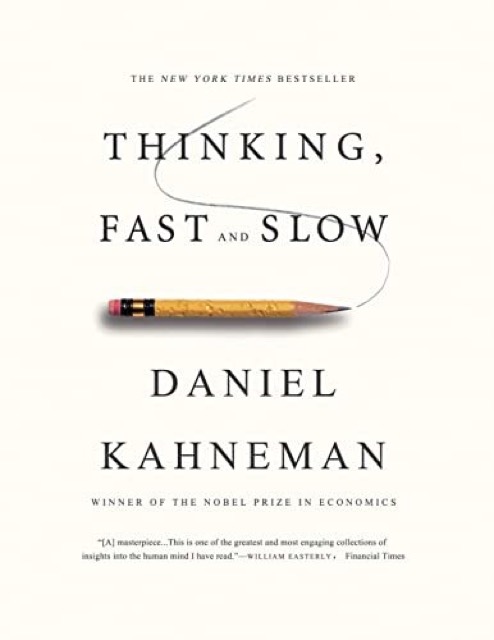
Thinking, Fast and Slow
Daniel KahnemanThe foundation. Kahneman, a psychologist who won the Nobel in economics, distills decades of research into a single frame: a fast, intuitive System 1 and a slow, deliberate System 2. From it flow anchoring, loss aversion, framing, and the availability heuristic. Read it first; the later books assume the vocabulary it establishes.
- 2
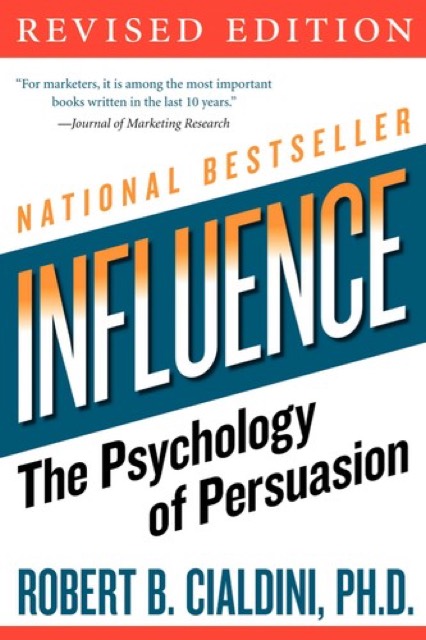
Influence: The Psychology of Persuasion
Robert CialdiniCialdini turns the lens outward: how others exploit your biases on purpose. Six principles—reciprocity, social proof, authority, scarcity, commitment, liking—show the same shortcuts Kahneman describes being weaponized by salespeople and marketers. Where the first book explains the error, this one names the people profiting from it, with field research to back each claim.
- 3
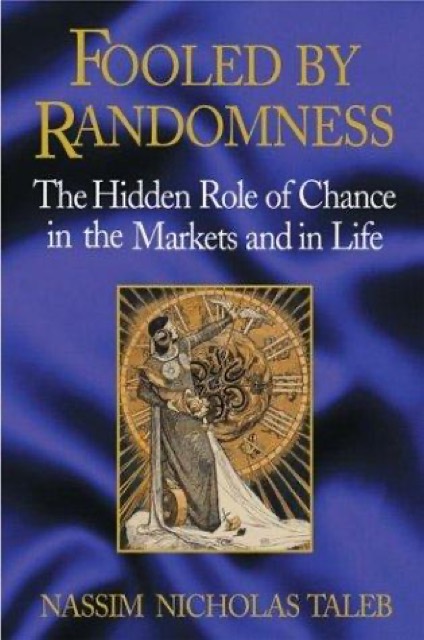
Fooled by Randomness
Nassim Nicholas TalebTaleb's first major book, and the right entry to his thinking before The Black Swan. He dismantles our habit of mistaking luck for skill, especially in markets, and exposes survivorship bias—we study winners and ignore the graveyard of the equally clever who failed. A sharper, more personal complement to Kahneman's account of misjudged probability.
- 4
The Black Swan
Nassim Nicholas TalebThe capstone. Taleb argues that history turns on rare, unpredictable events we rationalize only in hindsight through the narrative fallacy. Building on the survivorship bias of Fooled by Randomness, he shows why our models of a bell-curve world fail against fat-tailed reality. The most ambitious book here, and the one that reframes everything before it.
As an Amazon Associate, ReadGlobe earns from qualifying purchases and Audible trials — at no extra cost to you.