Bayesian Thinking vs Base-Rate Neglect
These are the cure and the disease. Base-rate neglect is the error of ignoring how common something is when weighing new evidence. Bayesian thinking is the discipline that fixes it — starting from the base rate, then updating in proportion to the evidence's strength.
| Dimension | Bayesian Thinking | Base-Rate Neglect |
|---|---|---|
| What it is | A reasoning discipline (the tool) | A cognitive bias (the error) |
| Treatment of priors | Starts from the base rate, then updates | Ignores the base rate entirely |
| Driven by | Prior probability × evidence strength | Vivid, specific detail |
| Result | Calibrated, proportioned belief | Over-confident judgement from a single cue |
| Classic test | Correctly solving the medical-test puzzle | Forgetting how rare the disease is |
A disease and its cure
Most pairs of ideas are contrasts. This one is a remedy and the ailment it treats. Base-rate neglect is the specific failure of human judgement that Bayesian thinking was, in effect, designed to correct. To understand either fully, you study them together: the bias shows you the hole, the discipline shows you how to fill it.
The base-rate trap
Imagine a disease affecting 1 in 1,000 people and a test that is 99% accurate. You test positive. Most people guess you are almost certainly ill. But because the disease is so rare, the false positives vastly outnumber the true ones — your real chance of being sick is roughly 9%. Base-rate neglect is forgetting that the prior rarity dominates the vivid "99% accurate" headline.
The Bayesian correction
Bayesian thinking refuses to throw away the base rate. It treats belief as a starting probability (the prior) that gets revised by new evidence — but only in proportion to how diagnostic that evidence really is. Strong evidence moves you a lot; weak evidence moves you a little; and the rarer the thing, the more evidence you need before you should believe it's happening.
Why the bias is so sticky
Base rates are abstract and forgettable; specific stories are vivid and persuasive. A detailed description of a quiet, bookish person feels like a librarian — even though there are vastly more salespeople than librarians, so the base rate alone makes "salesperson" likelier. The Bayesian habit is to consciously ask, before judging, "how common is this in the first place?"
The verdict
You cannot really separate these: base-rate neglect is the default human setting, and Bayesian thinking is the deliberate override. The practical takeaway is a single habit — before letting any striking piece of evidence convince you, anchor on the base rate, then update by an amount that matches how strong the evidence truly is. Do that, and the most common error in probabilistic judgement quietly disappears.
Frequently asked
- Is base-rate neglect the opposite of Bayesian thinking?
- In effect, yes. Bayesian thinking insists you start from the base rate and update with evidence; base-rate neglect is the failure to use the base rate at all. The bias is precisely the error the discipline prevents.
- Do I need maths to think like a Bayesian?
- No formal calculation is required day to day. The core habit is qualitative: ask 'how common is this normally?' before updating, and move your belief more for strong evidence than weak. The arithmetic only formalises that instinct.
- Why do vivid details cause base-rate neglect?
- Specific, story-like information feels representative and grabs attention, while abstract frequencies are easy to ignore. The mind substitutes "how well does this match a stereotype?" for "how likely is this given how common it is?" — dropping the base rate in the process.
Explore further
More comparisons
Keep reading
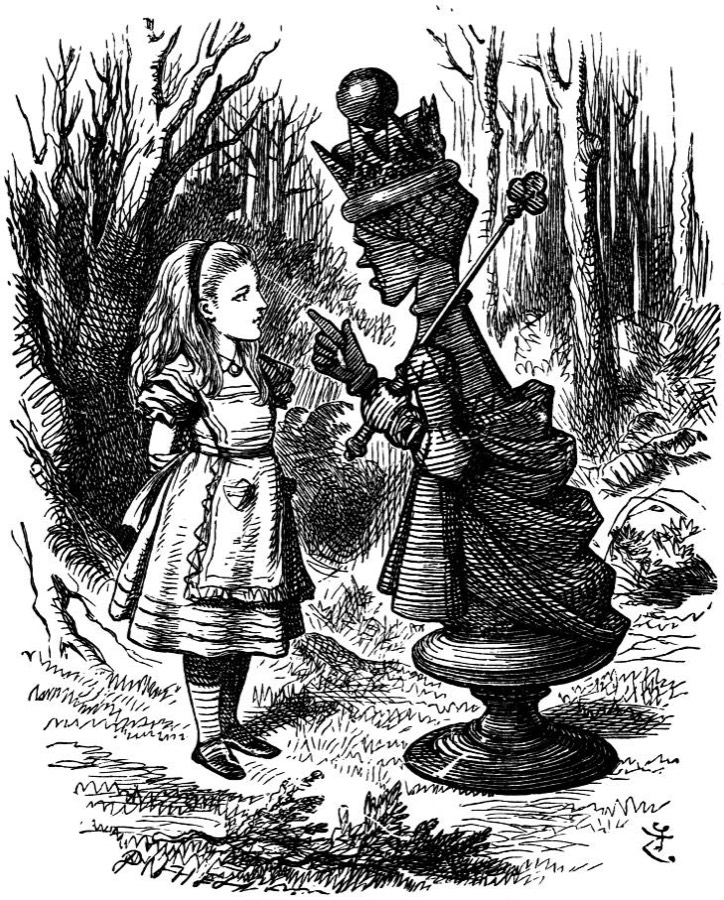
Red Queen effect
Faster cheetahs breed faster gazelles; both sprint harder just to stay even.
Go deeper
Affiliate links. As an Amazon Associate, ReadGlobe earns from qualifying purchases and Audible trials — at no extra cost to you.
The book behind this idea: The Signal and the Noise by Nate Silver. Hear the whole thing free — start an Audible trial and your first audiobook is on the house.
Read the full summary of The Signal and the Noise →
More canonical picks:
- Thinking, Fast and Slow — Daniel Kahneman
- The Art of Thinking Clearly — Rolf Dobelli
- The Great Mental Models, Volume 1 — Shane Parrish
- Poor Charlie’s Almanack — Charlie Munger
- Super Thinking — Gabriel Weinberg & Lauren McCann
- Seeking Wisdom — Peter Bevelin
Primary sources: Bayesian Thinking (Wikipedia) · Base-Rate Neglect (Wikipedia)
Editorial synthesis © ReadGlobe 2026, drawing on Bayes’ theorem, the judgement-under-uncertainty literature (Kahneman, Tversky), and the mental-models tradition. · Last reviewed 2026-05-29.