Inversion vs Second-Order Thinking
Both improve decisions by looking beyond the obvious, differently. Inversion works backward from failure — 'what would guarantee disaster?' — then avoids it. Second-order thinking works forward — 'and then what?' — tracing consequences over time. One prevents the worst; the other anticipates the downstream.
| Dimension | Inversion | Second-Order Thinking |
|---|---|---|
| Direction | Backward from the bad outcome | Forward through the consequences |
| Core question | What would make this fail? | And then what happens next? |
| Goal | Avoid catastrophe and stupidity | See the delayed and downstream effects |
| Output | A list of failure modes to prevent | A chain of first-, second-, third-order effects |
| Strength | Surfacing hidden risks | Catching consequences others miss |
Two upgrades to ordinary decision-making
Most decisions are made forward and shallow: pick the option with the best obvious outcome. Inversion and second-order thinking both deepen this, but along different lines. Inversion flips the direction — start from the failure you want to avoid. Second-order thinking extends the depth — keep following the effects past the first, pleasant one. Reversal versus extension.
Inversion: start from the disaster
Inversion asks not "how do I succeed?" but "what would guarantee failure?" — then works to eliminate those conditions. "Tell me where I'm going to die, so I'll never go there," as Munger put it. By making failure modes explicit, inversion surfaces risks that forward-only planning glosses over, and it is often easier to avoid known ways of being stupid than to engineer brilliance.
Second-order thinking: follow the chain
Second-order thinking keeps asking "and then what?" The first-order effect of a decision is the immediate one; the second- and third-order effects are what follow from that. A price cut's first-order effect is more sales; its second-order effect may be a price war and eroded margins. Most people judge by first-order effects alone, which is exactly where many decisions go wrong.
Where they meet and differ
They overlap — a thorough inversion often involves tracing how a chain of consequences could end in disaster, which is second-order thinking pointed at failure. But their defaults differ: inversion is fundamentally about *avoidance* (what to prevent), while second-order thinking is about *anticipation* (what will unfold, good or bad). Inversion narrows toward the catastrophic; second-order thinking maps the whole downstream, including upside.
The verdict
Run both before a big decision. Use second-order thinking to trace where each option actually leads over time — past the seductive first effect. Then invert: ask what would make your chosen path fail, and remove those risks before committing. Anticipation tells you where you're going; inversion makes sure you don't walk into a known disaster on the way. Foresight plus failure-proofing.
Frequently asked
- What is the difference between inversion and second-order thinking?
- Inversion works backward from failure — "what would guarantee disaster?" — then avoids it. Second-order thinking works forward — "and then what?" — tracing consequences over time. One is about preventing the worst; the other about anticipating downstream effects.
- Can you use inversion and second-order thinking together?
- Yes, and it is ideal. Use second-order thinking to map where each option leads, then invert to identify and remove the conditions that would make your chosen path fail. Anticipation plus failure-proofing produces far more robust decisions.
- Is inversion a kind of second-order thinking?
- They overlap — a thorough inversion often traces a chain of consequences toward failure. But inversion defaults to avoidance (what to prevent), while second-order thinking maps the full downstream including upside. Related tools with different emphases.
Explore further
More comparisons
Keep reading
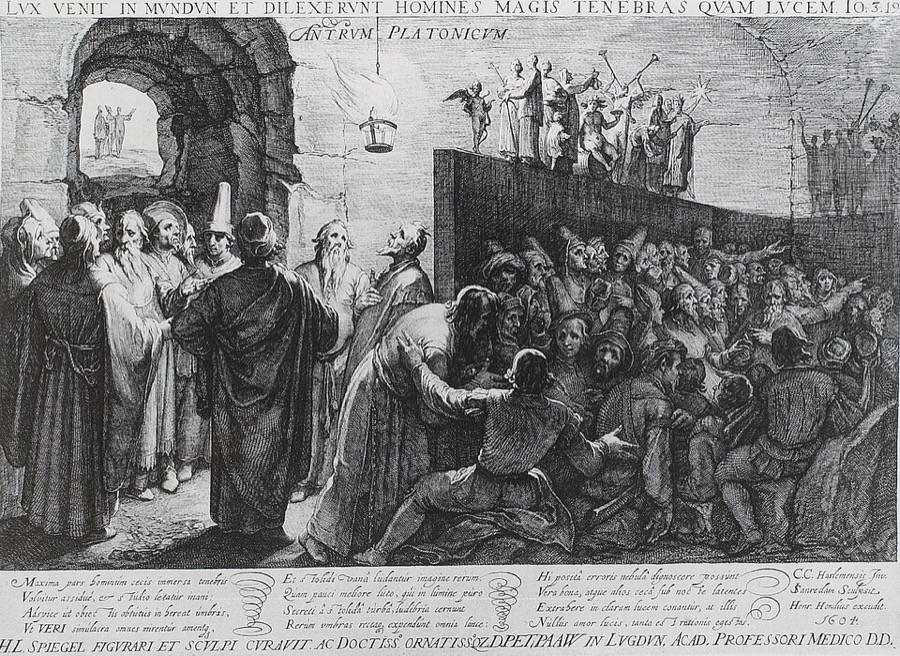
The Allegory of the Cave
Freed from the cave, the prisoner climbs to the light — and the others reject what he brings back.
Go deeper
Affiliate links. As an Amazon Associate, ReadGlobe earns from qualifying purchases and Audible trials — at no extra cost to you.
The book behind this idea: Poor Charlie's Almanack by Charlie Munger. Hear the whole thing free — start an Audible trial and your first audiobook is on the house.
Read the full summary of Poor Charlie's Almanack →
More canonical picks:
- Thinking, Fast and Slow — Daniel Kahneman
- The Art of Thinking Clearly — Rolf Dobelli
- The Great Mental Models, Volume 1 — Shane Parrish
- Super Thinking — Gabriel Weinberg & Lauren McCann
- Seeking Wisdom — Peter Bevelin
Primary source: Second-Order Thinking (Wikipedia)
Editorial synthesis © ReadGlobe 2026, drawing on the mental-models tradition (Charlie Munger on inversion; Howard Marks on second-order thinking). · Last reviewed 2026-05-29.