First-principles thinking
First-principles thinking is breaking a problem down to its most basic, undeniable truths and reasoning up from there — rather than reasoning by analogy to how things are usually done. It strips away inherited assumptions and rebuilds from the ground.
✦ Foundational — cross-referenced 41× across this reference (26 related ideas · 7 comparisons · 5 hubs · 2 books) · The State of Thinking 2026 →
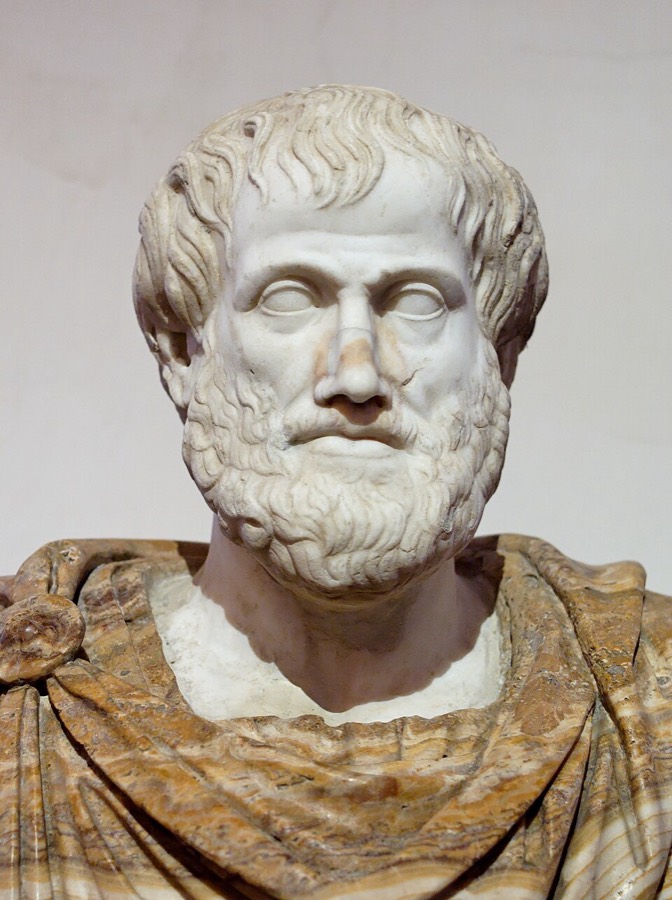
Bust of Aristotle, Roman copy after Lysippos · public domain
How does first-principles thinking work?
Instead of accepting inherited conclusions (“this is how it’s done”), you ask “what do I actually know to be fundamentally true?” and reconstruct the solution from those atoms — exposing assumptions that were never necessary in the first place.
A scalpel, not a default — reserve it for the few decisions that justify tearing everything down to bedrock.
How do you use first-principles thinking?
- When an industry’s “rules” seem expensive or arbitrary, decompose the constraint to its underlying physics or economics.
- When you catch yourself copying competitors, ask what the goal genuinely requires, from scratch.
- When an assumption is treated as fixed, test whether it’s a law or merely a convention.
What does first-principles thinking look like in practice?
Rather than accept that battery packs “cost $600/kWh because they always have,” break the cost into raw materials — cobalt, nickel, carbon — priced on the commodity market. The floor turns out to be far lower, revealing a path to build them differently. This is famously how Tesla reframed battery cost.
Where does first-principles thinking fail?
It’s slow and effortful — most decisions don’t justify rebuilding from scratch. Applied to everything, it wastes time re-deriving what convention already got right.
- Your 'basic truths' may themselves be assumptions in disguise — the method only works if the foundations are genuinely verified, not just felt to be fundamental.
- In domains governed by social convention rather than physics — law, etiquette, markets — the 'arbitrary' rules often are the territory, and deriving around them fails.
- Reasoning from scratch discards accumulated tacit knowledge; a first-principles redesign can quietly reintroduce failure modes that tradition had already engineered out.
The counter-model: Chesterton's fence — First-principles thinking tears down inherited structure to rebuild; Chesterton's fence insists you first understand why the structure exists — the two together prevent both stagnation and naive demolition.
How do you apply first-principles thinking, step by step?
- Pick one decision where the standard approach feels expensive, slow, or arbitrary.
- List every assumption embedded in the standard approach, including ones nobody states aloud.
- Test each assumption: is it a physical constraint, a regulation, or merely habit?
- Keep only the constraints that survive; discard the habits.
- Rebuild the solution using just the surviving constraints, then compare its cost against the conventional path.
The deeper point
The real skill isn’t reasoning from first principles — almost anyone can in theory. It’s knowing the few decisions that justify the cost. First-principles thinking is a scalpel, not a default; for everything else, reasoning by analogy is faster and usually right.
Frequently asked
- What is first-principles thinking?
- Reasoning from fundamental, undeniable truths rather than by analogy — decomposing a problem to what’s basically true and rebuilding the solution from those basics.
- What is the opposite of first-principles thinking?
- Reasoning by analogy — copying how things are usually done. It’s faster but silently inherits assumptions that first-principles thinking exposes.
- When should you use first-principles thinking?
- On high-stakes problems where convention looks expensive or arbitrary. For routine choices, reasoning by analogy is faster and usually good enough.
Compared side by side
Related
Keep reading
Switching costs
Cheaper and slicker isn't enough when leaving means chaos, retraining, and downtime.
See this alongside the other thinking tools of building a startup, negotiation, product management, learning and writing clearly.
Go deeper
Affiliate links. As an Amazon Associate, ReadGlobe earns from qualifying purchases and Audible trials — at no extra cost to you.
The book behind this idea: The Great Mental Models, Volume 1 by Shane Parrish. Hear the whole thing free — start an Audible trial and your first audiobook is on the house.
Read the full summary of The Great Mental Models, Volume 1 →
More canonical picks:
- Thinking, Fast and Slow — Daniel Kahneman
- The Art of Thinking Clearly — Rolf Dobelli
- Poor Charlie’s Almanack — Charlie Munger
- Super Thinking — Gabriel Weinberg & Lauren McCann
- Seeking Wisdom — Peter Bevelin
Cite this page
ReadGlobe. (2026). First-principles thinking. https://readglobe.com/model/first-principles-thinking/
"First-principles thinking." ReadGlobe, 29 May 2026, readglobe.com/model/first-principles-thinking/.
Primary source: Wikipedia
Editorial synthesis © ReadGlobe 2026, drawing on the mental-models tradition (Charlie Munger, Farnam Street) and the primary sources for each model. · Last reviewed 2026-05-29.