Reactance
Reactance is the urge to do the opposite of what you’re told when you feel your freedom of choice is being threatened. A heavy-handed rule, ban, or hard sell can trigger resistance — making the forbidden option suddenly more appealing.
- 1 min read
- 6 linked ideas
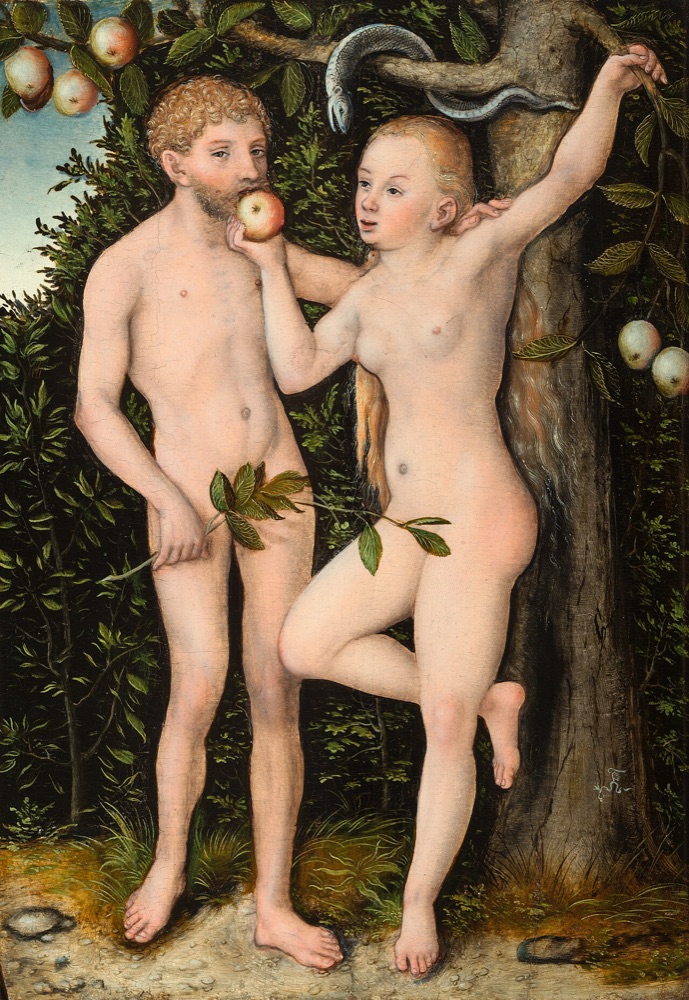
Of every tree in Eden only one was forbidden, and it is precisely that fruit the pair cannot resist — the archetype of reactance, where a single prohibition makes the barred thing suddenly irresistible.
Lucas Cranach the Elder, Adam and Eve (c. 1538) · Public domain
Why does reactance happen?
We value our autonomy, and a perceived attempt to control us registers as a threat to it. Restoring the threatened freedom — by resisting, defying, or wanting the restricted thing more — relieves that discomfort. The stronger and more controlling the pressure, the stronger the push-back.
People will defend a freedom they don't even want to use — the persuasive move is to hand control back.
What does reactance look like in real life?
- Wanting a banned book or film far more precisely because it was banned.
- A teenager doing the opposite of a parent’s blunt command.
- Aggressive "buy now or lose out" tactics making a customer walk away.
How do you counter reactance?
- When persuading, preserve the other person’s sense of choice ("it’s up to you") to lower defences.
- In yourself, separate "do I actually want this?" from "am I just resisting being told?"
- Beware marketers who weaponise bans and scarcity to trigger your reactance.
The deeper point
It is why prohibition so often backfires and why "you can’t make me" outlasts most arguments: people will defend a freedom they don’t even want to use. The most persuasive move is usually to hand control back, not to grab for more.
Frequently asked
- What is psychological reactance?
- It is the impulse to resist or do the opposite when you feel your freedom of choice is being threatened — by a rule, ban, or hard sell — which can make the restricted option more appealing than it was.
- What is an example of reactance?
- Telling people not to do something often makes them want to do it more — the "forbidden fruit" effect. Bans on books or products frequently boost their appeal precisely because the ban threatens free choice.
- How do you avoid triggering reactance?
- Preserve the other person’s sense of autonomy — emphasise that the choice is theirs, avoid controlling language, and don’t use heavy-handed pressure, which provokes resistance rather than compliance.
Keep reading
The cobra effect
Pay a bounty on dead cobras and someone, the story goes, will start breeding them.
See this alongside the other thinking tools of negotiation and persuasion & marketing.
This bias distorts negotiation.
The books behind better thinking
Affiliate links. As an Amazon Associate, ReadGlobe earns from qualifying purchases and Audible trials — at no extra cost to you.
Listen to any of these free. Start a free Audible trial and get your first audiobook on the house.
Prefer to read? The canonical picks:
- Thinking, Fast and Slow — Daniel Kahneman
- The Art of Thinking Clearly — Rolf Dobelli
- The Great Mental Models, Volume 1 — Shane Parrish
- Poor Charlie’s Almanack — Charlie Munger
- Super Thinking — Gabriel Weinberg & Lauren McCann
- Seeking Wisdom — Peter Bevelin
Cite this page
ReadGlobe. (2026). Reactance. https://readglobe.com/bias/reactance/
"Reactance." ReadGlobe, 29 May 2026, readglobe.com/bias/reactance/.
Primary source: Wikipedia
Editorial synthesis © ReadGlobe 2026, drawing on Kahneman’s Thinking, Fast and Slow, the Tversky–Kahneman research program, and the primary cognitive-science literature. · Last reviewed 2026-05-29.