Circle of competence
Your circle of competence is the set of areas where you genuinely have expertise. The model says: know its boundary, operate inside it, and be honest about what lies outside — because most costly errors come from acting confidently beyond your real knowledge.
✦ Foundational — cross-referenced 28× across this reference (13 related ideas · 4 comparisons · 4 hubs · 6 books) · The State of Thinking 2026 →
How does circle of competence work?
What matters isn’t how big the circle is but how well you know its edge. Staying inside it, and either learning or deferring at the boundary, prevents the overconfident mistakes that do the real damage.
The danger isn't the edge of what you know — it's that the edge drifts outward whenever your ego is involved.
How do you use circle of competence?
- Before a big decision, ask honestly: is this inside my circle, or am I guessing?
- Outside your circle, defer to genuine experts — or simply decline.
- Expand the circle deliberately over time, but never pretend it’s already bigger than it is.
What does circle of competence look like in practice?
Warren Buffett avoided technology stocks for decades — not because they were bad investments, but because they sat outside his circle. He compounded enormous returns by hitting the easy pitches inside it and ignoring everything else.
Where does circle of competence fail?
Used as an excuse, it justifies never learning anything new. The point is honesty about the edge plus deliberate expansion — not permanent comfort.
- The boundary is self-assessed, and the least competent are the worst judges of it — the model presumes a calibration that incompetence itself removes.
- Competence decays: a circle mapped years ago in a fast-moving field marks where your edge was, not where it is.
- Some decisions cannot wait for competence — a medical or legal choice may force you outside the circle, where the model offers no guidance beyond 'borrow judgment.'
The counter-model: The Dunning–Kruger effect — The circle of competence assumes you can locate your own boundary; the Dunning-Kruger effect shows the boundary is least visible exactly where competence is lowest — so verify the edge with external evidence, not confidence.
How do you apply circle of competence, step by step?
- Before a consequential decision, write down the domain it actually belongs to.
- List your concrete track record in that domain: outcomes, not opinions.
- If the record is thin, name a specific person or source with a real record there.
- Either defer to that judgment or explicitly shrink the bet to learning size.
- Log the decision and outcome to sharpen your map of the boundary.
The deeper point
The danger isn’t the edge of your competence — it’s that the edge is fuzzy and drifts outward whenever your ego is involved. Knowing what you don’t know is a skill that degrades precisely when the stakes, and your confidence, rise.
Frequently asked
- What is the circle of competence?
- The range of subjects you truly understand. The model urges you to operate within it and stay honest about its edge, since errors cluster just outside it.
- Who came up with the circle of competence?
- Warren Buffett and Charlie Munger popularised it: “Know your circle of competence, and stick within it. The size of that circle is not very important; knowing its boundaries is vital.”
- How do you expand your circle of competence?
- Deliberately, through study and experience — while being honest that you’re still at the boundary, not yet inside it.
Compared side by side
Related
Keep reading
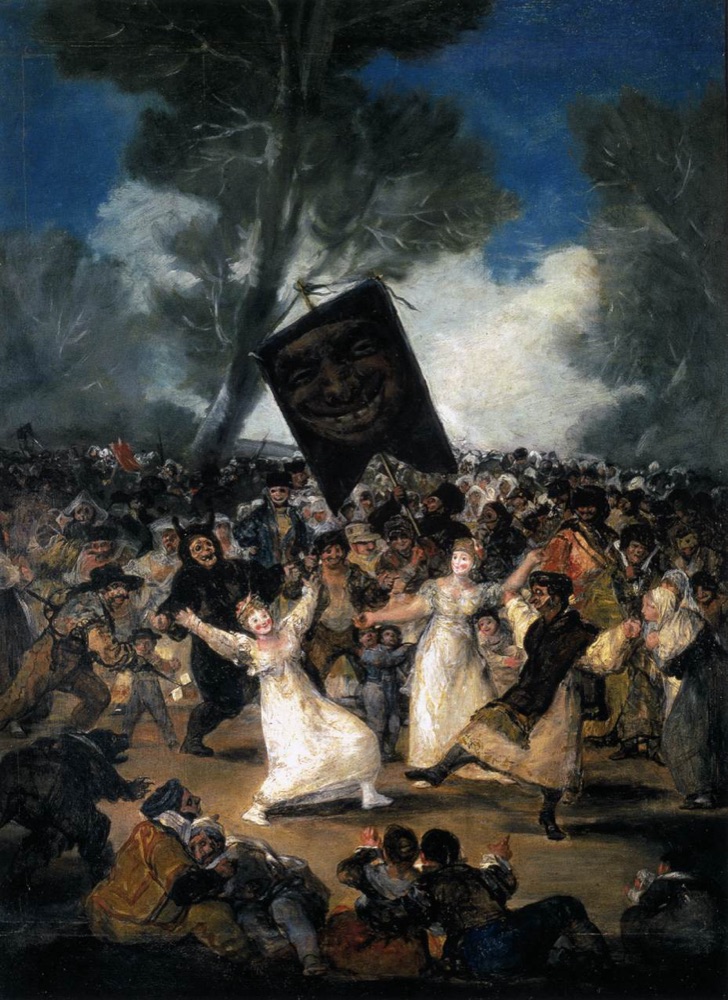
Bandwagon effect
Popularity starts to function as evidence — and the pile-in feeds on itself.
See this alongside the other thinking tools of investing, career growth, learning and writing clearly.
Go deeper
Affiliate links. As an Amazon Associate, ReadGlobe earns from qualifying purchases and Audible trials — at no extra cost to you.
The book behind this idea: Poor Charlie's Almanack by Charlie Munger. Hear the whole thing free — start an Audible trial and your first audiobook is on the house.
Read the full summary of Poor Charlie's Almanack →
More canonical picks:
- Thinking, Fast and Slow — Daniel Kahneman
- The Art of Thinking Clearly — Rolf Dobelli
- The Great Mental Models, Volume 1 — Shane Parrish
- Super Thinking — Gabriel Weinberg & Lauren McCann
- Seeking Wisdom — Peter Bevelin
Cite this page
ReadGlobe. (2026). Circle of competence. https://readglobe.com/model/circle-of-competence/
"Circle of competence." ReadGlobe, 29 May 2026, readglobe.com/model/circle-of-competence/.
Primary source: Wikipedia
Editorial synthesis © ReadGlobe 2026, drawing on the mental-models tradition (Charlie Munger, Farnam Street) and the primary sources for each model. · Last reviewed 2026-05-29.