Mental models for writing clearly
Mental models for writing and thinking clearly are compact reasoning tools — first-principles thinking, Occam's razor, via negativa, the map-is-not-the-territory — that help you strip an idea to its essentials, cut what obscures it, and put it on the page so a reader grasps it exactly.
The load-bearing ideas: First-principles thinking, Via negativa, Occam’s razor, Inversion, The curse of knowledge.
Where to start, by situation
Explaining fails when you forget what the reader doesn't yet know. Write from fundamentals, stay inside what you genuinely understand, and don't trust your own sense of clarity.
- The curse of knowledgeStart hereOnce you understand your own point you can't un-know it, so you skip what the reader needs.
An argument is only as honest as the evidence you let in. Framing and the most vivid example decide whether you convince a reader or quietly mislead them — and yourself.
- Confirmation biasStart hereArguing a thesis, you unconsciously gather only supporting evidence — the first thing to correct for.
A draft improves most by subtraction, not addition — cut throat-clearing, filler, and hedges. But cut with care: an odd caveat or transition may be load-bearing.
- Via negativaStart hereEditing is subtraction in action — you sharpen prose far more by deleting than by adding.
The mental models
- First-principles thinking
Clear writing starts with clear thinking: strip the idea down to what you actually know to be true and build the sentence up from there, instead of recycling borrowed phrasing or a fashionable analogy. When you can't reason a claim from its foundations, that's the muddle the reader will feel.
- Via negativa
Clarity is mostly subtraction. Editing is via negativa in action — you improve a draft far more by deleting the redundant clause, the hedging adverb, and the sentence that says nothing than by adding more. Ask what to cut before you ask what to add.
- Occam’s razor
Prefer the plainest account that still fits: the sentence with the fewest moving parts, the explanation that assumes the least. When a passage needs elaborate scaffolding to make sense, that's a signal the underlying thought — or its phrasing — is more complicated than it needs to be.
- Inversion
To write clearly, first ask how you'd make this maximally confusing — bury the point, pile on jargon, invert the logic — then delete exactly those moves. To test an argument, don't defend it; try to demolish it, and keep only what survives.
- The map is not the territory
Your words are a map of the idea, never the idea itself — so watch for the moment a neat phrase feels true because it's neat, not because it's accurate. Good writing keeps checking the sentence against the reality it describes, and flags where the description simplifies.
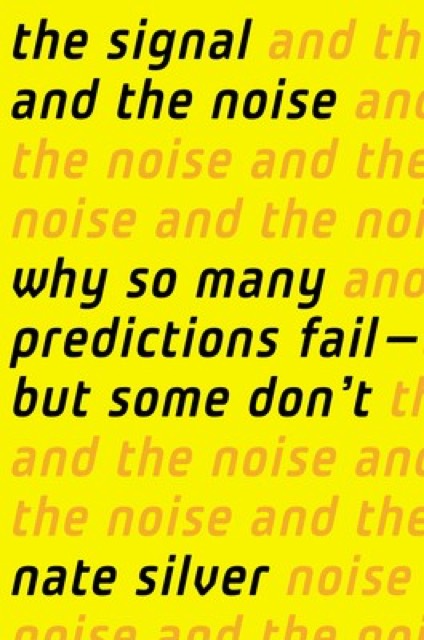
- Signal vs noise
A clear piece has a high signal-to-noise ratio: the core message stands out and the filler, throat-clearing, and decoration are stripped away. Before you send anything, find the signal — the one thing it must say — and cut whatever competes with it for the reader's attention.
- The Pareto principle
In most drafts a small fraction of the words carries almost all of the meaning. Find that vital 20% — the load-bearing sentences and the one example that lands — and make the rest earn its place or go. It's also how you triage limited editing time.
- The framing effect
The same true point can be framed many ways, and the framing decides whether a reader grasps it or bounces off. Choosing 'nine in ten succeed' over 'one in ten fail' is a writer's tool — used to reveal the idea plainly, never to distort it.
- Streetlight effect
Muddled thinking often comes from writing about the part of a question that's easy to articulate rather than the part that actually matters. Notice when you're circling the well-lit, quotable edge of a topic, and steer back to the harder crux the reader really needs answered.
- Chesterton's fence
The counterweight to ruthless cutting: before you delete a paragraph, a caveat, or an odd transition, work out what job it was doing. A line that reads as clutter to you may be carrying a qualification, a bridge, or a nuance the argument quietly needs.
- Circle of competence
Unclear prose often comes from writing past what you actually understand — bluffing produces fog. Write inside your circle of competence and the sentences come out clean; when you must step outside it, say so plainly, and the honesty itself reads as clarity.
Biases that trip up writing clearly
- The curse of knowledge
Once you understand your own point you can't un-know it, so you skip the context, definitions, and connective steps a first-time reader needs. It's the single biggest reason expert writing is unclear — the gap between what you wrote and what you assumed the reader already had.
- Illusion of transparency
You feel your meaning is obvious, so you don't revise — but what's vivid in your head barely reaches the page. The clearer a passage feels to you as you write it, the more you should suspect the reader is getting only a fraction of it.
- Confirmation bias
When you're arguing a thesis you unconsciously gather only the evidence that supports it and wave away what doesn't, producing prose that feels airtight to you and one-sided to everyone else. Clear thinking requires actively hunting the counter-example you'd rather not find.
- Anchoring bias
The first phrasing you commit to anchors you: once a sentence exists you tinker around it instead of seeing the far clearer version you'd write from scratch. This is why the fix is often to delete the paragraph and rewrite it blind, not to keep polishing the anchor.
- Bias blind spot
You catch fuzzy logic and clumsy sentences in other people's writing instantly, yet stay blind to the same faults in your own — which is exactly why a draft that feels crystal-clear to you reads as murky to everyone else. Self-editing needs a deliberate stranger's-eye pass.
- Availability heuristic
Your argument drifts toward whatever example is most vivid or recent in memory rather than the one that's most representative, quietly distorting the picture you present. The most memorable case is rarely the most typical — and clear thinking has to notice the difference.
The books behind these ideas
Read the ideas in two minutes here, then read the book that goes deep.
Prefer to listen? Start a free trial and your first audiobook is on the house.
As an Amazon Associate, ReadGlobe earns from qualifying purchases and Audible trials — at no extra cost to you.
Mental models for other work
Editorial synthesis © ReadGlobe. Each idea links to a full reference page with sources. Unlike a generic "top models" list, this set is weighted toward subtraction and precision — via negativa, Occam's razor, signal-vs-noise — and pairs it with the reader-blindness biases (curse of knowledge, illusion of transparency, bias blind spot), because clear writing is won by cutting and by seeing your own prose as a stranger would, not by adding frameworks.