The Pareto principle
The Pareto principle — the 80/20 rule — observes that for many outcomes, roughly 80% of effects come from 20% of causes. A small share of inputs (customers, effort, code, sources) produces most of the results.
✦ Widely referenced — cross-referenced 15× across this reference (6 related ideas · 3 comparisons · 5 hubs · 1 book) · The State of Thinking 2026 →
How does the Pareto principle work?
Effects are rarely distributed evenly; they concentrate. Identifying the vital few inputs that drive most of the output lets you focus effort where it compounds and stop spreading it thinly across the trivial many.
Inside the vital 20% there's another 20% doing most of the work — apply the lens recursively.
How do you use the Pareto principle?
- Find the ~20% of tasks, customers, or products driving ~80% of results — and double down there.
- Cut or de-prioritise the low-yield majority.
- When overwhelmed, ask: which few inputs actually move the outcome?
What does the Pareto principle look like in practice?
A business often finds ~80% of revenue comes from ~20% of clients; a codebase has ~80% of crashes from ~20% of bugs. Fixing the vital few beats spreading effort evenly across everything.
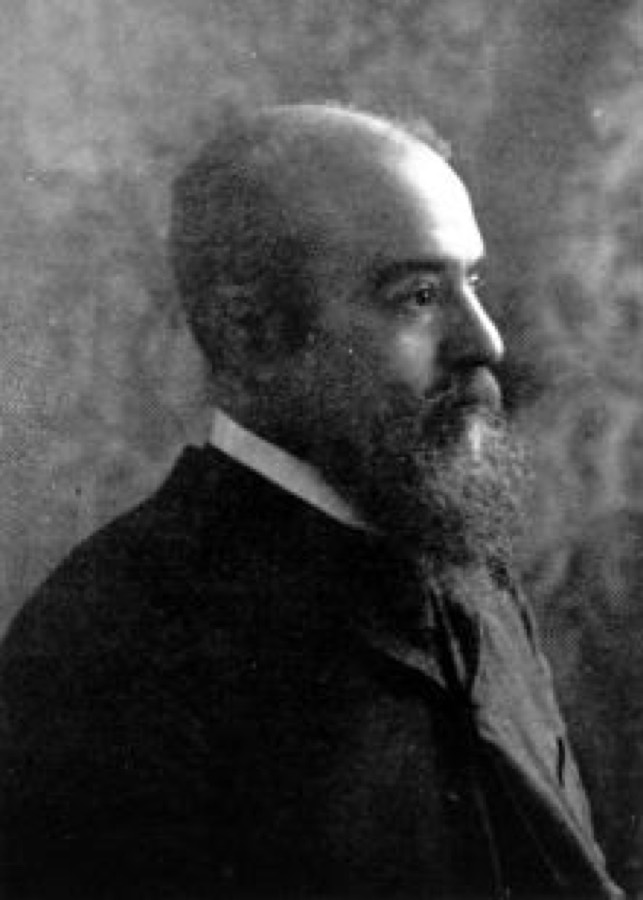
Vilfredo Pareto · CC BY-SA 3.0
Where does the Pareto principle fail?
The ratio is a rough observation, not a law — it may be 90/10 or 70/30. And the “unimportant” 80% isn’t always disposable (the long tail can matter). Use it to prioritise, not to justify neglect.
- The vital 20% is identified in hindsight — before the fact you often cannot tell which fifth of customers, features, or bets will carry the results.
- The distribution is not static: cut the trivial 80% and a new 80/20 split appears inside what remains, inviting endless rounds of cutting.
- Interdependence breaks the arithmetic — the productive 20% may depend on the surrounding 80% (support work, long-tail inventory, junior staff) to function at all.
The counter-model: Redundancy — Pareto logic concentrates resources on the vital few; redundancy deliberately spends on the 'inefficient' many so that no single failure is fatal — resilience is bought from the 80%.
How do you apply the Pareto principle, step by step?
- Choose one output that matters: revenue, defects, hours, complaints.
- Break it down by contributor and rank contributors from largest to smallest.
- Mark the point where the top contributors account for most of the output.
- Shift real resources — time, budget, attention — toward that top group this week.
- Before cutting the tail, check what the top group silently depends on.
The deeper point
The 80/20 rule eats itself: apply it to the vital 20%, and inside that there’s another 20% doing most of the work. The real move isn’t finding the 20% once — it’s applying the lens recursively until the leverage is obvious.
Frequently asked
- What is the 80/20 rule?
- The Pareto principle: roughly 80% of results come from 20% of causes — a small share of inputs drives most outcomes, so focus on the vital few.
- Is the Pareto principle always exactly 80/20?
- No — it’s a rough pattern, not a fixed law. The real split might be 90/10 or 70/30. What matters is that effects concentrate, not the exact ratio.
- How do you apply the 80/20 rule?
- Identify the ~20% of inputs driving ~80% of results and concentrate effort there, while cutting or minimising the low-yield majority.
Compared side by side
Related
Keep reading
Hyperbolic discounting
Take $50 now over $100 next year — then flip the same choice when both sit years away.
See this alongside the other thinking tools of product management, persuasion & marketing, learning, writing clearly and productivity.
Go deeper
Affiliate links. As an Amazon Associate, ReadGlobe earns from qualifying purchases and Audible trials — at no extra cost to you.
The book behind this idea: The 80/20 Principle by Richard Koch. Hear the whole thing free — start an Audible trial and your first audiobook is on the house.
Read the full summary of The 80/20 Principle →
More canonical picks:
- Thinking, Fast and Slow — Daniel Kahneman
- The Art of Thinking Clearly — Rolf Dobelli
- The Great Mental Models, Volume 1 — Shane Parrish
- Poor Charlie’s Almanack — Charlie Munger
- Super Thinking — Gabriel Weinberg & Lauren McCann
- Seeking Wisdom — Peter Bevelin
Cite this page
ReadGlobe. (2026). The Pareto principle. https://readglobe.com/model/pareto-principle/
"The Pareto principle." ReadGlobe, 29 May 2026, readglobe.com/model/pareto-principle/.
Primary source: Wikipedia
Editorial synthesis © ReadGlobe 2026, drawing on the mental-models tradition (Charlie Munger, Farnam Street) and the primary sources for each model. · Last reviewed 2026-05-29.