Mental models for productivity
Mental models for productivity are the reasoning tools that decide where your hours actually go — Parkinson's law, the Eisenhower matrix, activation energy, and opportunity cost. They matter because productivity is rarely about working harder: it's about constraint, subtraction, and putting effort where a small input moves the most.
The load-bearing ideas: Parkinson's law, The Eisenhower matrix, The Pareto principle, Activation energy, The planning fallacy.
The mental models
- Parkinson's law
Work expands to fill the time available, so most deadlines measure tolerance for delay, not the size of the task. The constraint — a shorter box, a hard stop — is the real productivity lever, not more time.
- The Eisenhower matrix
Sort by urgent versus important and the trap becomes visible: the shouting tasks are rarely the ones that matter. Schedule the important-but-quiet work first, or the urgent will eat every day.
- The Pareto principle
A few tasks produce most of the outcome — and inside those, a few again. Applied recursively, the 80/20 lens keeps pointing at the vital few until the leverage is obvious and the rest can be dropped.
- Activation energy
The hard part of most work is starting it, not doing it. Lower the barrier — the file already open, the shoes by the door — and "discipline" problems quietly disappear; most of them were friction problems.
- Opportunity cost
Every yes is a no to something else: the true cost of a meeting, a project, or a commitment is the best alternative use of those hours. "It only takes an hour" prices the time at zero.
- Bottleneck
Your output is capped by one constraint at a time — energy, focus, a decision you're avoiding. Improving anything else feels productive and changes nothing; find the narrow point and widen it.
- Leverage
An hour spent building a template, a system, or a delegation pays out every time it runs again; an hour of raw effort pays once. Rank work by how far the input is amplified, not by how busy it feels.
- Compounding
Small daily gains feed on themselves — but compounding punishes interruption more than it rewards intensity. The unbroken chain of ordinary days beats the occasional heroic sprint.
- Diminishing returns
The first hour on a task yields the most; the fifth hour of polishing yields almost nothing. Knowing when extra effort stops paying — and moving on — is itself a productivity skill.
- Via negativa
Productivity gains come faster from removal — the standing meeting, the notification, the commitment made by default — than from new tools. Subtracting a clear negative is more reliable than adding another system.
- Marginal thinking
Decide at the margin: is the NEXT hour on this worth more than the next hour on anything else? And beware its dark side — "just this once" is marginal thinking applied against your own routines.
Biases that trip up productivity
- The planning fallacy
You plan the week as if every task takes its best-case time, then live the week where none do. Estimate from your actual past weeks, not from the clean version in your head.
- Hyperbolic discounting
The reward that arrives now — the scroll, the small easy task — steeply outweighs the larger one that arrives later, which is the whole engine of procrastination.
- The Zeigarnik effect
Unfinished tasks keep intruding on your attention until they're captured somewhere trusted — why an open loop in your head costs focus all day, and writing it down releases it.
- Action bias
Busyness feels like progress, so you answer email and rearrange the list instead of doing the one hard thing. Motion and progress are different quantities.
- The ostrich effect
The dreaded task gets avoided precisely because checking on it hurts — and the avoidance buys relief now at a growing price later.
- Sunk-cost fallacy
The project that no longer deserves your time keeps getting it because of the time it already got. Judge each commitment as if you were taking it on fresh today.
The books behind these ideas
Read the ideas in two minutes here, then read the book that goes deep.


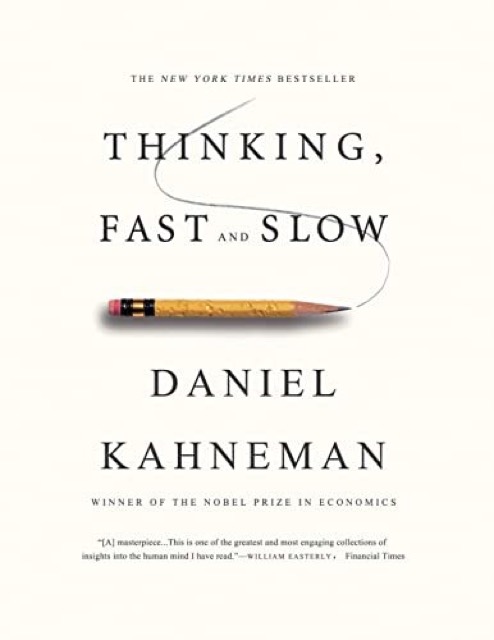
Prefer to listen? Start a free trial and your first audiobook is on the house.
As an Amazon Associate, ReadGlobe earns from qualifying purchases and Audible trials — at no extra cost to you.
Mental models for other work
Editorial synthesis © ReadGlobe. Each idea links to a full reference page with sources. Not a time-management listicle — the constraint-and-subtraction toolkit: Parkinson's law, the Eisenhower matrix, activation energy, and marginal thinking (none carried by any other collection here), paired with the procrastination biases (hyperbolic discounting, the Zeigarnik effect, action bias) that explain why busy days produce so little.