Mental models for software engineers
Mental models for software engineers are the reasoning tools behind durable systems — Gall's law, Conway's law, the bottleneck, entropy, and Chesterton's fence. They matter because most engineering failures are reasoning failures: optimizing the wrong part, rewriting what worked, or deleting the check you didn't understand.
The load-bearing ideas: Gall’s law, Conway’s law, Chesterton's fence, Bottleneck, The planning fallacy.
The mental models
- Gall’s law
A complex system that works invariably evolved from a simple system that worked — which is why grand rewrites and designed-from-scratch architectures so rarely do. Ship the simplest working version and grow it; don't design the end state up front.
- Conway’s law
Your architecture will mirror your org chart: separate teams produce separate services with interfaces shaped like their communication paths. To change the system's structure, you usually have to change who talks to whom.
- Chesterton's fence
That odd guard clause or "pointless" config was probably put there to stop something you haven't seen yet. Understand why the code exists before deleting it — or you'll rediscover the outage it was preventing.
- Bottleneck
One constraint — a slow query, a flaky pipeline stage, one overloaded reviewer — caps the whole system's throughput. Profile first: optimizing anything except the bottleneck changes nothing but the code.
- Entropy
Codebases drift toward disorder by default — dependencies rot, docs go stale, quick fixes accumulate. Maintenance isn't the boring part of engineering; it's the constant energy a working system needs just to stay working.
- Redundancy
Backups, failover, and retries look like waste until the day they're survival. A system tuned for perfect efficiency has removed exactly the slack that absorbs failures.
- Second-order thinking
The quick fix compiles today and creates the incident next quarter. Before shipping, trace the "and then what?" — what this change trains callers, teammates, and future code to depend on.
- Local vs global optimum
Incremental refactors can strand a codebase on a local peak — better than every nearby variant, far below a different design. Sometimes the only path to the better architecture runs through a temporarily worse state.
- Via negativa
Deleting code is often the highest-value commit: less surface, fewer states, fewer bugs. Knowing what to remove — a dependency, a feature flag, an abstraction — is more reliable than knowing what to add.
- Occam’s razor
Debug the simple explanation first — the typo, the stale cache, the wrong environment — before the exotic one. The simplest hypothesis isn't always right, but it's the cheapest to rule out.
- The map is not the territory
The diagram, the docs, and the staging environment are maps; the running production system is the territory. Systems fail precisely in the gaps the map was never drawn to show.
- Goodhart's law
Make coverage, velocity, or ticket-count a target and engineers will optimize the number, not the quality it was meant to track. Every dashboard you reward eventually measures ingenuity at hitting dashboards.
Biases that trip up software engineers
- The planning fallacy
Every similar feature ran over, yet this estimate assumes the smooth best case — because from inside a plan, the unknown obstacles are invisible. Estimate from how the last ten tasks actually went, not from the plan.
- Sunk-cost fallacy
The migration is two quarters in and clearly failing, but abandoning it feels like wasting the work already done. Past effort is gone either way — only the remaining cost and payoff should decide.
- The IKEA effect
Code you wrote yourself feels worth more than the sturdier library that already exists — the root of not-invented-here syndrome and the in-house tool nobody else can maintain.
- The curse of knowledge
Once you know how the system works, you can't imagine not knowing — so your API docs, error messages, and onboarding assume context the reader doesn't have.
- Action bias
Under an outage, doing something — restarting, rolling back, patching live — feels better than reading the logs first. Visible motion beats understanding in the moment, and loses over the incident.
- Optimism bias
It works on your machine, the migration "should be fine", the edge case "won't happen" — engineers systematically plan for the happy path and are surprised by the ordinary one.
- Hindsight bias
After the incident, the cause looks like it was obvious all along — which makes post-mortems drift into blame instead of asking why the failure was invisible beforehand.
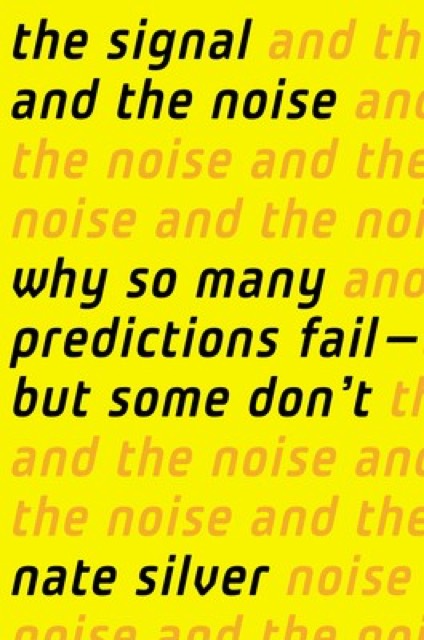
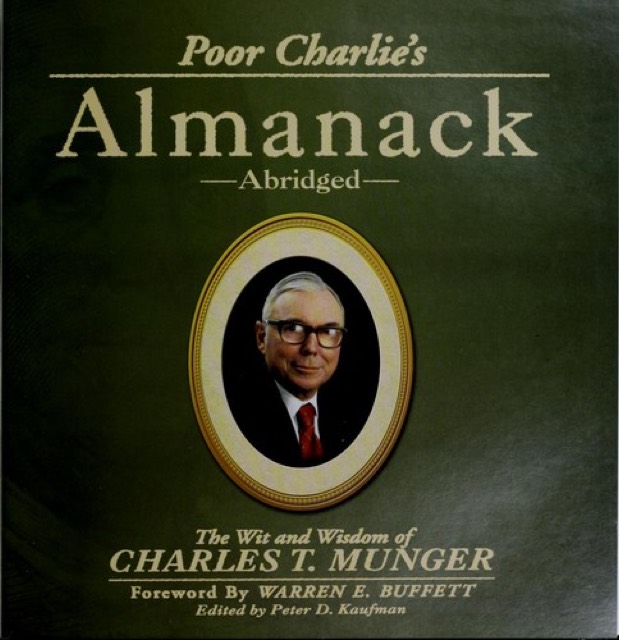
The books behind these ideas
Read the ideas in two minutes here, then read the book that goes deep.


Prefer to listen? Start a free trial and your first audiobook is on the house.
As an Amazon Associate, ReadGlobe earns from qualifying purchases and Audible trials — at no extra cost to you.
Mental models for other work
Editorial synthesis © ReadGlobe. Each idea links to a full reference page with sources. The engineering-native canon no other collection here carries — Conway's law, Gall's law, Chesterton's fence, entropy, redundancy — the models coined in or for systems work, paired with the biases (planning fallacy, IKEA effect, action bias under incident pressure) behind bad estimates, doomed rewrites, and not-invented-here.