Mental models for learning
The mental models that speed up learning treat studying as a system: knowledge compounds, memory decays without review, and re-reading fakes fluency. The fastest learners build from first principles, attack the 20% of material that carries the most, clear prerequisites first, and test themselves to see what they truly know.
The load-bearing ideas: First-principles thinking, Compounding, The OODA loop, Entropy, The mere-exposure effect.
Where to start, by situation
Exams reward a vital core of concepts and punish forgetting, so the work is finding the high-yield material and fighting decay with recall. The classic trap: re-reading that feels like progress.
- The Pareto principleStart hereA small core of concepts carries most of the marks — find it before revising anything else.
Without a syllabus, no one sequences the material or flags the gap that's blocking you. You have to build from fundamentals and know the honest edge of what you understand.
- First-principles thinkingStart hereWith no curriculum to lean on, rebuilding a topic from fundamentals is how real understanding forms.
With scarce, fragmented time the battle is starting at all, then cutting the noise wrapped around the few ideas that matter, and stopping before returns flatten.
- Activation energyStart hereThe hardest part of a short session is beginning it — lower that barrier and momentum follows.
The mental models
- First-principles thinking
Real understanding means rebuilding a topic from its fundamental truths rather than memorising the surface pattern or a single worked example. When you can derive a formula or explain an idea from first principles, you can handle novel problems instead of only the ones you've already seen.
- Compounding
Knowledge compounds: each concept you master makes the next one easier to absorb, so an hour of study today pays off on every hour after it. Short, daily sessions beat sporadic cramming because consistency lets learning build on itself instead of resetting each time.
- The OODA loop
Skill improves through tight feedback loops — attempt, see the result, correct, attempt again. The faster you cycle from doing to feedback via practice problems, flashcards, or a tutor's correction, the quicker errors get pruned, which is why active self-testing outpaces passive reading.
- Entropy
Memory left alone is a closed system: without energy put back in, what you learned decays and scatters — the forgetting curve is entropy at work. Spaced review is the energy you add to hold knowledge together against its natural drift toward being forgotten.
- The map is not the territory
Your notes, summaries, and mnemonics are maps — useful simplifications of the material, never the understanding itself. Studying your neat summary can teach you the summary while the underlying territory stays fuzzy, so check by working real problems rather than admiring the map.
- The Pareto principle
A small core of concepts usually carries most of an exam's marks and most of a field's real leverage. Identifying and drilling that high-yield 20% — the load-bearing definitions and recurring problem types — beats spreading attention evenly across everything.
- Diminishing returns
The first read of a chapter teaches you a lot; the fourth teaches almost nothing. Once returns on one topic flatten, your next hour is better spent switching to a weaker area or a different retrieval method than grinding the same page again.
- Bottleneck
Learning is sequential, so one missing prerequisite becomes the bottleneck that throttles everything downstream — you can't absorb calculus while the algebra underneath is shaky. Find and clear the narrowest gap in your understanding before piling on new material, or the new material won't stick.
- Circle of competence
Effective study is mapping the honest boundary between what you truly know and what you only recognise. Testing yourself under exam conditions reveals where your circle of competence actually ends, so you can study the edges instead of re-covering the comfortable centre you've already mastered.
- Signal vs noise
A textbook or lecture is mostly noise wrapped around a few signal ideas that actually carry the concept. Learning to extract that signal — the principle, not every example — is why a concise, self-made summary beats transcribing everything you hear.
- Activation energy
The hardest part of a study session is starting it — the upfront push before momentum takes over. Lowering that activation energy (open the book to the exact page, commit to just five minutes, put the phone in another room) is often what actually gets the studying done.
- Local vs global optimum
A comfortable study method or a plateaued skill can be a local optimum — the best you'll do without changing approach. Breaking through often means temporarily getting worse: adopting a harder technique or unlearning a bad habit to reach a higher global level of mastery.
Biases that trip up learning
- The mere-exposure effect
Re-reading and highlighting make material feel familiar, and the mind mistakes that familiarity for mastery — the fluency illusion. You close the book confident you know it, then blank in the exam, because you practised recognising the page rather than recalling the idea.
- Dunning–Kruger effect
Early in a topic you lack the very knowledge needed to gauge how much you're missing, so beginners feel deceptively confident. This blind spot makes you stop studying too soon, right where you still can't tell genuine competence from its illusion.
- Hyperbolic discounting
A study session pays off weeks later at exam time, while the phone pays off right now — so the immediate reward keeps winning. This steep preference for the present is the engine of procrastination, even when you sincerely intend to study.
- The planning fallacy
You reliably underestimate how long revision will take and how much can go wrong, so the plan says three days when the material needs ten. The result is cramming — a schedule built on optimism colliding with the real size of the syllabus.
- Status-quo bias
Learners cling to comfortable defaults — rereading, highlighting, recopying notes — because they're familiar, even after evidence shows retrieval and spacing work far better. Switching methods feels like a loss, so the weaker habit quietly persists.
- Choice overload
Facing endless courses, textbooks, apps, and open tabs, you burn the study session choosing a resource instead of learning from one. The abundance of options breeds paralysis and second-guessing, so nothing actually gets studied.
The books behind these ideas
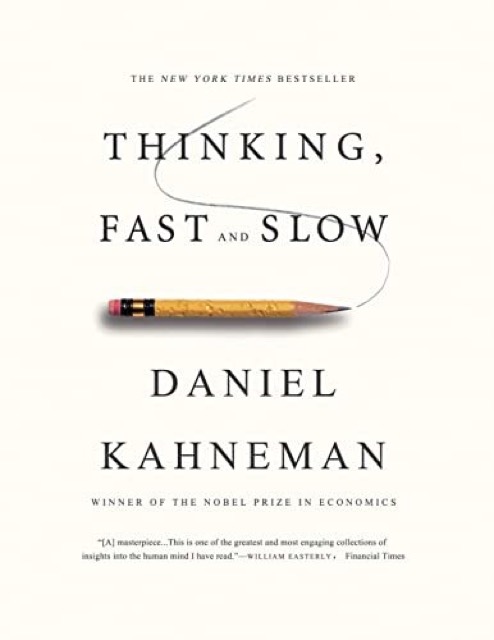
Read the ideas in two minutes here, then read the book that goes deep.
Prefer to listen? Start a free trial and your first audiobook is on the house.
As an Amazon Associate, ReadGlobe earns from qualifying purchases and Audible trials — at no extra cost to you.
Mental models for other work
Editorial synthesis © ReadGlobe. Each idea links to a full reference page with sources. Unlike a generic "top models" list, this set is built around the mechanics of memory and skill acquisition — the forgetting curve as entropy, deliberate-practice feedback loops, prerequisite bottlenecks, and the fluency illusion — the tools that separate real understanding from the mere feeling of knowing.