Contrast effect
The contrast effect is when our judgement of something shifts depending on what we compare it to. The same option seems better or worse, bigger or smaller, more or less expensive, based purely on the reference point placed beside it.
- 1 min read
- 6 linked ideas
Why does the contrast effect happen?
The mind judges in relative, not absolute, terms — it is far better at comparison than at calibration. So a recent or adjacent reference point recalibrates the scale, and the target is rated against that contrast rather than on its own merits.
The mind has no fixed scale — control the comparison and you control the judgement.
What does the contrast effect look like in real life?
- A $1,000 watch seeming cheap after you were shown a $10,000 one first.
- An average candidate looking impressive right after a weak one, and weak right after a star.
- A house feeling small after touring a mansion, large after a studio.
How do you counter the contrast effect?
- Judge options against an absolute standard or your actual needs, not just what’s beside them.
- Notice when a seller shows you an expensive or inferior option first — it may be a deliberate contrast.
- Re-evaluate in isolation: "Would I want this if I hadn’t just seen the other one?"
The deeper point
It is proof the mind has no fixed scale — value is computed fresh at the moment of comparison, from whatever happens to be nearby. Control the comparison and you control the judgement, which is exactly what skilled sellers and negotiators do.
Frequently asked
- What is the contrast effect?
- It is when your judgement of something changes based on what it is compared to. The same item can seem cheap or expensive, large or small, good or bad, depending purely on the reference point shown beside it.
- What is an example of the contrast effect?
- A moderately priced item looks like a bargain right after you’re shown a far pricier one — which is why sellers often present an expensive option first to make the next one feel reasonable.
- How is the contrast effect different from anchoring?
- Anchoring is an initial number pulling your estimate toward it. The contrast effect is a comparison pushing your judgement away from the reference — the target looks more extreme in the opposite direction from what it’s beside.
Keep reading
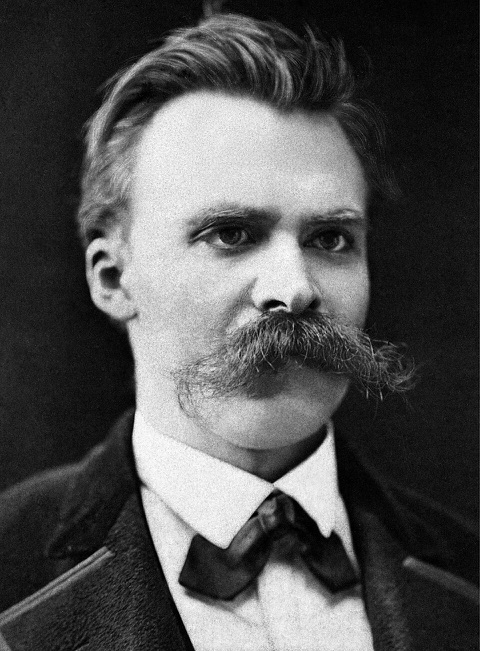
Friedrich Nietzsche
"God is dead" was a warning, not a celebration — meaning had dissolved and Europe hadn't noticed.
See this alongside the other thinking tools of hiring.
This bias distorts negotiation, hiring, performance reviews and shopping & spending.
The books behind better thinking
Affiliate links. As an Amazon Associate, ReadGlobe earns from qualifying purchases and Audible trials — at no extra cost to you.
Listen to any of these free. Start a free Audible trial and get your first audiobook on the house.
Prefer to read? The canonical picks:
- Thinking, Fast and Slow — Daniel Kahneman
- The Art of Thinking Clearly — Rolf Dobelli
- The Great Mental Models, Volume 1 — Shane Parrish
- Poor Charlie’s Almanack — Charlie Munger
- Super Thinking — Gabriel Weinberg & Lauren McCann
- Seeking Wisdom — Peter Bevelin
Cite this page
ReadGlobe. (2026). Contrast effect. https://readglobe.com/bias/contrast-effect/
"Contrast effect." ReadGlobe, 29 May 2026, readglobe.com/bias/contrast-effect/.
Primary source: Wikipedia
Editorial synthesis © ReadGlobe 2026, drawing on Kahneman’s Thinking, Fast and Slow, the Tversky–Kahneman research program, and the primary cognitive-science literature. · Last reviewed 2026-05-29.