Cognitive biases in performance reviews
Recency, the halo effect, and the contrast effect distort performance reviews most: the last few weeks eclipse a whole year, one standout trait inflates every score, and a rating shifts with whoever was reviewed just before. Noticing them is what makes an appraisal reflect the record rather than memory.
The ones that bite hardest: Recency bias, Halo effect, Contrast effect.
Which biases bite hardest — by situation
Rating a full year, the risks are temporal and evaluative: the last few weeks crowd out the earlier ten months, one strength or one visible slip distorts everything, and you look mainly for evidence you already believe.
- Recency biasStart hereRecency is the default failure of annual reviews — recent work is simply what you can still recall.
Assessing your own year, you tend to claim the wins and externalize the misses, while last cycle's rating and a few vivid moments quietly set the number you argue for.
- Self-serving biasStart hereSelf-serving bias skews the whole account before any specific example is even weighed.
Comparing people side by side, order and similarity dominate: someone reviewed after a star looks weak, people like you get more benefit of the doubt, and one trait colours the rest.
- Contrast effectStart hereCalibration is sequential comparison, so the contrast effect distorts scores the moment you rank people in a row.
The biases, and how each one bites
- Recency bias
The last few weeks dominate the rating, eclipsing ten months of steady work that fall out of memory.
- Halo effect
One standout strength — likability or a single win — inflates scores on unrelated competencies across the review.
- Contrast effect
An employee reviewed right after a star looks weak, after a laggard looks strong — same work, different score.
- Negativity bias
A single visible mistake outweighs many quiet successes, dragging the rating down more than the record warrants.
- Confirmation bias
You gather examples that confirm your existing view and quietly discount evidence that contradicts it.
- Fundamental attribution error
You blame a report's misses on character while excusing top performers' misses as bad circumstances.
- In-group bias
You rate people similar to you more generously and scrutinize those unlike you harder.
- Anchoring bias
Last cycle's rating or the self-assessment number anchors the score, which barely adjusts from it.
- The peak-end rule
You judge the whole period by one dramatic moment and how it ended, ignoring everyday performance.
- Self-serving bias
In self-reviews, people claim credit for wins but blame shortfalls on teammates, tools, or circumstances.
- Availability heuristic
A vivid, memorable incident feels representative of the whole year, skewing the rating toward what springs to mind.
The books that teach you to spot them
The canon on how the mind misfires — read one and you’ll catch these biases in the act.
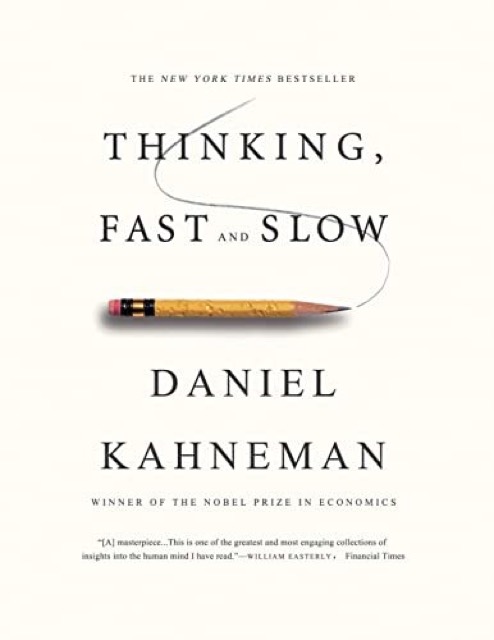
Prefer to listen? Hear the source books free on Audible — start a trial and your first audiobook is on the house.
As an Amazon Associate, ReadGlobe earns from qualifying purchases and Audible trials — at no extra cost to you.
Biases in other situations
Or browse the flip side — the mental models for real work →
Editorial synthesis © ReadGlobe. Each bias links to a full reference page with sources. Review biases are the ones that distort remembering and comparing a person over time — recency, halo, contrast — not the in-the-moment biases of a negotiation.