Cognitive biases in studying & learning
Overconfidence, the Dunning–Kruger effect, and the mere-exposure effect sabotage studying most: fluent re-reading feels like mastery, early beginners can't see their gaps, and familiarity gets mistaken for knowledge. Recognising them is what turns passive review into learning that actually sticks.
The ones that bite hardest: Overconfidence effect, Dunning–Kruger effect, The mere-exposure effect.
Which biases bite hardest — by situation
Under a deadline, the pull of nearer rewards drives procrastination, revision takes longer than planned, the openings of sessions stick while the middles fade, and closing a topic too early feels like finishing.
- Hyperbolic discountingStart hereHyperbolic discounting is what erodes the study schedule before any of the material is even reached.
As a genuine beginner, you lack the skill to see your own gaps, the materials skip the very steps you need, and mere familiarity with a page starts to pass for real knowledge.
- Dunning–Kruger effectStart hereDunning–Kruger is the beginner's trap — too little skill to notice how much is still missing.
Checking your own grasp, fluent re-reading feels like mastery, recognizing material is mistaken for recalling it, and every worked answer looks obvious once you've seen it.
- Overconfidence effectStart hereOverconfidence is the core error — fluency feels like knowing, so you stop before you can actually reproduce it.
The biases, and how each one bites
- Overconfidence effect
Fluent re-reading feels like mastery, so you close the book far more confident than a test would confirm.
- Dunning–Kruger effect
Early on you lack the skill to see your gaps, so you overrate understanding and stop studying too soon.
- The mere-exposure effect
Repeated exposure breeds familiarity you mistake for knowledge — recognizing a page isn't recalling it unaided.
- Hindsight bias
Seeing the worked answer makes it feel obvious, hiding that you couldn't have produced it yourself.
- Hyperbolic discounting
The near reward of leisure outweighs the larger later reward of a good grade, driving procrastination.
- The planning fallacy
You underestimate how long revision takes and how it goes wrong, cramming instead of pacing across weeks.
- The curse of knowledge
Expert textbooks and teachers can't imagine not knowing, skipping the steps a genuine beginner most needs.
- Primacy effect
You retain the opening of a chapter or session best, leaving crucial middle material underlearned.
- The Zeigarnik effect
Unfinished topics nag and stay memorable, so calling study 'done' too early releases the tension aiding recall.
- Confirmation bias
Researching an essay, you notice sources fitting your thesis and discount evidence that would complicate it.
The books that teach you to spot them
The canon on how the mind misfires — read one and you’ll catch these biases in the act.
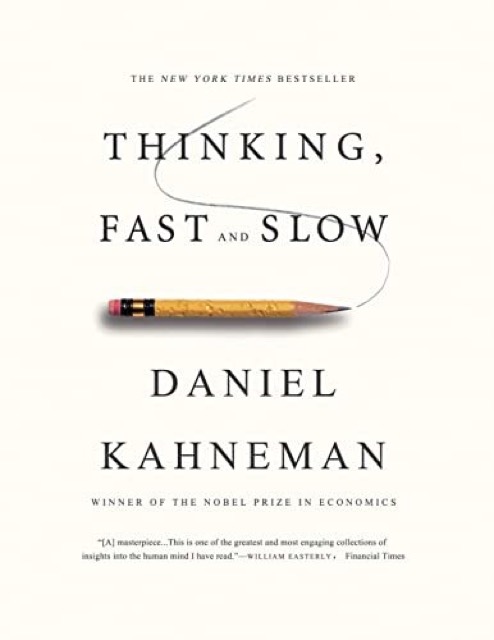
Prefer to listen? Hear the source books free on Audible — start a trial and your first audiobook is on the house.
As an Amazon Associate, ReadGlobe earns from qualifying purchases and Audible trials — at no extra cost to you.
Biases in other situations
Or browse the flip side — the mental models for real work →
Editorial synthesis © ReadGlobe. Each bias links to a full reference page with sources. Learning biases are the ones that make you feel you know more than you do — overconfidence, Dunning–Kruger, the fluency of re-reading — a set specific to acquiring skill.