Framing effect
The framing effect is when the way information is presented — not its content — changes your decision. “Ninety percent survive” and “ten percent die” state the same fact, yet the first feels far more reassuring and shifts the choice.
Why does the framing effect happen?
The mind reacts to the reference point a frame creates — especially gains versus losses. Identical options feel different depending on whether they’re cast in positive or negative language, so presentation quietly steers the decision.
If your preference flips when the same fact is reworded, you didn't have a preference — you had a reaction.
What does the framing effect look like in real life?
- “90% fat-free” outselling the identical “10% fat”.
- A surgery described by its survival rate versus its mortality rate.
- “€5 cash discount” feeling better than an identical “€5 card surcharge”.
How do you counter the framing effect?
- Restate the choice in the opposite frame and check whether your preference holds.
- Strip the emotional wording and compare the raw numbers.
- Be alert whenever a choice is cast purely as a gain or purely as a loss.
The deeper point
If your preference flips when the same fact is reworded, you didn’t have a preference — you had a reaction to the frame. The framing effect is proof that many "opinions" are artifacts of presentation.
Frequently asked
- What is an example of the framing effect?
- Ground beef labelled “80% lean” seems better than the same beef labelled “20% fat,” even though the two descriptions are identical.
- Why does framing change decisions?
- Positive frames emphasize gains and negative frames emphasize losses; because losses loom larger, the same fact feels worse when framed as a loss.
- How do you avoid the framing effect?
- Re-express the option in the opposite frame, reduce it to plain numbers, and notice when wording — not substance — is driving your reaction.
Compared side by side
Keep reading
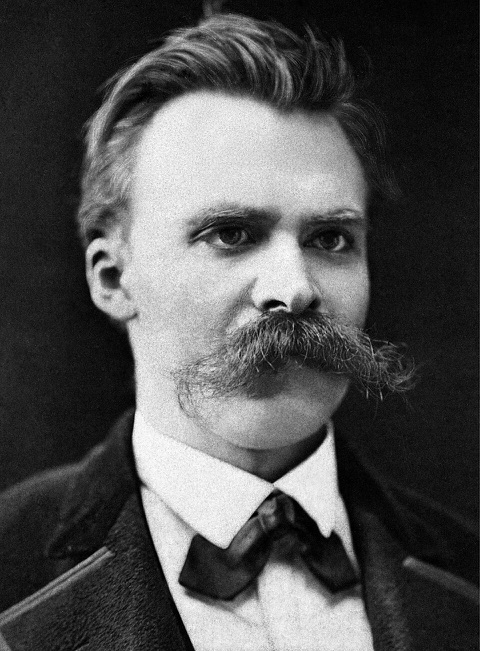
Friedrich Nietzsche
"God is dead" was a warning, not a celebration — meaning had dissolved and Europe hadn't noticed.
This bias distorts negotiation and shopping & spending.
Go deeper
Affiliate links. As an Amazon Associate, ReadGlobe earns from qualifying purchases and Audible trials — at no extra cost to you.
The book behind this idea: Thinking, Fast and Slow by Daniel Kahneman. Hear the whole thing free — start an Audible trial and your first audiobook is on the house.
Read the full summary of Thinking, Fast and Slow →
More canonical picks:
- The Art of Thinking Clearly — Rolf Dobelli
- The Great Mental Models, Volume 1 — Shane Parrish
- Poor Charlie’s Almanack — Charlie Munger
- Super Thinking — Gabriel Weinberg & Lauren McCann
- Seeking Wisdom — Peter Bevelin
Cite this page
ReadGlobe. (2026). Framing effect. https://readglobe.com/bias/framing-effect/
"Framing effect." ReadGlobe, 29 May 2026, readglobe.com/bias/framing-effect/.
Primary source: Wikipedia
Editorial synthesis © ReadGlobe 2026, drawing on Kahneman’s Thinking, Fast and Slow, the Tversky–Kahneman research program, and the primary cognitive-science literature. · Last reviewed 2026-05-29.