Flywheel
A flywheel is a self-reinforcing loop where each part feeds the next, so momentum builds over time. Jim Collins’ metaphor: early pushes are hard and produce little, but the accumulated turns make the wheel eventually spin almost by itself.
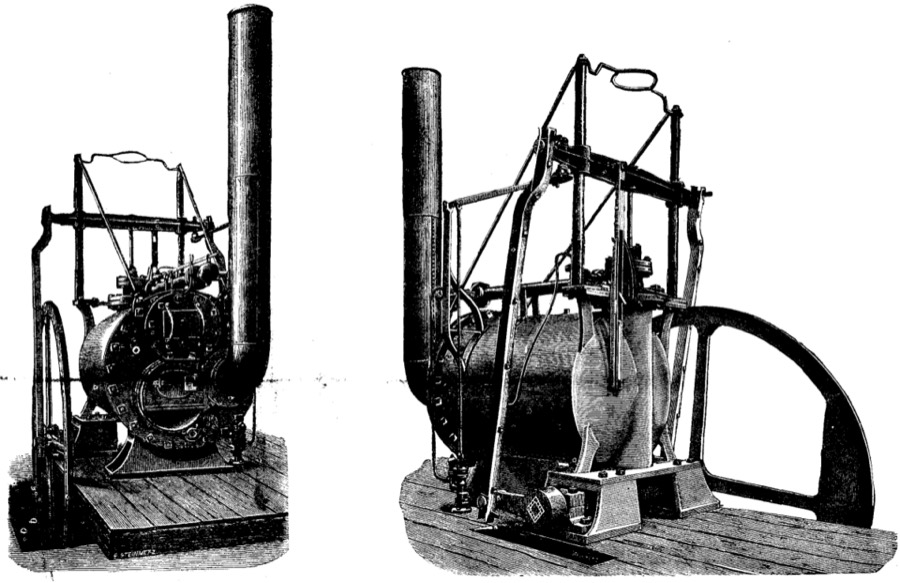
Trevithick high-pressure steam engine · public domain
How does flywheel work?
Identify a virtuous cycle where each step strengthens the next (e.g., lower prices → more customers → more scale → lower prices). Push consistently on the loop rather than chasing disconnected initiatives; momentum compounds as the wheel turns.
The early turns feel like failure — enormous effort, almost no movement — which is exactly when most people quit.
How do you use flywheel?
- Designing a business around a self-reinforcing loop rather than one-off tactics.
- Recognising that the early, hard, low-reward phase is where the wheel is being loaded.
- Distinguishing compounding strategies from disconnected efforts that never build momentum.
What does flywheel look like in practice?
Amazon’s flywheel: lower prices draw more customers, which attracts more sellers, which widens selection, which draws still more customers — and growing scale lowers costs, enabling lower prices again. Each turn makes the next one easier.
Where does flywheel fail?
Flywheels turn in reverse too — break one part of the loop and the momentum decays as powerfully as it built. And not every business has a genuine flywheel; forcing the metaphor onto disconnected steps creates a story, not momentum.
- A real flywheel proves itself slowly, tempting you to abandon it during the long early phase that produces almost nothing.
- A well-built flywheel accelerates you efficiently, but it can be pointed at the wrong destination just as easily as the right one.
- Any sequence of steps can be dressed up as a loop, so the metaphor invites you to see self-reinforcement where there is only a linear process.
The counter-model: Bottleneck — One constrained step caps the whole loop regardless of momentum, so bottleneck analysis finds where the flywheel is actually stuck.
How do you apply flywheel, step by step?
- Draw the loop and confirm each step genuinely feeds the next.
- Test the causal link at every arrow rather than assuming the story holds.
- Find the slowest or weakest step, since it limits the whole wheel.
- Strengthen that step first before adding new components.
- Verify the loop is accelerating toward the outcome you actually want.
The deeper point
Its hardest truth is that the early turns feel like failure — enormous effort, almost no movement — which is exactly when most people quit. The momentum that eventually carries a flywheel was loaded in slowly, invisibly, turn by unrewarding turn.
Frequently asked
- What is a flywheel in business?
- It’s a self-reinforcing loop where each part feeds the next, so momentum compounds over time. From Jim Collins: early pushes are hard, but accumulated turns eventually make the wheel spin almost on its own.
- What is an example of a business flywheel?
- Amazon’s: lower prices bring more customers, attracting more sellers and wider selection, which brings more customers — while scale cuts costs, enabling lower prices again. Each turn makes the next easier.
- How is a flywheel different from compounding?
- Compounding is growth building on itself within one quantity; a flywheel is a loop of distinct steps each strengthening the next. A flywheel is a structured way to create compounding momentum across a system.
Related
Keep reading
Inversion
List every way to wreck a career; avoiding them beats any positive plan.
See this alongside the other thinking tools of building a startup, product management and career growth.
Go deeper
Affiliate links. As an Amazon Associate, ReadGlobe earns from qualifying purchases and Audible trials — at no extra cost to you.
The book behind this idea: Good to Great by Jim Collins. Hear the whole thing free — start an Audible trial and your first audiobook is on the house.
Read the full summary of Good to Great →
More canonical picks:
- Thinking, Fast and Slow — Daniel Kahneman
- The Art of Thinking Clearly — Rolf Dobelli
- The Great Mental Models, Volume 1 — Shane Parrish
- Poor Charlie’s Almanack — Charlie Munger
- Super Thinking — Gabriel Weinberg & Lauren McCann
- Seeking Wisdom — Peter Bevelin
Cite this page
ReadGlobe. (2026). Flywheel. https://readglobe.com/model/flywheel/
"Flywheel." ReadGlobe, 29 May 2026, readglobe.com/model/flywheel/.
Primary source: Wikipedia
Editorial synthesis © ReadGlobe 2026, drawing on the mental-models tradition (Charlie Munger, Farnam Street) and the primary sources for each model. · Last reviewed 2026-05-29.