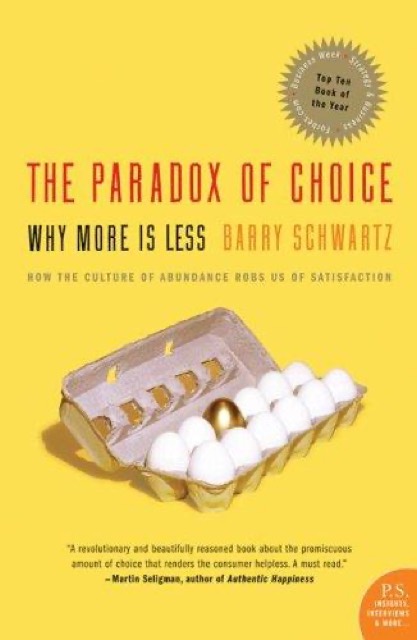
The Paradox of Choice
by Barry Schwartz
Beyond a modest number, additional options stop expanding freedom and start imposing cost: harder decisions, higher expectations, and regret about the alternatives you did not take. More choice can make a better outcome feel worse.
What does The Paradox of Choice teach?
Schwartz's argument runs against an assumption so basic it is rarely examined — that added choice is straightforwardly good. He separates two ways of choosing. Maximisers search for the best available option and, having searched exhaustively, remain exposed to every road not taken; satisficers apply a standard, take the first thing that meets it, and stop. Maximisers reliably obtain objectively better outcomes and reliably feel worse about them. The mechanism is opportunity cost made vivid: each rejected alternative keeps some of its appeal, and the more alternatives there were, the more the chosen one is measured against a composite of things it is not. Expectation rises with assortment size, so even a good result disappoints. The book is careful about scope — the effect is not universal and the famous jam-tasting study has been contested — but the practical conclusions survive: set a standard rather than seeking the optimum, deliberately constrain the set you consider, and treat a decision as closed once made. Useful for anyone who builds choices for other people as well as anyone exhausted by their own.
Which ideas does The Paradox of Choice explain?
Read the idea in two minutes, then read the book behind it.
Read or listen to The Paradox of Choice
Hear the whole book free: start an Audible trial and your first audiobook — this one, if you like — is on the house.
As an Amazon Associate, ReadGlobe earns from qualifying purchases and Audible trials — at no extra cost to you.