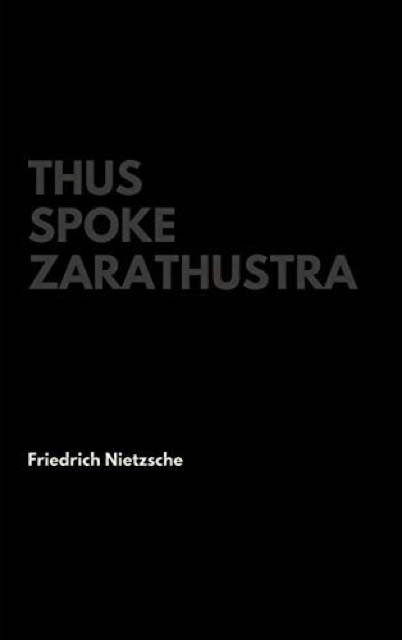
Thus Spoke Zarathustra
by Friedrich Nietzsche
A prophet descends from his mountain to teach that God is dead, humanity is something to be overcome, and the fully alive person says yes to existence exactly as it is, endlessly repeated.
What does Thus Spoke Zarathustra teach?
Nietzsche writes philosophy as scripture, casting Zarathustra as a wandering teacher who delivers his doctrines in parables, songs, and reversals rather than arguments. With God dead, older values lose their foundation, and the danger is nihilism. His answer is the Übermensch: not a superior race but a person who creates values instead of inheriting them, and who channels the will to power—the drive to grow, shape, and surpass oneself—into self-mastery. The book's hardest test is eternal recurrence, the thought-experiment that you must live this same life over infinitely. To greet that prospect with joy is amor fati, love of fate: to want nothing other than what is. Read it for the questions it forces about where meaning comes from once external authority collapses. Expect contradiction, irony, and demands rather than comfort.
Which ideas does Thus Spoke Zarathustra explain?
Read the idea in two minutes, then read the book behind it.
Read or listen to Thus Spoke Zarathustra
Hear the whole book free: start an Audible trial and your first audiobook — this one, if you like — is on the house.
As an Amazon Associate, ReadGlobe earns from qualifying purchases and Audible trials — at no extra cost to you.