Friedrich Nietzsche
The philosopher with a hammer who diagnosed the collapse of inherited values.
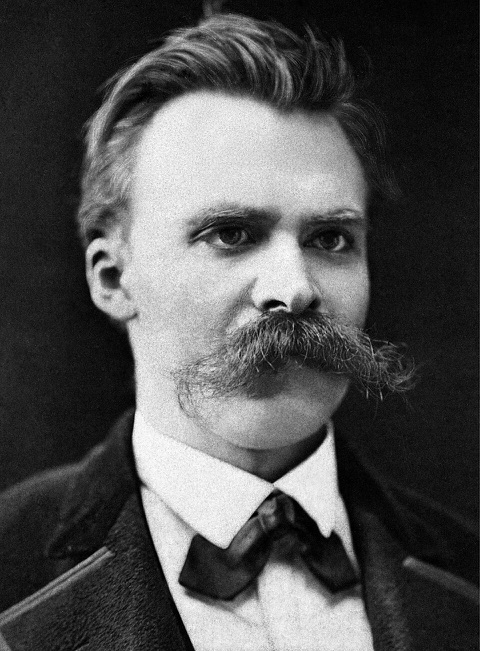
Nietzsche wrote against systems — in aphorisms, polemics, and the prophetic voice of Thus Spoke Zarathustra. His announcement that "God is dead" was not a celebration but a warning: the shared horizon of meaning had quietly dissolved, and Europe had not yet noticed. His response was not despair but a project of revaluation — replacing inherited morality with values one affirms oneself. Two ideas anchor this: eternal recurrence, the thought-experiment of willing one's life to repeat infinitely, and amor fati, the love of one's fate. He prized the creative individual who turns suffering into self-overcoming rather than resentment. Often misread and posthumously distorted, Nietzsche is best understood as a psychologist of values, exposing the hidden motives beneath what cultures call good and evil.
'God is dead' was not a celebration but a warning — the shared horizon of meaning had quietly dissolved.
Why Friedrich Nietzsche still matters
Nietzsche diagnosed the modern crisis before it fully arrived: once religion’s cultural authority collapses ("God is dead"), where does meaning come from? Existentialism, psychoanalysis, and postmodernism all grow out of his answer — and he writes like no other philosopher, in aphorisms, "with a hammer."
The one big idea
Don’t passively inherit your values — create them, and affirm your life so completely you would will it to recur eternally (amor fati). The task is to become who you are.
Commonly misunderstood
He is wrongly tarred as a proto-Nazi — a distortion engineered by his sister, who edited his notes after his collapse. Nietzsche despised antisemitism and German nationalism; the "will to power" is about self-overcoming, not domination of others.
Key ideas
- Eternal Recurrence — Nietzsche's thought-experiment: if you had to live your life over and over, identically, forever — could you affirm it?
- Amor Fati — The Latin phrase "love of fate" — embracing everything that happens, including suffering, not merely tolerating it.
Famous quotes
- “He who has a why to live for can bear almost any how.” — Twilight of the Idols
- “That which does not kill us makes us stronger.” — Twilight of the Idols
- “Without music, life would be a mistake.” — Twilight of the Idols
- “He who fights with monsters should look to it that he himself does not become a monster. And if you gaze long into an abyss, the abyss also gazes into you.” — Beyond Good and Evil, §146
- “What if a demon crept after you and said: "This life as you now live it you will have to live once more and innumerable times more"?” — The Gay Science, §341
Influenced by
Influenced
Compare Friedrich Nietzsche
Frequently asked
- What did Nietzsche mean by "God is dead"?
- Not a celebration but a diagnosis: the collapse of religion’s grip on Western culture leaves a vacuum of meaning we must confront — and risk filling with something worse — rather than a triumphant atheism.
- What is the will to power?
- Nietzsche’s proposed fundamental drive — not mere survival but the urge to grow, overcome, and express strength. Applied to oneself it means self-overcoming, not control of others.
- Was Nietzsche a nihilist?
- He diagnosed nihilism as the danger of his age but sought to overcome it — through life-affirmation, value-creation, and amor fati, not surrender to meaninglessness.
Where to start with Friedrich Nietzsche
The short answer: Do not start with Zarathustra. Start with On the Genealogy of Morality — his most sustained, systematic argument — or the short late Twilight of the Idols. Save Thus Spoke Zarathustra for after you know his ideas; it is poetry that presumes them.
Gentle · start here — no background needed
On the Genealogy of Morality — Friedrich NietzscheStart here
Three connected essays — his most argumentatively structured book, and the standard scholarly entry point. Master and slave morality, ressentiment, and ascetic ideals are all here.
Which edition: Walter Kaufmann (Vintage) or Maudemarie Clark (Hackett) — both standard.
Twilight of the Idols — Friedrich Nietzsche
Written late as a deliberate summary of his philosophy — short, savage, quotable. Nietzsche himself called it a "complete introduction" to his thought.
Moderate · once the ideas are familiar
Beyond Good and Evil — Friedrich Nietzsche
The mature critique of philosophy itself — perspectivism, the will to power, the critique of dogmatists. Denser than the Genealogy but rewards the groundwork.
The Gay Science — Friedrich Nietzsche
Where "God is dead" and eternal recurrence first appear in force — his sunniest and most personal book of aphorisms.
I Am Dynamite! — Sue Prideaux
The acclaimed 2018 biography — separates the man from the myth his sister built, and makes the books above land harder.
Deep end · the demanding texts, worth the climb
Thus Spoke Zarathustra — Friedrich Nietzsche
The famous one — and the worst entry point. A prose-poem in biblical parody that assumes you already know the doctrines it dramatizes. Read fifth, it opens up.
Prefer to listen? Most of this list is on Audible — start a free trial and the first one is on the house.
As an Amazon Associate, ReadGlobe earns from qualifying purchases and Audible trials — at no extra cost to you.
What people get wrong about Friedrich Nietzsche
- “Nietzsche was a nihilist.”
- Actually: He diagnosed nihilism as the crisis that follows the collapse of shared values — and spent his career trying to overcome it. "God is dead" is spoken as a warning, not a victory lap.
- “The Übermensch is a proto-Nazi master-race idea.”
- Actually: Nietzsche broke with Wagner partly over antisemitism and mocked German nationalism. His sister Elisabeth — a genuine antisemite — edited and reframed his unpublished notes after his collapse; the Nazi reading came through her.
- “Will to power means the drive to dominate others.”
- Actually: In the published work it is primarily self-overcoming — the drive to grow, master oneself, and impose form on one’s own chaos. Political domination is one crude expression, not the definition.
Reading order follows the widely-shared scholarly advice (Kaufmann; Clark) to begin with the Genealogy rather than Zarathustra. The Elisabeth Förster-Nietzsche editorial history is documented in Prideaux and in the Colli–Montinari critical edition.
Keep reading
The OODA loop
Cycle faster than your rival and they end up fighting information that is already stale.
Cite this page
ReadGlobe. Friedrich Nietzsche. https://readglobe.com/thinker/friedrich-nietzsche/
"Friedrich Nietzsche." ReadGlobe, readglobe.com/thinker/friedrich-nietzsche/.
Primary source: Wikipedia
Biographical summary synthesised from Wikipedia (CC-BY-SA) and the Stanford Encyclopedia of Philosophy.