Eternal Recurrence
Nietzsche's thought-experiment: if you had to live your life over and over, identically, forever — could you affirm it?
What does eternal recurrence mean?
Nietzsche presents eternal recurrence less as a cosmological claim than as an existential test. Imagine a demon telling you that every detail of your life will repeat infinitely. Would the thought crush you, or could you say yes? The idea forces the question of whether you are living a life you could affirm without reservation. It is the engine behind amor fati: to will the eternal return of one's life is the highest form of life-affirmation Nietzsche could imagine.
If every detail of your life repeated forever — would it crush you, or could you say yes?
How does eternal recurrence apply today?
- A clarifying filter for decisions: would you choose this again, endlessly?
- A diagnostic for life-satisfaction versus quiet resentment
- A spur toward living deliberately rather than by default
The deeper point
Eternal recurrence isn’t a claim about physics — it’s a device that converts the abstract question of meaning into a personal verdict: would you say yes to this life, in every detail, forever? Most ethical systems judge individual actions; this one judges your whole existence at once.
Quotes on this idea
Compared in
Related ideas
Frequently asked
- What is Nietzsche's eternal recurrence?
- A thought experiment: imagine living your exact life, in every detail, infinitely many times. Could you affirm it? Nietzsche uses it as a test of whether you truly love your life.
- Is eternal recurrence literally true?
- Nietzsche presents it mainly as an existential test, not a cosmological claim. Its power is psychological — it pressures you to live so that you would will every moment to return eternally.
- How does eternal recurrence relate to amor fati?
- Eternal recurrence is the test; amor fati is the passing grade. To will your life’s infinite return is to love your fate completely.
Keep reading
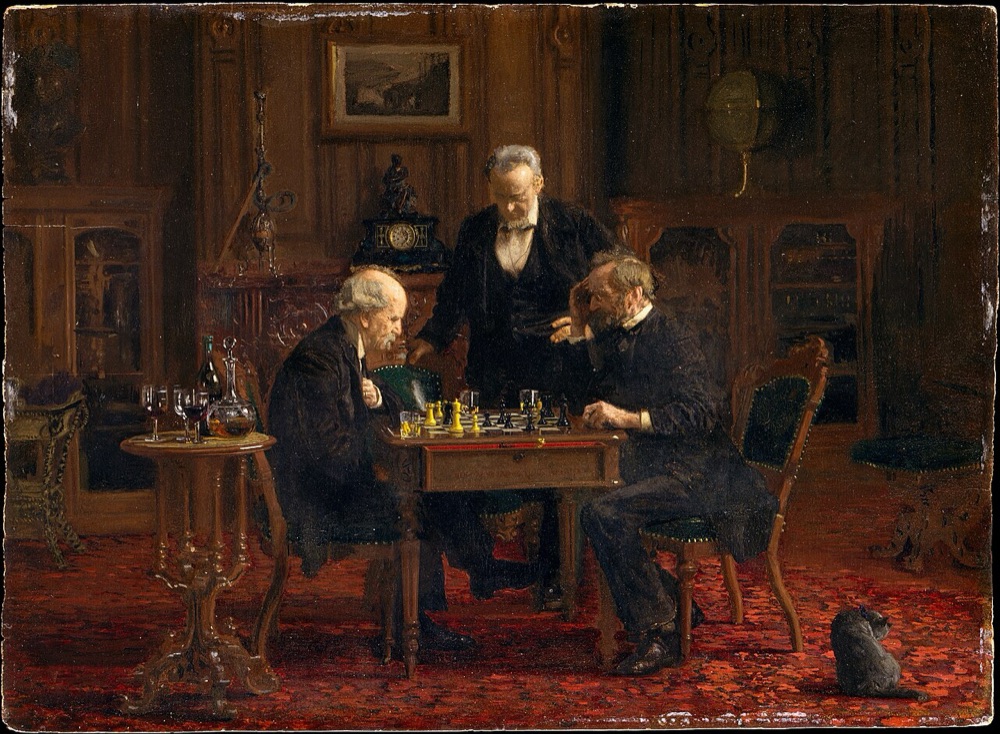
Game theory
Two shops each make the rational move, and both end up poorer for it.
Go deeper
Affiliate links. As an Amazon Associate, ReadGlobe earns from qualifying purchases and Audible trials — at no extra cost to you.
The book behind this idea: Thus Spoke Zarathustra by Friedrich Nietzsche. Hear the whole thing free — start an Audible trial and your first audiobook is on the house.
Read the full summary of Thus Spoke Zarathustra →
More canonical picks:
- Thinking, Fast and Slow — Daniel Kahneman
- The Art of Thinking Clearly — Rolf Dobelli
- The Great Mental Models, Volume 1 — Shane Parrish
- Poor Charlie’s Almanack — Charlie Munger
- Super Thinking — Gabriel Weinberg & Lauren McCann
- Seeking Wisdom — Peter Bevelin
Cite this page
ReadGlobe. Eternal Recurrence. https://readglobe.com/idea/eternal-recurrence/
"Eternal Recurrence." ReadGlobe, readglobe.com/idea/eternal-recurrence/.
Primary source: Wikipedia
Summary based on Nietzsche's The Gay Science (public domain).