Ergodicity
Ergodicity is whether the average outcome across many people (the ensemble average) equals the average for one person over time (the time average). When they differ — a non-ergodic system — what looks good "on average" can still ruin any individual who plays.
- 1 min read
- 2 books teach this
- 4 linked ideas
How does ergodicity work?
Before trusting an "expected value," ask whether the average across many parallel trials matches what happens to one person repeating the bet over time. If a single bad outcome removes you from the game (ruin), the time average diverges from the ensemble average — and the latter lies.
A single absorbing outcome breaks the link between the average and your actual fate.
How do you use ergodicity?
- Spotting bets that are good "on average" but ruinous when one person repeats them.
- Understanding why avoiding ruin can matter more than maximising expected value.
- Distinguishing risks you can take repeatedly from those that end the game on one bad roll.
What does ergodicity look like in practice?
Russian roulette pays well "on average" across many one-time players, but for one person playing repeatedly, ruin is certain. The ensemble average (across people) and the time average (one person over time) point in opposite directions — the bet that looks fine in aggregate kills the individual.
Where does ergodicity fail?
Ergodicity is subtle and easy to invoke incorrectly; not every repeated bet is non-ergodic, and many risks are perfectly survivable. The point isn’t to avoid all risk but to identify the specific bets where a single outcome ends your ability to keep playing.
- Judging whether a system is ergodic in advance is genuinely hard, and the label is easy to attach to bets that are actually survivable.
- What counts as ruin is context-dependent; a loss that ends one player's game is a survivable setback for another with more reserves.
- The distinction only bites when you have clearly defined the individual and the time horizon over which their outcomes compound.
The counter-model: Expected value — Expected value optimises the ensemble average that ergodicity warns can quietly ruin any single player who keeps taking the bet.
How do you apply ergodicity, step by step?
- Describe the bet and whether you will take it repeatedly over time.
- Ask whether a single bad outcome would end your ability to keep playing.
- If it would, treat the attractive average as irrelevant and refuse the bet at that size.
- If ruin is impossible, size the bet by expected value as usual.
The deeper point
It is the rigorous version of "don’t risk what you can’t afford to lose." Ruin deserves special fear not for emotional reasons but mathematical ones: a single absorbing outcome breaks the link between the average and your actual fate, so no rosy expected value can save you once you’re out of the game.
Frequently asked
- What is ergodicity in simple terms?
- It’s whether the average outcome across many people equals the average for one person over time. When they differ (a non-ergodic system), something good "on average" can still ruin any individual who keeps playing.
- What is an example of non-ergodicity?
- Russian roulette: across many one-time players the average payoff might look acceptable, but one person playing repeatedly faces certain ruin. The ensemble average and the individual’s time average diverge sharply.
- Why does ergodicity matter for decisions?
- Because expected value assumes you can repeat a bet many times. If a single bad outcome wipes you out, the long-run average for you isn’t the textbook average — avoiding ruin can matter more than maximising it.
Related
Keep reading
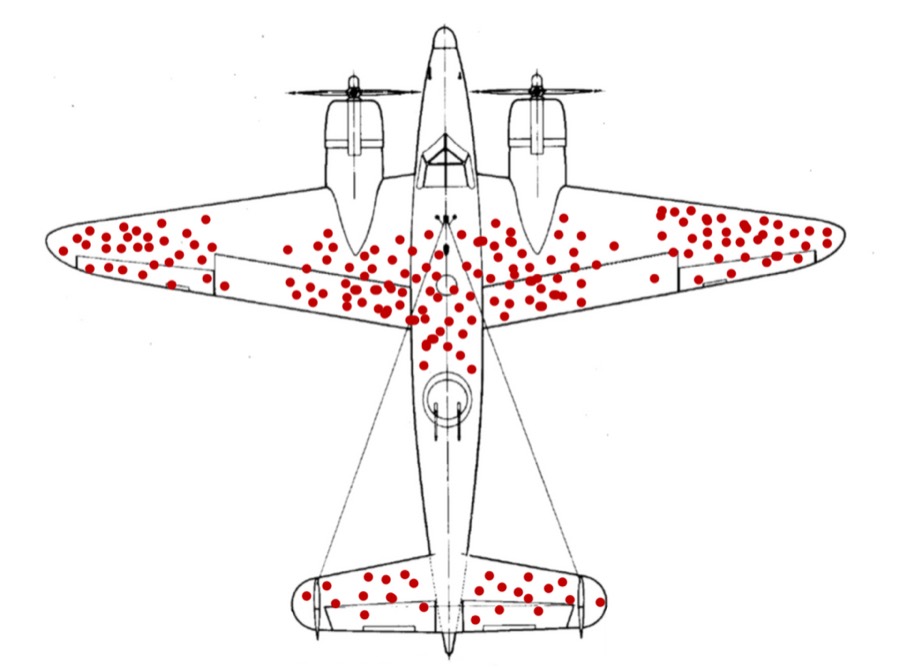
Survivorship bias
Armour the bombers where the survivors show no holes — those hits never came home.
See this alongside the other thinking tools of investing.
Go deeper
Affiliate links. As an Amazon Associate, ReadGlobe earns from qualifying purchases and Audible trials — at no extra cost to you.
The book behind this idea: Skin in the Game by Nassim Nicholas Taleb. Hear the whole thing free — start an Audible trial and your first audiobook is on the house.
Read the full summary of Skin in the Game →
More canonical picks:
- Thinking, Fast and Slow — Daniel Kahneman
- The Art of Thinking Clearly — Rolf Dobelli
- The Great Mental Models, Volume 1 — Shane Parrish
- Poor Charlie’s Almanack — Charlie Munger
- Super Thinking — Gabriel Weinberg & Lauren McCann
- Seeking Wisdom — Peter Bevelin
Cite this page
ReadGlobe. (2026). Ergodicity. https://readglobe.com/model/ergodicity/
"Ergodicity." ReadGlobe, 29 May 2026, readglobe.com/model/ergodicity/.
Primary source: Wikipedia
Editorial synthesis © ReadGlobe 2026, drawing on the mental-models tradition (Charlie Munger, Farnam Street) and the primary sources for each model. · Last reviewed 2026-05-29.