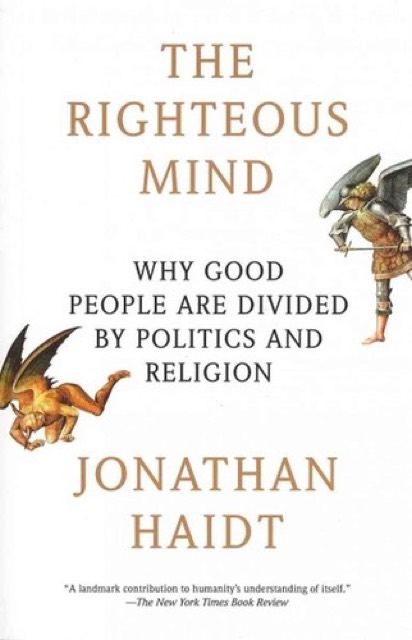
The Righteous Mind
by Jonathan Haidt
Moral judgment arrives first and reasoning follows to defend it. Haidt's image is a rider on an elephant: the rider believes it is steering, but it is largely a press secretary for where the elephant was already going.
What does The Righteous Mind teach?
Haidt builds the argument in three steps. First, intuitions come first and strategic reasoning second — shown through cases that people condemn confidently and then cannot justify, becoming what he calls morally dumbfounded. Second, morality is broader than harm and fairness: he proposes additional foundations including loyalty, authority and sanctity, and argues that political disagreement often reflects different weightings of these rather than one side lacking morality. Third, humans are groupish as well as selfish — capable of switching into a mode where the group's interest genuinely displaces the individual's, which builds cohesion and simultaneously makes coalitional bias almost automatic. The empirical claims about moral foundations remain contested, and the book is stronger as a description of how moral argument actually proceeds than as settled science. Its practical value is durable: it explains why presenting better evidence so rarely moves anyone, and why the reliable route to being heard is engaging the intuition rather than the stated reason.
Which ideas does The Righteous Mind explain?
Read the idea in two minutes, then read the book behind it.
Read or listen to The Righteous Mind
Hear the whole book free: start an Audible trial and your first audiobook — this one, if you like — is on the house.
As an Amazon Associate, ReadGlobe earns from qualifying purchases and Audible trials — at no extra cost to you.