Dunning–Kruger vs Illusory Superiority
Illusory superiority is the broad tendency to rate yourself above average — most people believe they're better-than-average drivers. The Dunning–Kruger effect is the sharper case: the least skilled overestimate the most, because the very competence they lack is what's needed to see the gap.
| Dimension | Dunning–Kruger Effect | Illusory Superiority |
|---|---|---|
| Scope | Specific — links skill level to self-error | Broad — general above-average self-rating |
| The twist | Lowest skill, largest overestimate | Almost everyone rates self above the median |
| Why it happens | Lacking skill hides the lack of skill | Self-flattery, motivated reasoning |
| Relationship | A specific pattern within the family | The wider better-than-average effect |
| Also affects experts? | Yes — high skill slightly underrates self | Less so — driven by the average person |
A family and a peculiar member
Illusory superiority is the umbrella: the robust finding that, across driving, intelligence, honesty, and dozens of other traits, far more than half of people rate themselves above the median — a statistical impossibility. The Dunning–Kruger effect is a particular, counter-intuitive pattern inside that family, one that connects how much you overrate yourself to how little you actually know.
The better-than-average effect
Illusory superiority is everywhere because self-flattery is comfortable and rarely corrected. Ask a room how many are above-average drivers and most hands go up; the same holds for ethics, competence, and popularity. It is a broad motivational tilt — we notice our strengths, discount our weaknesses, and quietly assume we sit on the better side of the line.
The Dunning–Kruger twist
Dunning and Kruger found something stranger than general overconfidence: the people who performed worst overestimated their performance the most. The reason is recursive — the skills required to do a task well are often the same skills required to judge whether you are doing it well. If you lack them, you are blind to your own errors, so you feel competent precisely because you cannot see your incompetence.
What it does not say
Dunning–Kruger is widely misquoted as "stupid people think they’re geniuses." The real finding is subtler: low performers overestimate but still usually rate themselves below the top, and — crucially — high performers tend to slightly *under*rate themselves, partly by assuming tasks easy for them are easy for everyone. It is a story about miscalibration across the whole skill range, not just a punchline about fools.
The verdict
Think of illusory superiority as the general illness and Dunning–Kruger as one striking symptom of it. The everyday lesson differs by where you sit: if you feel effortlessly confident in an area you have barely studied, treat that confidence as a warning sign; if you are genuinely skilled, remember you may be underestimating yourself and overestimating others. Calibration — actively seeking feedback against reality — is the cure for both.
Frequently asked
- Is the Dunning–Kruger effect the same as illusory superiority?
- No. Illusory superiority is the broad tendency to rate yourself above average. Dunning–Kruger is a specific pattern within it: the least skilled overestimate the most because they lack the competence to recognise their own errors.
- Does Dunning–Kruger mean experts are humble and novices arrogant?
- Roughly, but with nuance. Low performers overestimate themselves most; high performers often slightly underrate themselves, assuming what is easy for them is easy for all. It is miscalibration across the whole range, not simple novice arrogance.
- How do you avoid the Dunning–Kruger trap?
- Seek concrete, external feedback rather than trusting your felt sense of competence — tests, critique, measurable results. Because the skill to judge your skill is the very thing you may lack, only outside reality can calibrate you.
Explore further
More comparisons
Keep reading
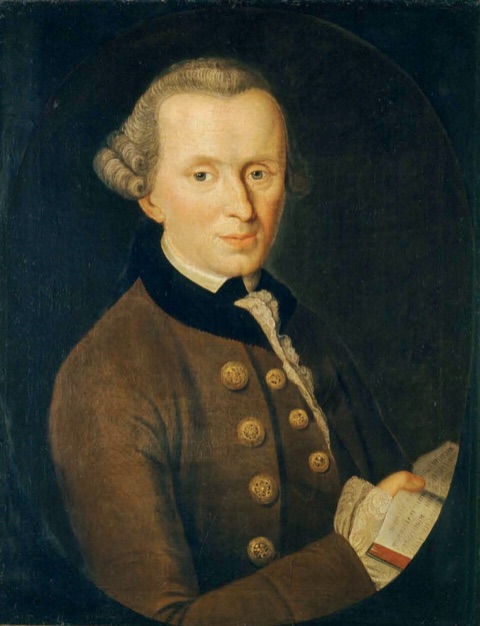
Immanuel Kant
From Königsberg, with famous regularity, he argued the mind doesn't receive the world — it structures it.
Go deeper
Affiliate links. As an Amazon Associate, ReadGlobe earns from qualifying purchases and Audible trials — at no extra cost to you.
The book behind this idea: Poor Charlie's Almanack by Charlie Munger. Hear the whole thing free — start an Audible trial and your first audiobook is on the house.
Read the full summary of Poor Charlie's Almanack →
More canonical picks:
- Thinking, Fast and Slow — Daniel Kahneman
- The Art of Thinking Clearly — Rolf Dobelli
- The Great Mental Models, Volume 1 — Shane Parrish
- Super Thinking — Gabriel Weinberg & Lauren McCann
- Seeking Wisdom — Peter Bevelin
Primary sources: Dunning–Kruger Effect (Wikipedia) · Illusory Superiority (Wikipedia)
Editorial synthesis © ReadGlobe 2026, drawing on Kruger & Dunning (1999), the self-assessment literature, and the mental-models tradition. · Last reviewed 2026-05-29.