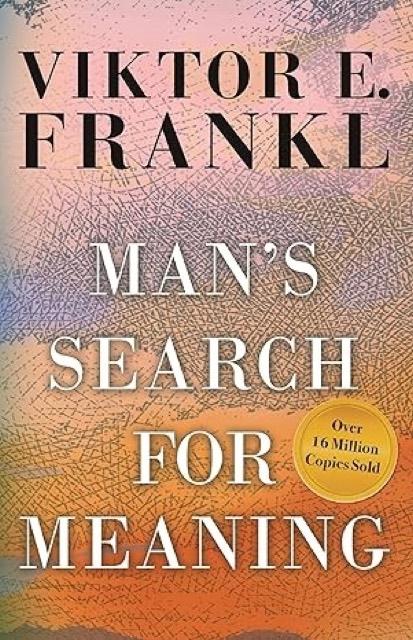
Man's Search for Meaning
by Viktor Frankl
Frankl argues from the camps that suffering is bearable when it carries meaning, and that while circumstances may remove everything else, the freedom to choose one's attitude toward them cannot be taken.
What does Man's Search for Meaning teach?
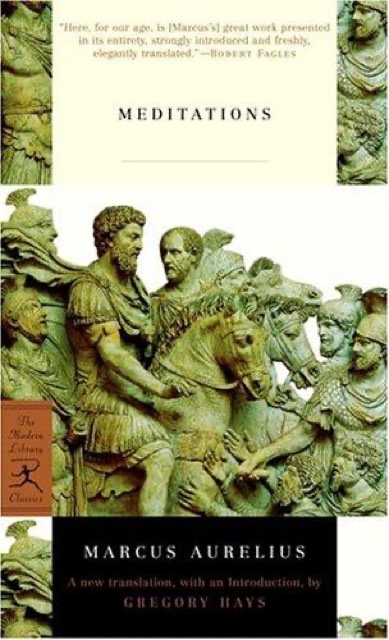
The book has two halves. The first is Frankl's account of Auschwitz and three other camps, written as a psychiatrist observing both his fellow prisoners and himself — which prisoners survived, how apathy set in as a defence, and the point at which a man who had abandoned any future stopped getting up. The second half sets out logotherapy, the school he founded, whose premise is that the primary human drive is toward meaning rather than pleasure or power. Meaning, in his account, is not received but found, in work, in love, and in the attitude taken toward unavoidable suffering. The Stoic inheritance is direct and Frankl acknowledges it: the distinction between what is and is not in our power runs through the whole argument, tested under conditions that make the abstraction concrete. It is a short book and an unsentimental one — it does not claim suffering is good, only that meaningless suffering is what breaks people. Read alongside Meditations, it is the twentieth-century case for the same claim.
Which ideas does Man's Search for Meaning explain?
Read the idea in two minutes, then read the book behind it.
Read or listen to Man's Search for Meaning
Hear the whole book free: start an Audible trial and your first audiobook — this one, if you like — is on the house.
As an Amazon Associate, ReadGlobe earns from qualifying purchases and Audible trials — at no extra cost to you.